Kadri Simson says quicker permitting and digitalisation will ease energy crisis
Areti Ntaradimou
Posted on: 8 November 2022
The European Commissioner for Energy, Kadri Simson, sees a tough winter ahead, but she is hopeful about the future nonetheless.
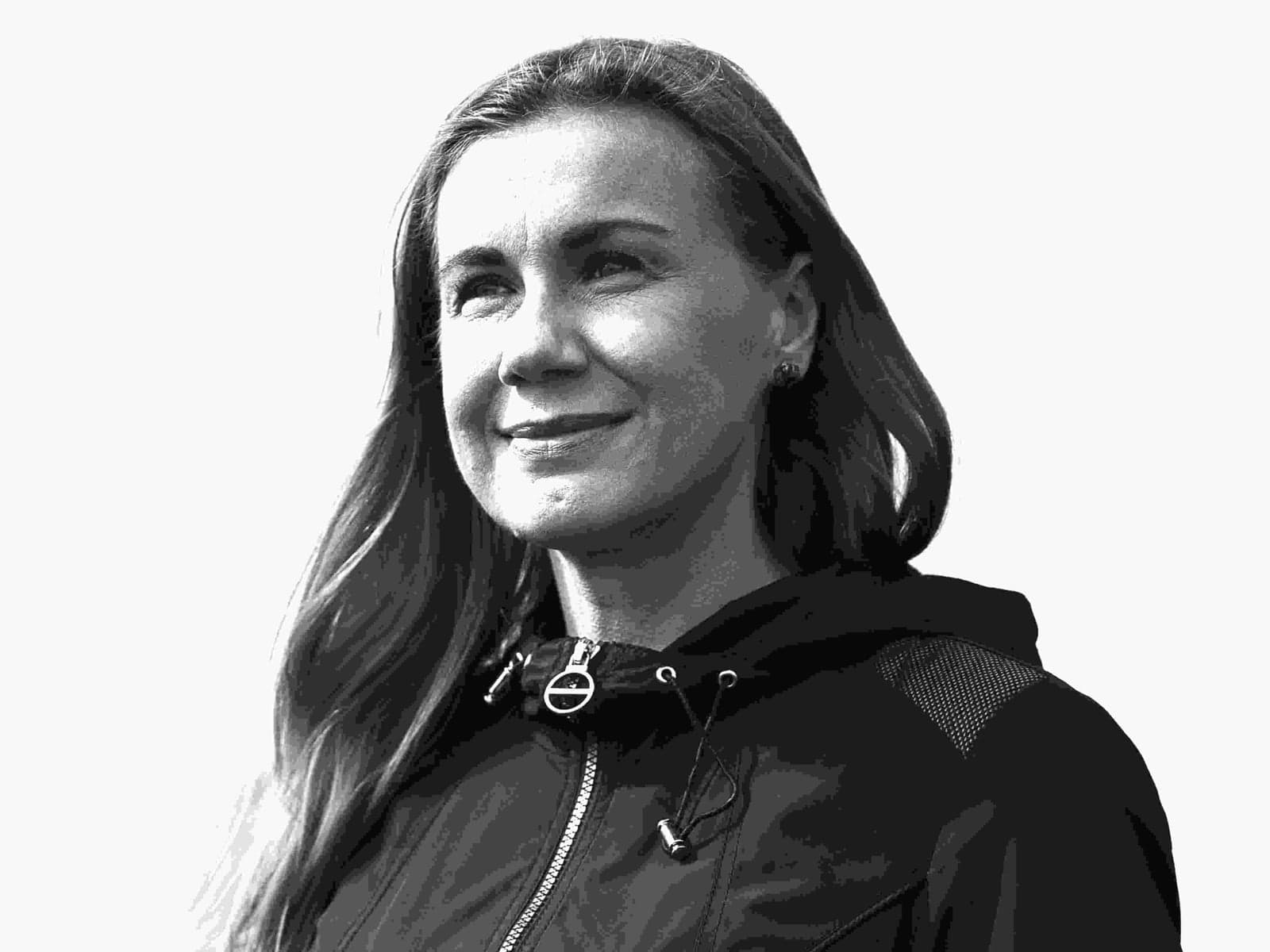
The European Commissioner for Energy sees a tough winter ahead, but in an exclusive interview with Areti Ntaradimou, she says she is hopeful about the future nonetheless.
Kadri Simson believes Europe can cut Russian gas, boost renewables and still deliver a ‘just transition’ amid economic crisis and war. It won’t be easy though…
How realistic is the Green Deal through the war in Ukraine's prism? Can we still make it?
What we are seeing today in the EU energy market are the consequences of the dependence on fossil fuels – if we had been further along with our green transition, the impact of the war on our energy system would have been less severe.
So it is clear that the Green Deal has become even more urgent after Russia’s invasion of Ukraine. Sustainability and energy security are complementary goals.
For me, this is not a question of ‘if’, but of ‘how’. And our response to this question is our REPowerEU plan, which sets out clearly the path of ending our dependence on Russian fossil fuels – largely by increasing the share of renewable energy, as well as energy savings and efficiency.
The war only increases the EU’s determination to become climate neutral and with that, truly energy independent.
How does the REPowerEU strategy intend to eliminate our dependence on Russian gas before 2030?
The EU has already introduced an embargo on imports of Russian coal and most of its oil. We are adamant that we need to end our energy reliance on a country that has brought war back to the European continent.
REPowerEU is a comprehensive plan to achieve this, resting on three pillars: accelerated rollout of renewable energy, energy savings and diversification of supplies.
The Commission has proposed increasing the renewables’ share in our energy mix to 45% by 2030. This includes wind and solar energy, renewable hydrogen and biomethane. Solar energy has the potential to be the largest electricity source in the EU, and we will seek to double the capacity by 2025 and reach 600GW by 2030.
The length of permitting processes for renewable projects can be a discouraging factor for investors and individual citizens alike.
We, therefore, propose to introduce the so-called ‘go-to’ areas, where permitting procedures will be done within a year, and granted once for the entire defined territory – suitable for areas with lower environmental risks.
Energy savings are the quickest and cheapest way to address the current energy crisis and we have also proposed increasing our ambition in this area.
The ‘EU Save Energy Communication’ was published with the REPowerEU plan and details short-term behavioural changes which could cut gas and oil demand by 5% and encourages Member States to start communication campaigns for households and industry.
We have already seen many Member States launch such campaigns and also take concrete energy savings measures like limiting the heating and cooling temperatures in public buildings.
That said, in the short term, we need to replace some of the Russian gas – by securing around 50bcm of LNG and an additional 10bcm of pipeline gas annually from other sources.
We have set up the EU Energy Platform and are now working on a voluntary ‘joint purchasing mechanism’ that would negotiate on behalf of participating Member States’ gas supplies and in the future hydrogen supplies.
After joint statements with the US, Canada and Norway, we have concluded Memorandums of Understanding with Israel and Egypt, as well as Azerbaijan, to increase gas deliveries to Europe.
So it is clear that the Green Deal has become even more urgent after Russia’s invasion of Ukraine. Sustainability and energy security are complementary goals.
You stated that fossil fuel subsidies have to end and that this is what the Green Deal requires. Does that mean that within the Just Transition Fund there will be a phase-out of fossil gas subsidies and when will that happen?
The Just Transition Fund (JTF) aims to help mitigate the socio-economic consequences of the transition to climate neutrality, including those regarding the phase-out of coal, peat and oil shale.
There is a fossil fuel exclusion in the JTF Regulation: JTF support cannot be used to fund activities related to oil, gas and coal.
All JTF spending needs to be in line with the climate neutrality objective of the EU, focusing mostly on decarbonisation and economic diversification measures as well as training and reskilling programmes for workers of high-emission sectors.
Have you read?
Energy communities are the missing piece of Europe’s transition puzzle
REPowerEU is the Green Deal on steroids
Europe’s future gas balance shows there’s no time for complacency
What is the EU doing in order to secure a sustainable future for today’s and tomorrow’s generations? How does it protect vulnerable consumers?
The European Green Deal is our overarching strategy – it is all about decarbonising our economy, to make a sustainable future for the coming generations.
But it’s also a growth strategy, ensuring that we can create growth and jobs with fewer resources, including energy.
Last summer, the Commission came forward with detailed proposals on how to implement this strategy in different areas and reduce our greenhouse emissions by 55% by 2030. They now need to be approved by the European Parliament and Member States.
Russia’s war against Ukraine has made this work even more urgent. To meet our energy security challenge, we need to accelerate the use of renewable energy and improve energy efficiency.
We should, for example, speed up the permitting process for renewable energy and increase our 2030 renewable energy target from 32% to 45%.
This is what the Commission has already proposed, plus many other steps – and this will also deliver a sustainable energy supply for the coming years and generations.
Energy poverty is something we keep in mind when we take any policy action and it has of course been receiving special attention over the past 12 months.
We have provided the Member States with a toolbox to address the impact of the exceptionally high prices and all of them have taken relevant measures.
But the best, lasting solution is to use more green energy, which is more affordable than fossil sources, and use less energy overall; for example by renovating houses.
This is something the EU supports through REPowerEU and other funds and policies.
Europe needs to build an energy system that is much smarter and more interactive than it is today.
The EU’s Action Plan on the digitalisation of the energy transition is due soon. What can you tell us about it?
It is clear that Europe needs to build an energy system that is much smarter and more interactive than it is today.
Decarbonisation, electrification, sector integration and decentralisation all require a tremendous effort through digitalisation.
This process is already happening in the energy sector, but more is needed. Sharing data across the energy value chain and linking this data with weather models, mobility patterns, financial services and geographic location systems will make innovative services possible, which in turn will contribute to growth and jobs in the EU.
It will enable financial institutions to unlock private investments that support the energy transition and will allow consumers to actively manage their energy consumption or generation and benefit from direct participation in the market. This requires a strategic vision and concrete actions in several areas:
- First, we must promote connectivity, interoperability and seamless exchange of data between different actors.
- Second, digitalisation requires more and better coordinated investments in the electricity grid.
- Third, consumers need support and protection to benefit from the opportunities digitalisation brings.
- Fourth, as the energy system needs to be cyber secure.
- Fifth, we need to ensure that the growing energy consumption of digital technologies themselves is a driver for the green transition.
- And finally, digitalisation is an ongoing process that requires continuous learning and support for R&I.
Can Europe accelerate the production of renewables? And if so, how?
In 2020, the Commission published a new Offshore Renewable Energy Strategy and a specific Hydrogen Strategy looking at the potential of these new sectors – and identifying potential bottlenecks and ways in which these technologies could be successfully scaled up on a truly continental scale in order to respond to the challenges ahead.
We also outlined a strategy on Energy System Integration, looking at how we can achieve additional synergies and efficiency gains across the energy sector.
The REPowerEU package from May went one step further by publishing a new solar strategy, aiming to boost the use of solar energy, including by proposing solar panels on rooftops for some categories of buildings.
Linked to this, REPowerEU has set out specific measures to address the issue of permitting – one of the greatest bottlenecks for fast deployment of renewables – and outlined the Hydrogen Accelerator.
The latter supports the rollout of renewable hydrogen in Europe and further afield, with a view to having 20mt available by 2030 – 10mt of which would be produced in the EU.
We have also proposed making additional funding available from the Recovery and Resilience Fund, to give an additional boost to investment in renewables.
Listen to The EU Projects Zone podcast
For renewables to become a sustainable solution, we need to store them sustainably. However, some storage technologies have capacity limitations, while others have manufacturing ethical issues. What can the Commission do about these issues?
The EU is taking decisive action to ensure that ‘dirty fuel’ is not replaced by ‘dirty batteries’.
The negotiations between the Council and the European Parliament on the Batteries Regulation have reached an advanced stage. When agreed upon and adopted, it will put strict requirements in place in terms of transparency (including raw materials sourcing), sustainability of production and recycling.
These will progressively increase over time. These requirements will cover both domestic production and imports. Sustainability is therefore taken very seriously by lithium-ion giga-factories under way in the EU.
NorthVolt, which I visited a few months ago in Sweden, is the best example in this respect as it envisages sourcing locally as many raw materials as possible (including cobalt), producing batteries with green electricity and then recycling them sustainably.
We are also quickly advancing with hydrogen technology – mostly for the needs of decarbonisation of industry and transport sectors, but also for long-term storage of renewable energy.
Second-life batteries (from electric vehicles) could also be used to store renewable energy, thereby ensuring that these batteries, and their components, are reused.
Clean energy storage is not only about electricity storage: after all, more than half of our energy consumption relates to thermal energy.
We have big thermal energy storage capacities in the context of solar-thermal technology. The quickly growing sector of heat pumps also comes with growing thermal storage capacities.
Thermal storage technologies benefit from the EU’s funding instruments in the same way as electricity storage technologies.
Check out the EU Projects Directory
How can the EU citizens on an individual level assist the energy transition?
We all can play a part in this process: by using less energy and by opting for clean energy sources.
Energy is vital for our everyday functioning. And while access to energy is increasingly considered a basic right, not all of us think about how important it is to keep energy sustainable at the same time as affordable.
Because we are all energy users, we can all reflect on how to lower our consumption. Bringing the temperature at home down by one degree or opting for a walk instead of a short car ride should be possible – and not only for financial reasons.
All too often we dismiss the small steps by thinking that they can’t bring a lasting change. But if 440 million EU citizens all undertake action, even minor in scale, it will make a real impact – for our wallets, for our energy security, and for the planet.