Climate scientist slams AI hubris and warns over the ethics of data
Kelvin Ross
Posted on: 21 May 2025
Climate and artificial intelligence pioneer Emily Shuckburgh says some in AI community are creating potential major problems.
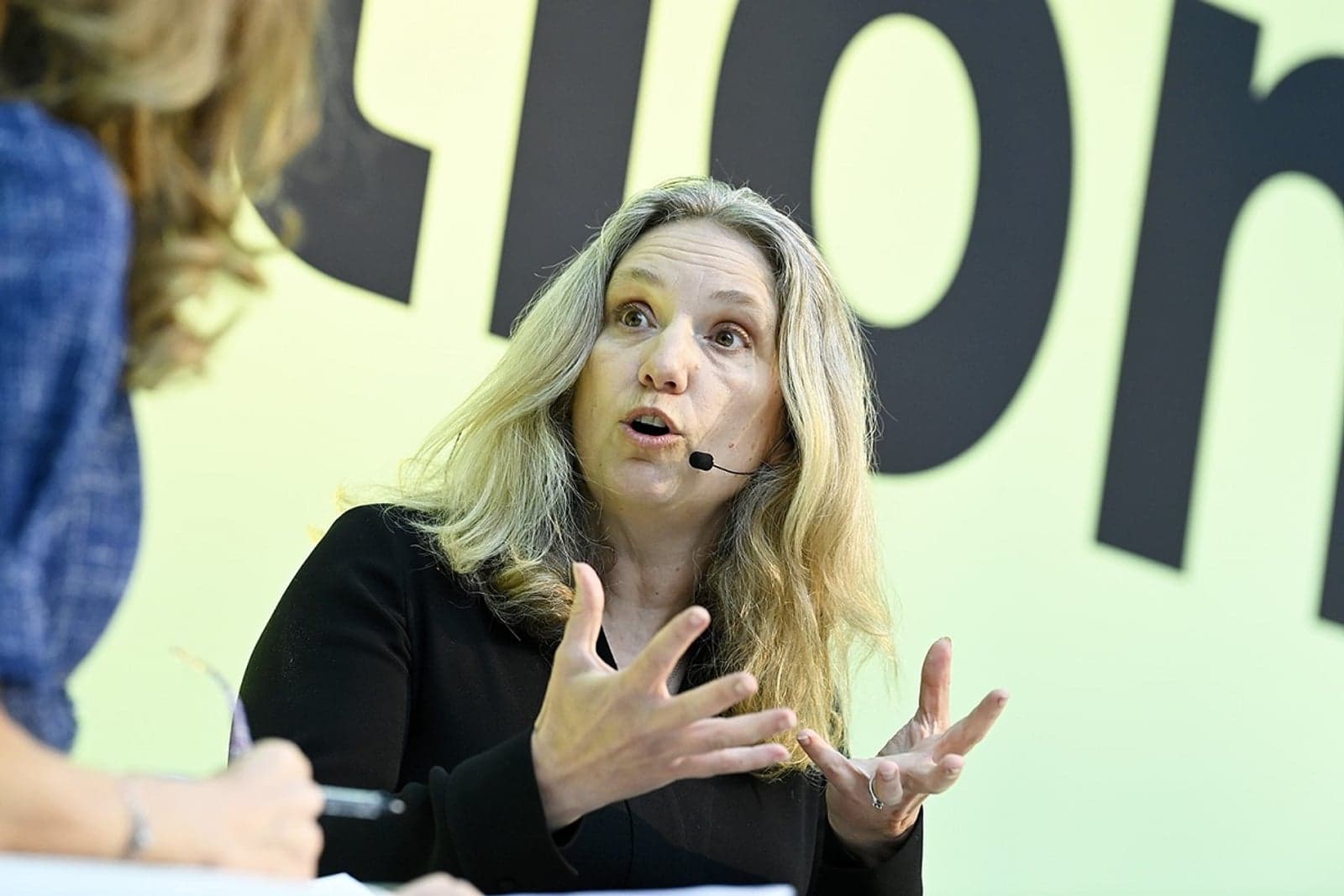
Climate and artificial intelligence pioneer Emily Shuckburgh says some in AI community are creating potential major problems
A leading climate scientist and expert on artificial intelligence has expressed her dismay at the way some on the field of AI are failing – or refusing – to acknowledge and tackle the extraordinary power consumption of data centres.
Professor Emily Shuckburgh, director of the University of Cambridge’s climate initiative Cambridge Zero, said “in the community that is using AI in the climate context, the energy consumption of the AI process itself is something we think very carefully about: we look to design the models we use in a way that is as under-energy intensive as possible.”
But she added: “I am deeply concerned about the hubris in much of the AI community that ignores the energy consumption, and there is a very, very real problem emerging.
It’s already the case that AI data centres are consuming single-digit percentages globally of electricity… and that is growing substantially. If that continues, then we have a major problem.”
Many would argue we already have a major problem, including the International Energy Agency: in April it published a report that stated projected electricity demand from data centres worldwide will more than double by 2030 to around 945 TWh: more than the current electricity consumption of Japan.
Did you miss these?
Why a Carney climate bounce could fix COP climate talks
Innovation summit told ‘now is not the time to hesitate’ on climate ambition
The IEA stated that “AI will be the most significant driver of this increase, with electricity demand from AI-optimised data centres projected to more than quadruple by 2030”.
However, Shuckburgh, who was Head of Open Oceans at the British Atlantic Survey for 12 years and was awarded the Order of the British Empire (OBE) in 2016 for services to science, remains an ardent supporter of AI and its potential in the energy sectors.

Speaking at the Innovation Zero World Congress in London, she said: “I've been working on the use of AI in the climate area for a decade or so in an academic context, and that intersection between climate science and AI is incredibly exciting. There's been huge revolutions happening, particularly over the last couple of years.”
She explained that the ability to use AI to crunch more data to forecast extreme weather events has been “completely transformed just in the last couple of months” and she revealed her students were “working on looking at predicting future deadly heatwaves or future flood risks”.
Shuckburgh said these “downstream impacts enable us as a society to understand how we can build resilience to those climate impacts that are already happening today… and are only going to get worse into the future”.
And she was particularly animated about using AI as a tool to enable decarbonisation.
More exclusive articles on AI:
From code to carbon: rewriting the rules for sustainable digital infrastructure
The smart science behind the UK’s green energy revolution
Redefining AI from villain to hero in the energy transition
“This is the exciting bit… and it is incredibly exciting. We are literally, in an academic context, seeing new developments not just on a month-by-month basis, but a day-by-day basis.
“We're working significantly on how we can use AI to support decarbonized mobility or decarbonized infrastructure. And how we can use AI to support developments in key technologies: batteries, for example, is an area where we're using AI to help speed up the innovation process itself.
“I think it really is the case that AI is going to be transformative in many aspects of climate related solutions.”
The ethics of AI and climate
However, Shuckburgh has a further ‘but’ to add: “There is really important ethics question. Because your AI models are only as good as the data underneath them, understanding where you get that data from, and the ethics associated with that, is critically important.”
She explained that “if we're looking climate-related solutions in the developing world, then ensuring that we have equality and fairness in terms of the way in which that AI model has been generated, and the data that's underlying it, is critically important”.
And for developed countries she said AI was being used “in terms of public services such as infrastructure or mobility”, then it was vital that “fairness and equality is baked into the AI models themselves. Then you’ve got a ‘human-in-the-loop element’ and that is critically important.”
Now why not try these articles:
Top trends shaping Europe’s data centre landscape
How gas turbines with carbon capture could power AI’s future