Google DeepMind's climate leader reveals top tips to maximise AI
Kelvin Ross
Posted on: 22 May 2025
Sims Witherspoon explains three key steps that all company's should follow to unlock climate action wins from AI.
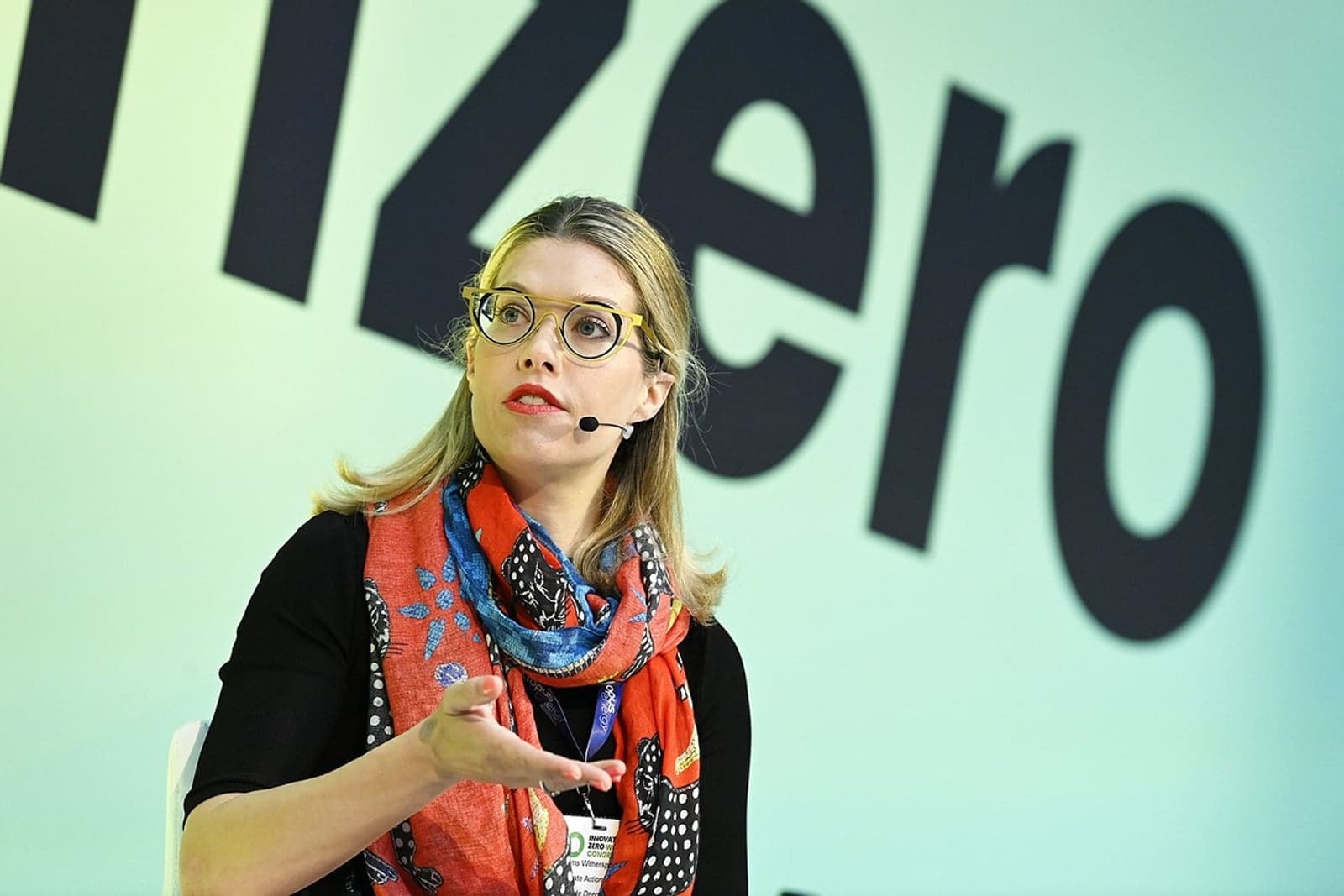
Sims Witherspoon explains three key steps that all company's should follow to unlock climate action wins from AI
Sims Witherspoon is clearly a believer in the ‘rule of three’, a concept that suggests a message, written or spoken, is digested and remembered if delivered as a trio of statements.
During a conference debate on whether artificial intelligence is a silver bullet for climate action, she delivers two messages wrapped up in the rule of three. And I remembered both: so I guess it works.
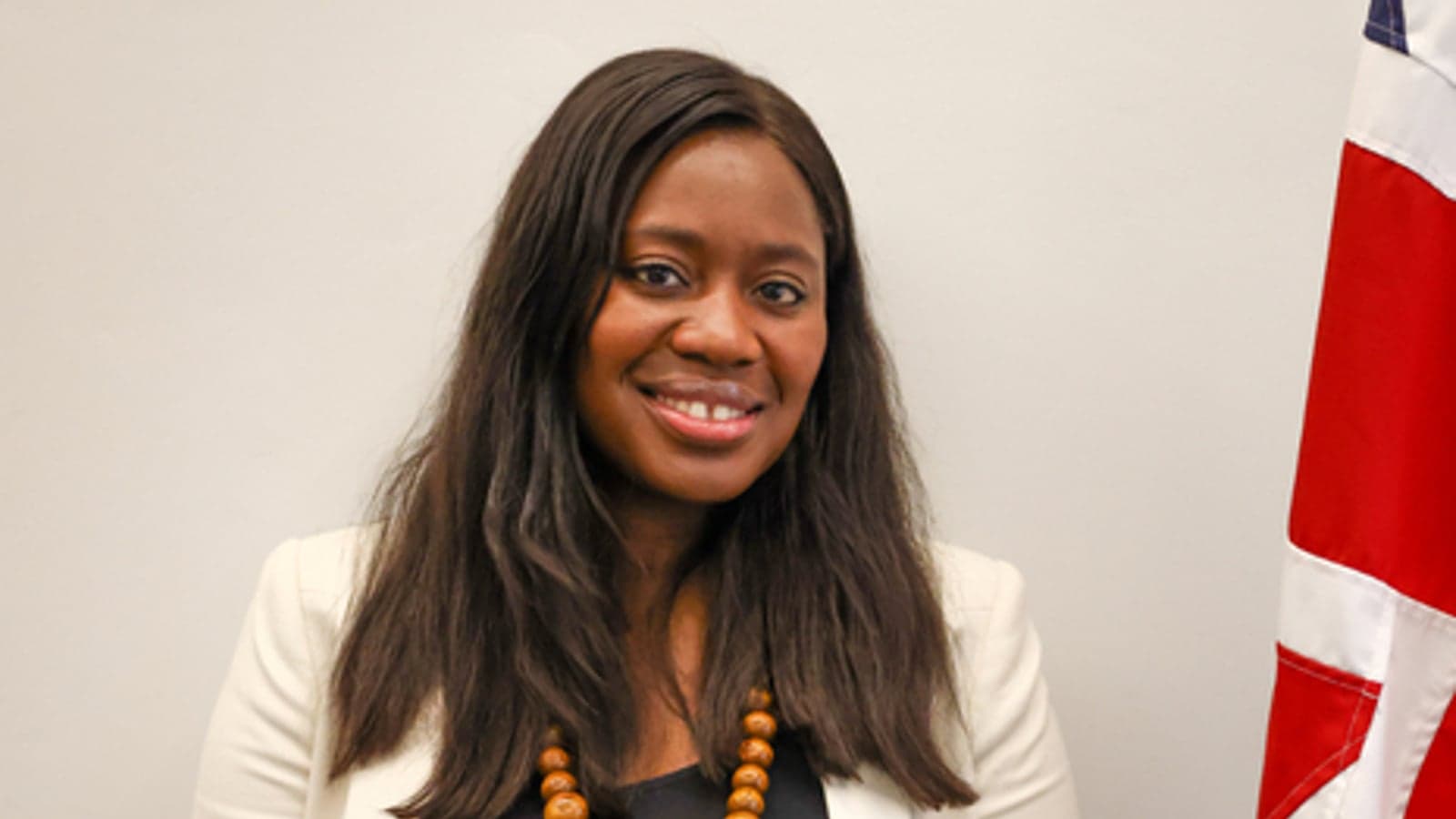
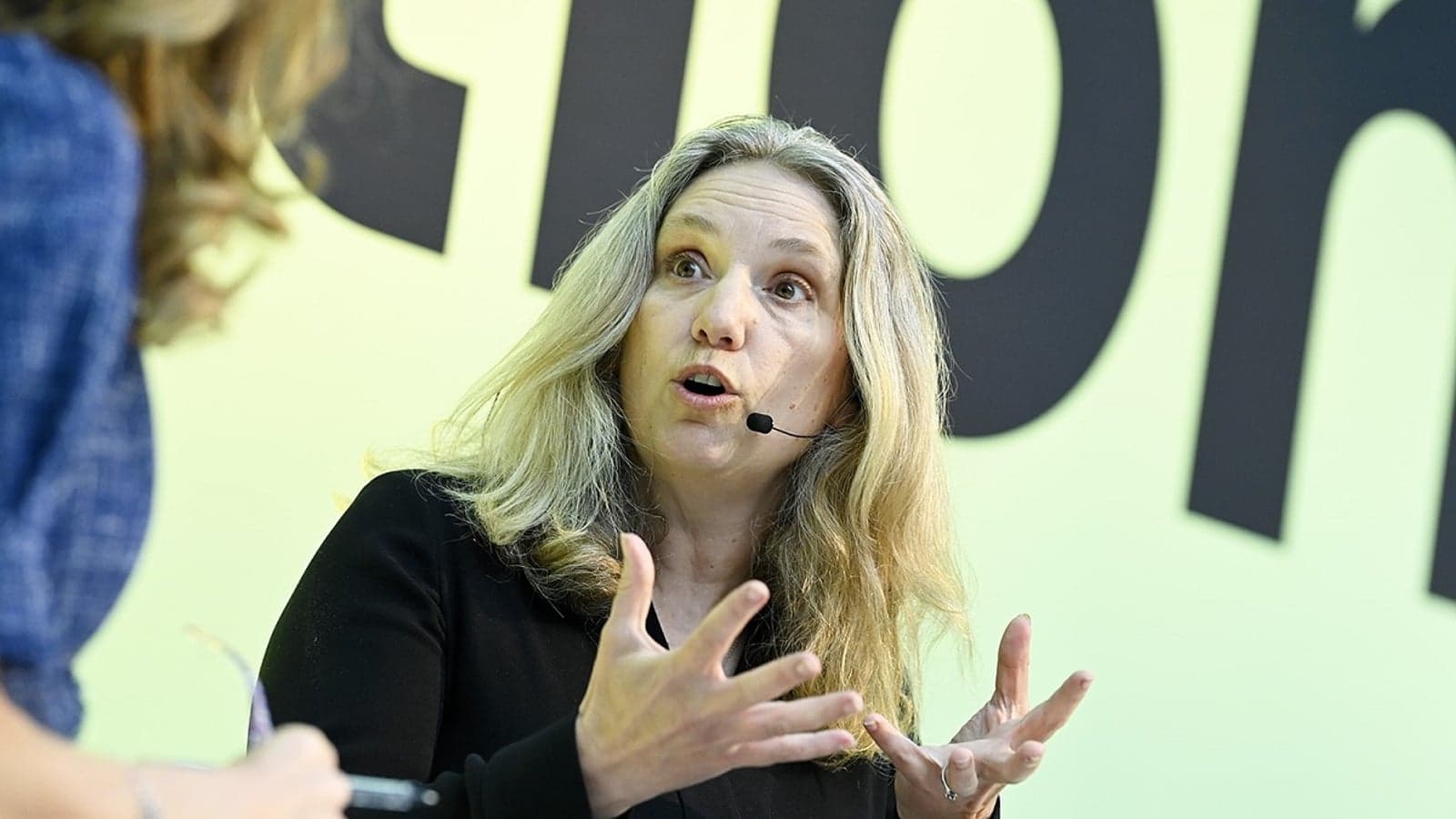
Witherspoon is Climate Action Lead for Google DeepMind and at the Innovation Zero World Congress in London she explored what it will take to “help us get to full utility on AI”.
More from Innovation Zero:
Climate scientist slams AI hubris and warns over the ethics of data
Why Donald Trump is ‘the King Canute of energy’
‘Now is not the time to hesitate’ on climate ambition
“There are three things. One is for individuals and organizations and governments to clearly define their problem statements: what are the challenges they want to solve using artificial intelligence?”
This sounds like an obvious first step, yet Witherspoon stresses that “when people start to define their problem, they sometimes realize that AI actually isn't the solution that they need in the first place: sometimes it’s a simpler or different solution. So, defining the problem statement is the first step.”
'Do the maths'
And, she adds, the metaphorical cherry-on-top of defining the problem is “if you can get someone on your team who can help you translate that problem statement into mathematical language that algorithms understand: then you’ll be eons ahead.”
The second piece of Witherspoon’s trio is data. “I cannot stress this enough: data, data, data,” she says. “Go clean your data; standardize it; get it formatted; make sure it's unbiased, and make sure it's representative of the problem.
“If you look at the problem statement you need to make sure that you have the data required to actually solve it. I can't tell you the number of times we've gone to work with partners and we look at the data sets that are needed… and some of them haven't even been recorded: there's no history.”
AI tools and data
She says AI tools “are only as good as the data you put into them”, so if the required data is missing “you're gonna have to wait… maybe six months, sometimes a year”, depending on how long it takes to collect it.
And the third thing is benchmarks: “Make sure you understand and are making clear to AI practitioners what the benchmarks are. “What is your target goal for AI performance? How much better do you need to be for you to invest in these tools? Are you going to get excited about these tools?”
Then Witherspoon reveals “a little secret of our world: if you put out those three things – a problem statement, the data that's going to solve it and benchmarks – you will get an entire community of very competitive machine-learning researchers and practitioners who will line up to solve your problem. We honestly can't help ourselves.”
Latest AI news:
Iberdrola launches East-West Digital to develop and commercialise AI
How gas turbines with carbon capture could power AI’s future
Witherspoon has worked for Google for over a decade and DeepMind for the past seven years. She is also co-founder of the Centre for AI and Climate, an organisation that advocates for the responsible, ethical use of artificial intelligence.
“I think AI can be a transformative tool for impact, positive impact, but we need to be responsible on how we will wield it and make sure that the benefits outweigh the risks.
“It's important with any technology, especially one as powerful as AI, for there always to be a constant evaluation of the risks and the rewards. The benefits must always vastly outweigh the risks of using the technology.”
AI and climate action
And assuming AI is indeed wielded as a force for good, she says it has a triple benefit in the climate space – her next ‘rule of three’. That trio is understanding; optimising; and accelerating.
She explains: “AI gives us the opportunity to understand the challenges we face: understand the science and understand the problems that are driving climate change.
“AI can also help us optimize current systems and infrastructure: we can't just start over from scratch today, because life depends on the systems that we use day in and day out.
AI has a particular opportunity there because it's a software-only solution, so we can learn on top of existing hardware by building more innovative, environmentally-friendly solutions for tomorrow.”
And in addition to understanding and optimizing, she says: “I also like to think of ‘accelerate’ as being the last part of a three-part framework of how AI can help in the climate space: where you accelerate the breakthroughs that we need for tomorrow's most sustainable technologies.
Upbeat on AI
She gives an example: “Understanding how plasma works in a fusion reactor: we've used AI to do that. And understanding plasma is one of the key components on the route to a nearly inexhaustible supply of carbon-free energy, namely infusion.”
So she’s upbeat about the potential of AI. Is she equally upbeat about the role of AI to make a positive difference in the climate fight, despite the now semi-regular instances of extreme weather events, an increasing realisation that the fight for 1.5 degrees may be lost, and the looming ‘target date’ of 2030?
“The science in AI tells us that it's not too late,” she says. And as an applied AI climate scientist, I wouldn't be working in the role I have if I thought it was too late.”
She concedes that “the 2030 targets are extremely ambitious and they're going to be very hard to hit”, but adds: “I don't think any of us would be working in this field if we didn't believe that at least some of them were achievable.”