BeFlexible: Empowering energy flexibility through DERMS integration
Guest/partner contributor
Posted on: 19 August 2025
The BeFlexible project demonstrates scalable, interoperable solutions for grid congestion management, facilitating the integration of renewable energy and advancing digital transformation for a decarbonised future.

The BeFlexible project demonstrates scalable, interoperable solutions for grid congestion management, facilitating the integration of renewable energy and advancing digital transformation for a decarbonised future.
The aim of the BeFlexible project is to increase the flexibility of energy systems by improving coordination between TSOs and DSOs and by facilitating the involvement of all energy actors.
To accelerate the digital transformation of the energy system, this initiative focuses on validating adaptable cross-sector services on a large scale. Central to this effort is the development of an interoperable digital platform designed to support efficient smart grids operation.
This platform, known as the Grid Data and Business Network (GDBN), serves as a foundational enabler for stakeholder collaboration across the flexibility value chain. The GDBN facilitates the seamless enrolment and active engagement of diverse flexibility stakeholders – regardless of their role or the scale of their flexibility potential – by providing a unified, interoperable environment for data exchange, coordination and service integration.
Managing grid congestion with flexibility
The ongoing energy transition introduces numerous challenges to the European energy system, particularly for DSOs. One of the most pressing challenges is managing the increased power volatility driven by the integration of more renewable energy sources and the electrification of energy within the distribution grid. These trends, while essential for decarbonisation, introduce significant operational complexity.
As distributed energy resources (DERs) become more prevalent and energy consumption patterns evolve, the risk of network congestion increases, particularly on infrastructure not originally designed for such dynamic and decentralised energy flows. This congestion can compromise grid reliability and limit renewable integration.
To address this, DSOs must develop innovative strategies and digital tools that enable real-time visibility, flexibility management and proactive grid planning. Ensuring a stable and reliable energy supply in this new landscape requires a shift toward data-driven, interoperable solutions that support both operational efficiency and stakeholder coordination.
Flexibility is key to addressing these challenges. It helps balance supply and demand, mitigates congestion and reduces peak load stress. This capability is particularly crucial for the effective integration of renewable energy sources, thereby increasing the utilisation of solar and wind power.
Beyond operational benefits, flexibility can optimise investment in grid infrastructure by reducing the need for costly network reinforcements. It also enhances system stability and reliability by responding to fluctuations in energy generation and consumption. Ultimately, flexibility is a key enabler of decarbonisation. It facilitates the integration of high levels of renewable energy and supports the electrification of transport, heating and industry.
Ultimately, leveraging flexibility makes energy systems more adaptable, resilient and efficient, contributing to a sustainable and secure energy future.
Integrating EcoStruxure DERMS with GDBN for smarter grid management
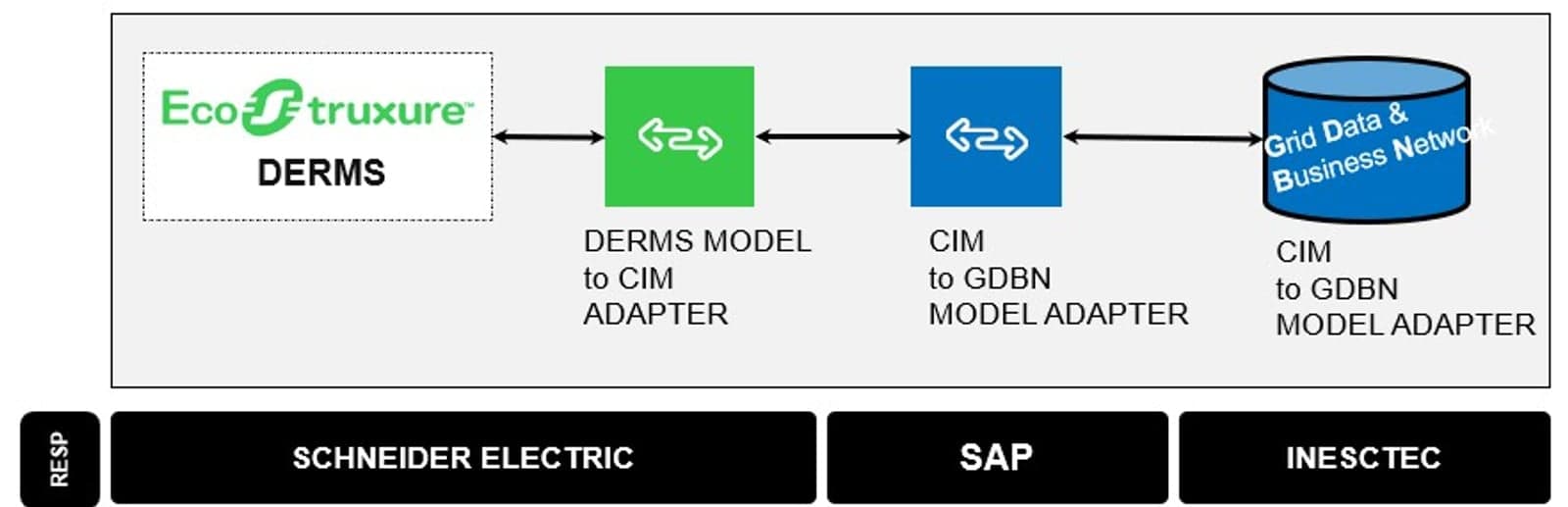
The BeFlexible project is demonstrating grid-centric services by integrating Schneider Electric’s commercial cloud-based solution, EcoStruxure DERMS, with the project’s GDBN. This integration leverages the SAP Integration Suite to orchestrate flexibility-related messages. The demonstration showcases how advanced distribution management systems (ADMS) and distributed energy resource management system (DERMS) platforms can interoperate with emerging digital infrastructures to support scalable, interoperable and automated flexibility services.
The outcome is developing a flexible, cloud-based (or hybrid) solution designed to support DSOs of all sizes – no matter their level of digital maturity. Built with interoperability in mind, the solution integrates seamlessly with existing systems and platforms, including the project’s own GDBN, making it a scalable and future-ready tool for grid management.
The architecture comprises multiple interconnected components that collaborate to manage flexibility and optimise the DSO grid. The architecture leverages SAP's Business Technology Platform, which provides externalised computing resources in the form of a Kubernetes cluster. The GDBN is deployed as a container within this cluster, utilising SAP's Integration Suite.
The Integration Suite plays a central role in enabling seamless interoperability between internal and external systems within the BeFlexible architecture. It not only orchestrates various SAP services that interface with the GDBN to manage asset repositories and energy measurements but also facilitates integration with external platforms, such as Schneider Electric's DERMS. This integration ensures the efficient exchange of flexibility-related messages, supporting coordinated grid operations and enabling scalable, modular deployment of flexibility services across diverse system environments.
The GDBN: A digital hub for grid flexibility
The GDBN platform serves as a foundational digital ecosystem designed to support all key activities across the flexibility value chain. It provides an integrated environment for a wide range of stakeholders –including consumers, service providers, aggregators and DSOs – to identify, unlock and utilise available flexibility potential. As a multi-stakeholder platform, it offers distinct value propositions for each stakeholder.
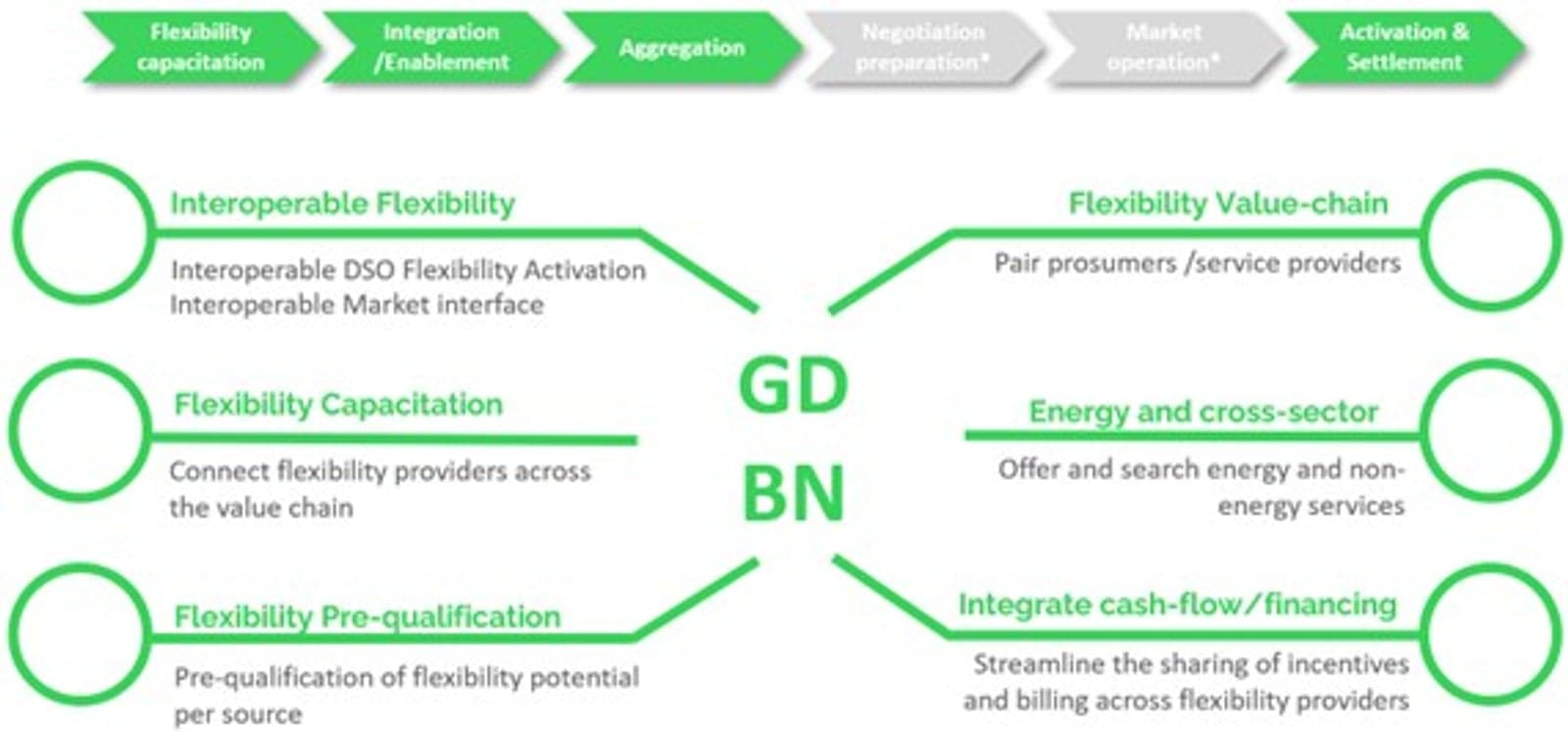
By joining the relevant stakeholders in one common platform, the GDBN provides a repository of relevant data across the flexibility value chain. It makes installed (used and unused) data from consumers available to service providers, contributing to planning process of flexibility provision.
For more on flexibility and BeFlexible
EU Energy Projects Podcast: Flexibility is the quiet superpower of Europe’s energy transition
Main achievements: Transforming the future of energy with BeFlexible
The BeFlexible project has made substantial progress in developing solutions to enhance grid flexibility and integration, particularly through digital innovation and interoperability. Below are the key achievements, showcasing how the project has advanced flexibility management, platform integration and system optimisation across Europe’s energy landscape.
1. GDBN platform development
• Creation of a comprehensive, cloud-based digital platform hosted on SAP's Business Technology Platform enabling scalability.
• Supports the entire flexibility value chain, including provision, aggregation, activation and settlement.
• Features a user friendly web-based interface for seamless stakeholder interactions.
2. Stakeholder integration and value propositions
• Offers tailored value propositions for diverse stakeholders (consumers, service providers, aggregators, DSOs).
• Facilitates identification and utilisation of flexibility potential across the energy ecosystem.
• Enables new business models aligned with consumer needs and regulatory frameworks.
3. Flexibility provision protocol
• Defines standardised protocols for flexibility provision, enhancing interoperability among different systems.
• Streamlines communication between flexibility providers, aggregators and system operators.
4. Technical implementation and integration
• Leverages SAP services for asset management (SAP Measurement Concept Management) and energy data storage (SAP Cloud for Energy).
• Integrates Schneider Electric's EcoStruxure DERMS platform for advanced grid-centric services.
• Implements robust data management practices and leverage SAP's secure cloud infrastructure to maintain data integrity and confidentiality.
• Designed with modular architecture to allow for future expansion and adaptations.
5. DERMS
• Calculates network transport capacity, down to individual customer level.
• Forecasts grid congestion using DERMS forecast module.
• Determines flexibility needs based on available flexibility received from FSP.
• Issues dispatch command to FSPs to mitigate congestion.
Looking ahead: Towards a decarbonised and resilient energy system
The BeFlexible project demonstrates how digital innovation, interoperability and stakeholder collaboration can unlock the full potential of flexibility in modern power systems. By integrating platforms like the GDBN with advanced solutions such as Schneider Electric’s EcoStruxure DERMS and SAP technologies, the project delivers a scalable, modular and secure architecture tailored to the evolving needs of DSOs.
These achievements lay a strong foundation for a more resilient, efficient, and decarbonized energy future across Europe.
To learn more about BeFlexible and how it’s shaping the future of energy flexibility, visit the website and explore the full project details.
About the authors

Stephane Dotto is an experienced go to market director at SAP Belgium with a focus on sustainability in utilities. His expertise includes project implementation, business transformation and value management with SAP solutions and he has contributed to major EU-funded projects like BeFlexible and Flexiciency.
Branislav Brbaklic holds a PhD in Power Engineering from the University of Novi Sad. With more than 25 years in smart grid application development and product management, he currently serves as the Product Strategy Lead for Schneider Electric’s Digital Grid line of business

María Ruiz is a trained telecommunications engineer and is PMP certified. With 18 years experience on international IT projects including Accenture and BMW Financial Services, she is currently working in Schneider Electric's R&D Department managing European funded projects.
Latest content
+6
RECreation: A digital platform to manage energy communities with support for flexibility markets
In the context of the BeFlexible project, the RECreation renewable energy communities management digital platform has been enhanced to participate in local flexibility markets.
- Guest/partner contributor
- 18/09/2025