Bridging the gap in energy storage with project SINNOGENES
Areti Ntaradimou
Posted on: 22 April 2026
As Europe accelerates its transition towards a climate-neutral energy system, one topic continues to move steadily from the margins to the centre of the debate: energy storage.
No longer a supporting technology, storage is increasingly recognised as a cornerstone of a flexible, resilient and decarbonised energy system.
In this episode of the EU Energy Projects Podcast, Angelina Broukou of the Horizon Europe-funded SINNOGENES project, offers a timely reminder that while storage technologies themselves are not new, the way we deploy and integrate them is where the real challenge, and opportunity, lies.
“Storage is what makes renewables reliable and usable at scale,” Angelina explains. It is a simple statement, but one that captures a growing reality: without storage, the variability of renewables risks becoming a structural limitation rather than a manageable feature of the system.
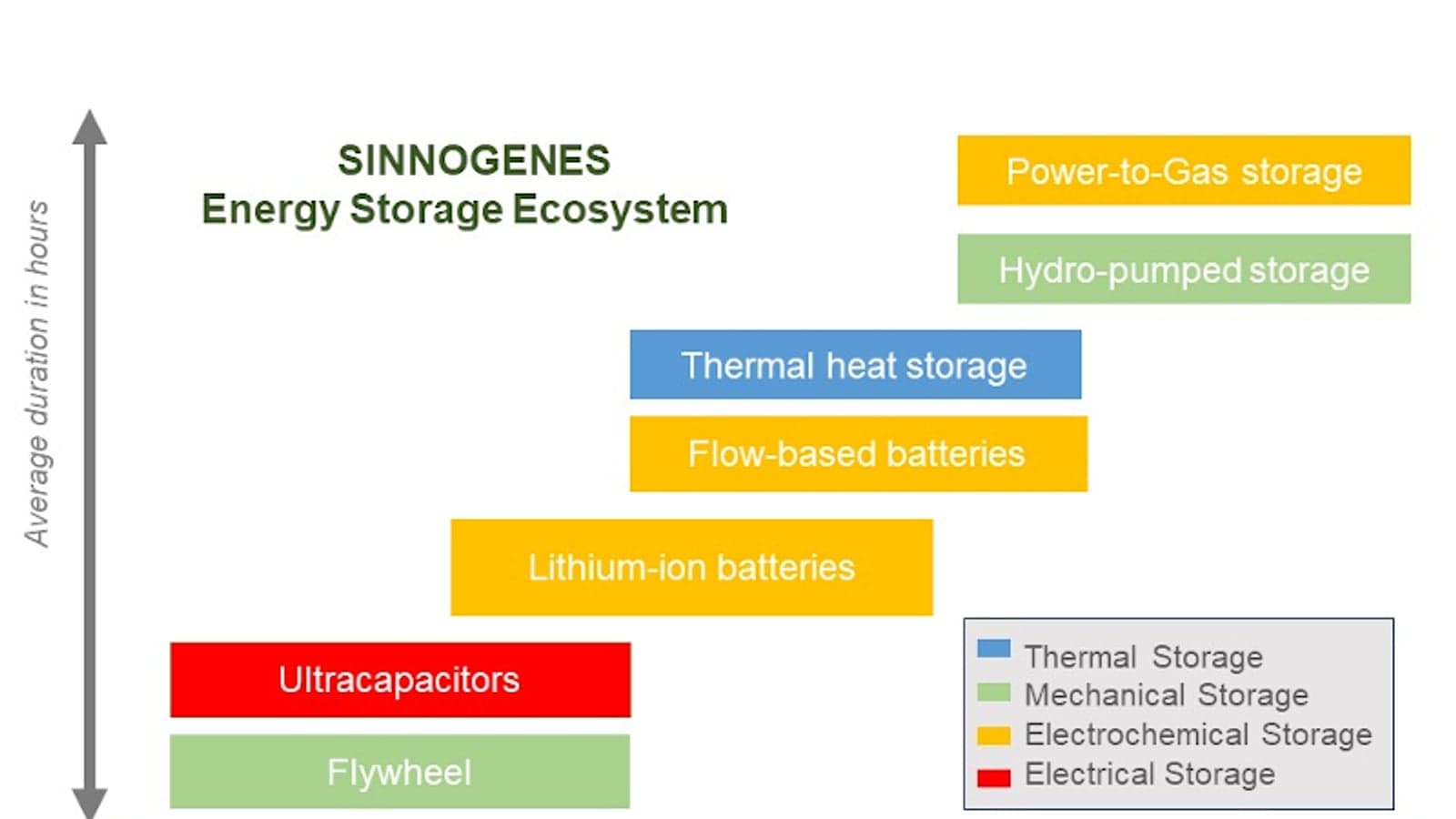
Yet SINNOGENES does not focus on a single technology. Instead, it brings together batteries, thermal storage, hydrogen and even flywheels, connecting them through a digital layer and testing them across six real-life pilots in Europe. From industrial sites in Portugal and Germany to microgrids in Spain and island systems such as Ikaria in Greece, the project moves beyond theory to explore how these solutions perform in practice.
And this is perhaps where the project becomes most relevant to the broader EU policy agenda. While initiatives such as REPowerEU and Fit for 55 set clear targets for decarbonisation and flexibility, the gap increasingly lies not in ambition, but in implementation. As Angelina notes, “the gap is not technology alone. It is how to actually use it effectively.”
This raises a familiar but persistent issue: fragmentation. Different technologies, unclear market signals and regulatory complexity continue to slow down deployment. Even when solutions exist, scaling them remains difficult. In this context, SINNOGENES' emphasis on integration, rather than isolated innovation, feels particularly aligned with current EU priorities.
There is also a notable shift in how success is defined. Beyond technical validation, the project places strong emphasis on business cases, real data and post-project exploitation. In other words, results must not only work, they must also endure.
The message to policymakers and industry is clear: Europe does not necessarily need more ideas. It needs solutions that function in real conditions, supported by clearer regulatory pathways and a willingness from the market to adopt them.
Because if storage is the backbone of the energy transition, integration may well be its missing link.
LISTEN NOW
Listen to previous episodes:
Using smart storage to turn buildings into prosumers
Decarbonising energy intensive industries