Building grid resilience from the distribution level up
Yusuf Latief
Posted on: 20 April 2026
Grid resilience remains high on the agenda as an energy sector priority; how can we build it in at the distribution level?
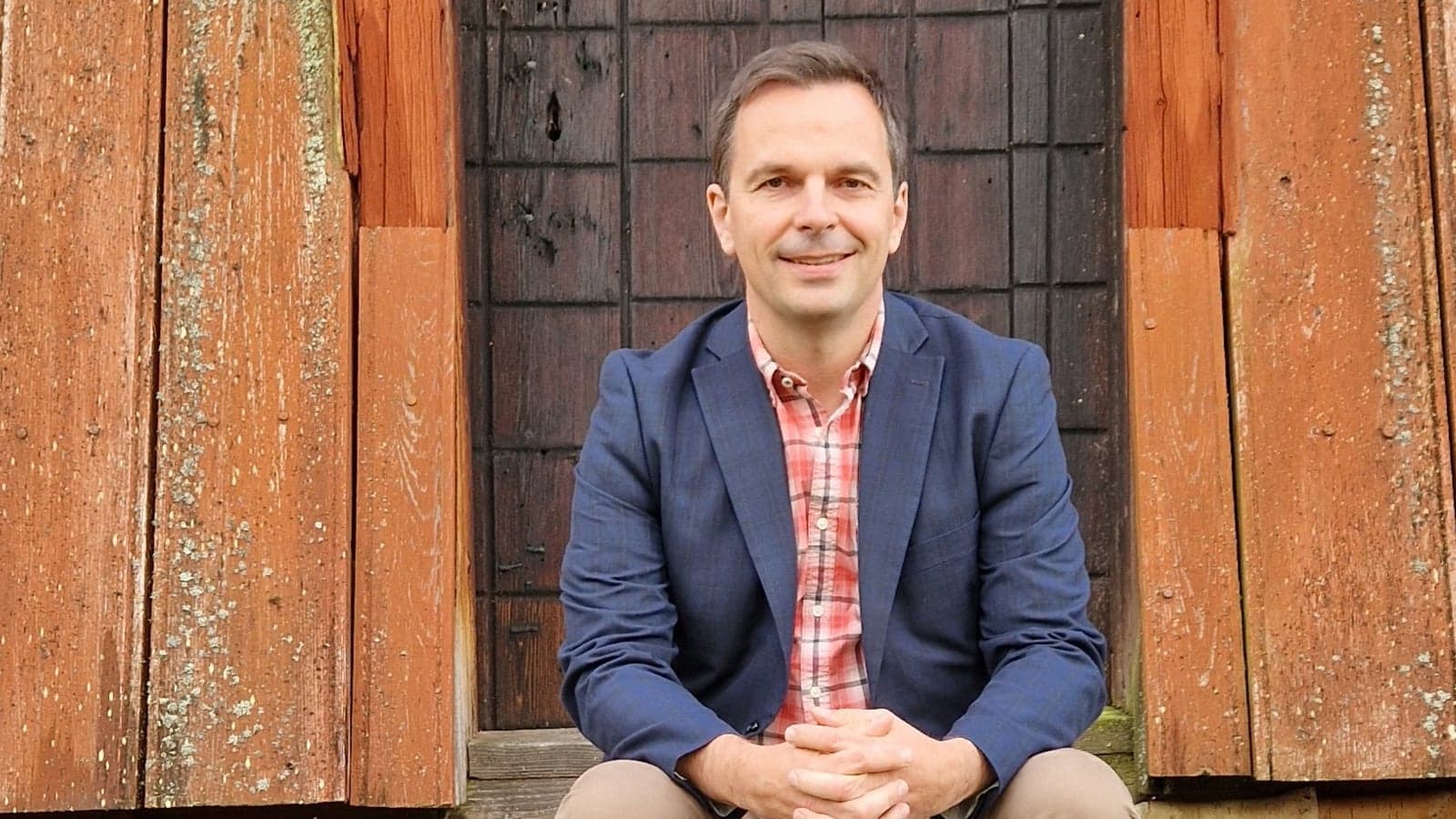
Nearly a year since the April 28 blackout, grid resilience remains a key point of attention as power system vulnerability continues to be a concern; looking at distribution-level islanding might be a way to build it in, according to VTT's Kari Mäki.
At the core of the discussion, Mäki points to a shift in thinking that moves beyond microgrid concepts and toward a more flexible use of existing distribution infrastructure.
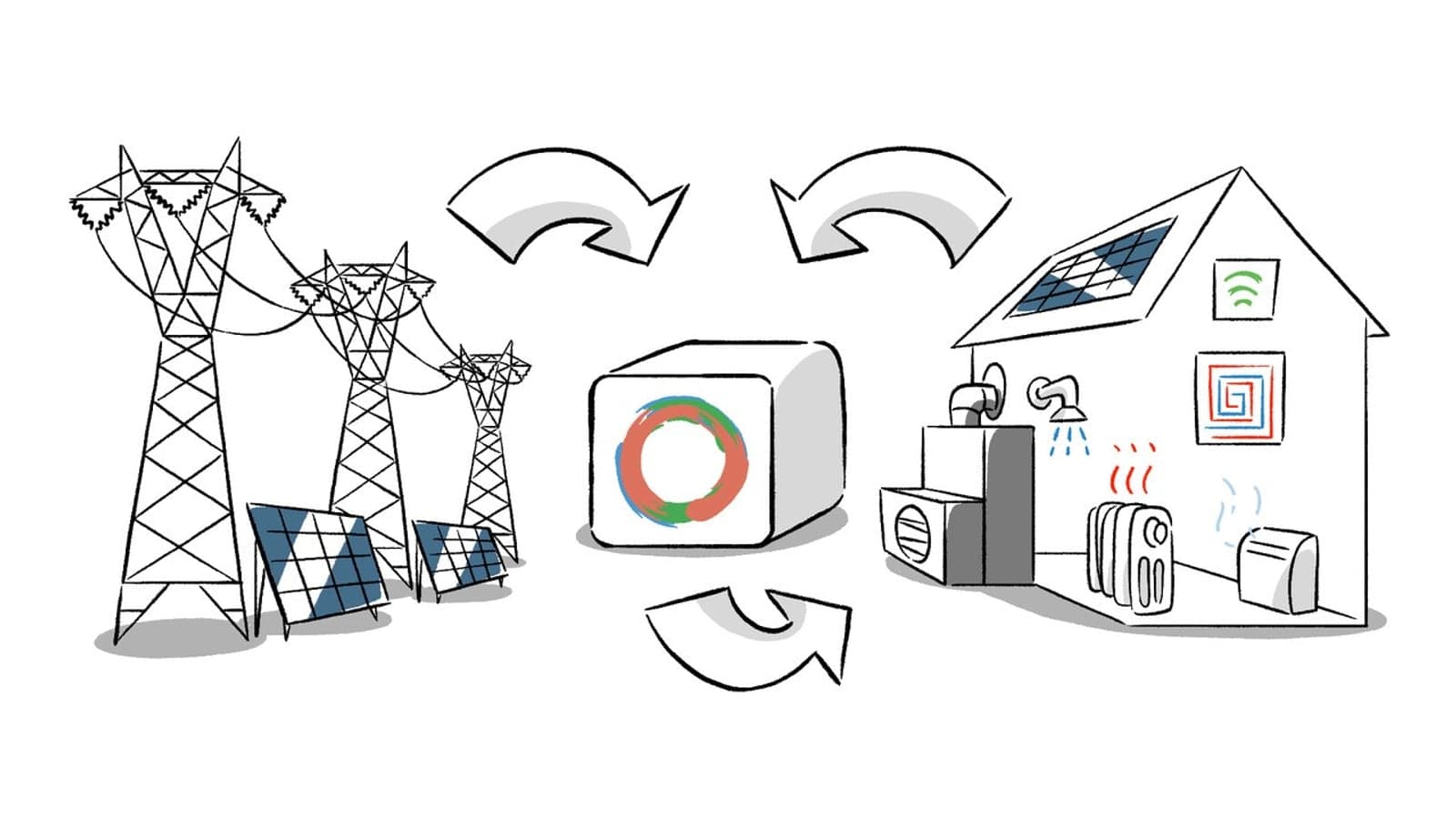
Mäki, a Smart Energy System Research Professor with VTT in Finland, explains that while microgrids and islanded networks have long been studied, the focus is now increasingly on whether existing distribution grids can be dynamically segmented into smaller operational ‘islands’ during disturbances.
This reflects both broader system stress and geopolitical realities shaping resilience thinking.
Said Mäki: “There has been a long tradition in the research side for looking at micro grids and islanded networks. But now I think there is more and more interest on how we can use the existing distribution grid and divide this into smaller islands when needed.”
For Mäki, this is enabled by structural change at the grid edge.
He highlights the growing penetration of distributed energy resources—solar PV, batteries, and EVs—as foundational to making localised operation viable.
Smart transformers are like a local node, they keep the grid around them alive, even if there is no feed from the upper level
“We have PVs, we have batteries, we have EVs that can also feed into the grid and we also see that it would be possible to form standalone islands utilizing all these together.”
Importantly, he adds, this wouldn’t be a full off-grid transition, but rather added as a conditional layer of resilience. The aim is continuity at the local level when higher-voltage systems fail, rather than permanent separation from the main grid.
Smart transformers and grid-forming nodes
A recurring theme in Mäki’s view is the importance of ‘nodes’ that can sustain local operation.
He describes smart transformers as one example of this emerging architecture, acting as local anchors that can maintain system stability even when upstream supply is disrupted.
“They are like a local node, they keep the grid around them alive, even if there is no feed from the upper level,” said Mäki, stressing that this capability is not inherent—it depends heavily on storage. Batteries, PV, or hybrid systems are required to provide the necessary energy backbone.
Beyond transformers, Mäki also points to the development of battery clusters as alternative resilience nodes. These installations, he suggests, can serve a similar function to smart transformers when equipped with the right control systems.
The critical technical requirement underpinning both approaches is grid-forming capability. Without it, distributed devices remain dependent on an already stable grid.
“Most of our devices are grid following… they require the grid to be there first and then they can feed in,” Mäki notes, adding that resilience requires at least one component capable of black-starting or establishing local frequency and voltage conditions.
More on grid resilience:
Powering grid resilience amid rising demand and system complexity
How to enhance utility resilience through digital transformation
Rethinking UK grid resilience in response to energy shocks
What makes islanding possible?
When asked what determines whether a section of the distribution grid can successfully operate as an island, Mäki frames the answer as a combination of technology, control, and behaviour.
At the technical level, grid-forming capability is essential to maintain frequency and voltage stability. But this alone is insufficient.
A second requirement is load management. In disturbance scenarios, not all demand can be served, meaning prioritisation becomes necessary. This may involve identifying critical loads or simplifying demand reduction through communication rather than complex automation at the household level.
Mäki suggests that operational simplicity may be more realistic than full automation. In extreme cases, customers may simply need to be instructed to reduce consumption manually.
"There are different ways to look at it, but we need to somehow try to focus on only the most important loads. If we have a major event, it's perhaps about just informing people to please use only what is really necessary.
"That's more simple than having an automation at every home and controlling what can be on and what can be off."
A third layer is regulatory clarity. He notes that roles and responsibilities during exceptional grid conditions are not always clearly defined, particularly around quality of supply and accountability during partial service operation.
From market operation to disturbance operation
One of the more structural challenges Mäki identifies is the transition between normal market-driven operation and emergency grid operation.
Under normal conditions, assets such as batteries, EV charging infrastructure, and PV systems operate primarily as market participants providing flexibility services.
However, during disturbances, these same assets would need to shift function rapidly toward system support.
This raises unresolved questions about coordination. Aggregators, for example, manage large portfolios of distributed assets, but it is unclear how these resources would be “handed over” to system operators during a major disruption.
As Mäki puts it, the system lacks clear processes for transitioning market-based assets into resilience infrastructure when needed.
They should be on a normal market under normal conditions…but then whenever we are in a disturbance mode, they can provide resilience.
The shift toward distribution-level resilience also introduces an investment tension for DSOs.
According to Mäki, resilience investments are inherently difficult to justify because they are designed for events that, ideally, never occur. DSOs must therefore weigh traditional reinforcement strategies—such as building more lines or undergrounding cables—against investments in distributed flexibility and islanding capability.
He argues that resilience cannot be treated as a standalone investment case. Instead, enabling technologies must serve dual purposes: supporting normal market operation while also providing emergency functionality when required.
“They should be on a normal market under normal conditions… but then whenever we are in a disturbance mode, they can provide resilience.”
This dual-use requirement is central to making the economics viable.
Communication and digital dependencies
Beyond physical infrastructure, Mäki highlights a less visible but critical vulnerability: communication systems.
He notes that distributed islanding depends heavily on remote control and data exchange. However, in severe outages, communication networks may also fail, limiting the ability to coordinate local islands.
“Normally, when we lose electricity, we will also lose communication,” Mäki explains, identifying this as a fundamental constraint on real-world deployment.
“We need to have remote control switches, and we need to have the communication channels open.”
This creates a paradox: while digitalisation enables local control and segmentation, it also introduces dependency risks that must be addressed through resilient communication architectures embedded within local clusters.
Emerging use cases and key technologies
While full-scale deployment of clustered distribution grids remains limited, Mäki confirms that pilots and modelling work are actively underway.
Most research activity has focused on simulation and system analysis rather than widespread operational islanding.
However, he points to early examples such as commercial battery installations in Finland incorporating grid-forming capability, which offer a glimpse of how future systems may operate.
These pilots suggest that the concept is moving from theory toward early-stage implementation, albeit unevenly.
Looking at the transition from the normal, market-based operation, into some kind of disturbance operation is something we should prioritise clarifying...
And when asked about the most promising technologies for distribution-level resilience, Mäki identifies three core building blocks: grid-forming inverter capability, battery storage, and advanced control and management systems.
Together, these form the foundation of any scalable islanding architecture.
However, he also emphasises that technology alone is not sufficient.
The system-level challenge lies in coordination—between DSOs, aggregators, technology providers, and customers—particularly during transitions from market operation to emergency operation.
“Looking at the transition from the normal, market-based operation, into some kind of disturbance operation is something we should prioritise clarifying, because these aggregators actually have a lot of assets in their portfolios that they are playing on the market.
“But I don't know about whether there are established processes in case there’s a major disturbance, and how the aggregators would somehow hand over their assets to the grid utility, for instance.
“So, how we can use these market-driven assets for resilience when needed is quite unclear.”
Indeed, without clear roles, incentives, and behavioural expectations, even the most advanced technical systems may struggle to deliver resilience in practice.
Related tags
Latest content
+2
How to enhance utility resilience through digital transformation
In this Energy Transitions podcast, Lobna El Gammal and David Cashman of EY talk about how utilities can maximise preparedness for major events, the role digital technologies can play, and why there is no time to waste in doing so.
- Enlit Editorial Team
- 14/04/2026