Collaboration critical as fusion developers push toward MW-scale pilots
Jonathan Spencer Jones
Posted on: 22 February 2026
Fusion is advancing rapidly but further technology innovation is needed to address the near term challenges, the IEA indicates.
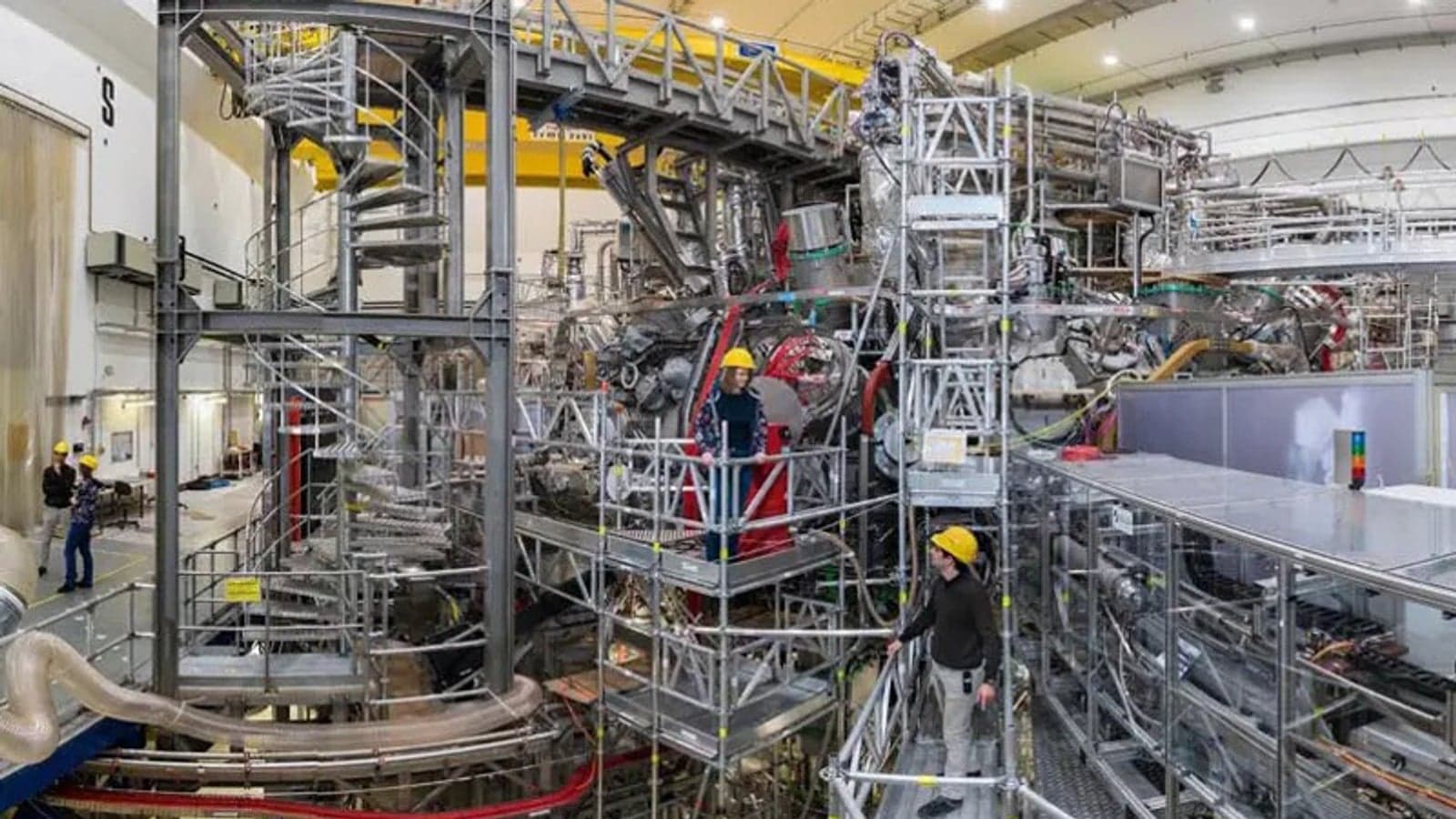
In its State of Energy Innovation 2026 report, the IEA highlights advances in sustained plasma operation in stellarators at high performance, demonstrating clear progress toward magnetic confinement fusion as one of the prominent advances from 2025.
The example refers to the Wendelstein 7-X research facility operated by the Max Planck Institute for Plasma Physics in Greifswald, Germany, which set a world record by maintaining a plasma at elevated temperature and density for 43 seconds, reaching the highest so-called ‘triple product’ measuring the closeness of the plasma to becoming self-sustaining in stellarators.
This is the first time a stellarator has matched – with a different fuel – the long-pulse performance levels previously associated with large tokamaks, the report points out, stating that most innovation effort in fusion currently is directed at the different approaches to confining the fusion plasma so that it can achieve ignition.
These are magnetic confinement with strong magnetic fields, inertial confinement with rapid compression and heating of a fuel pellet, and magneto-inertial confinement combining aspects of the two approaches.
Within each of these, there are competing designs for the reactor and fuel, as well as other operational differences, at different Technology Readiness Levels.
Also of interest
Energy innovation funding going through transition says IEA
Meet the ‘fusionista’ ready to deliver on the promise of fusion energy
Aside from plasma confinement, there are significant innovation needs for integrating the confinement system into a larger facility that can provide a continual fuel supply, capture the energy produced and convert it to useful outputs, such as electricity, the report adds.
Many of these components need not be specific to a particular confinement approach but, given the state of plasma confinement demonstration, these integration technologies have not yet been extensively designed or optimised.
As developers seek to scale up, the scope of fusion innovation is also broadening, the report notes. In particular, engineering problems – such as the serial production of magnets, material durability and low-cost fuel supplies – are coming into sharp focus.
It also notes that to date, fusion energy research has been notable for high levels of collaboration between public programmes, companies and different countries, which will continue to be essential through the next stages of testing and scale-up.
However, while given the scale of development ahead, the various teams focusing on different aspects are not in direct competition, with funding limited, they are in competition for the next project financing. It must therefore be spread appropriately to cover the outstanding knowledge gaps.
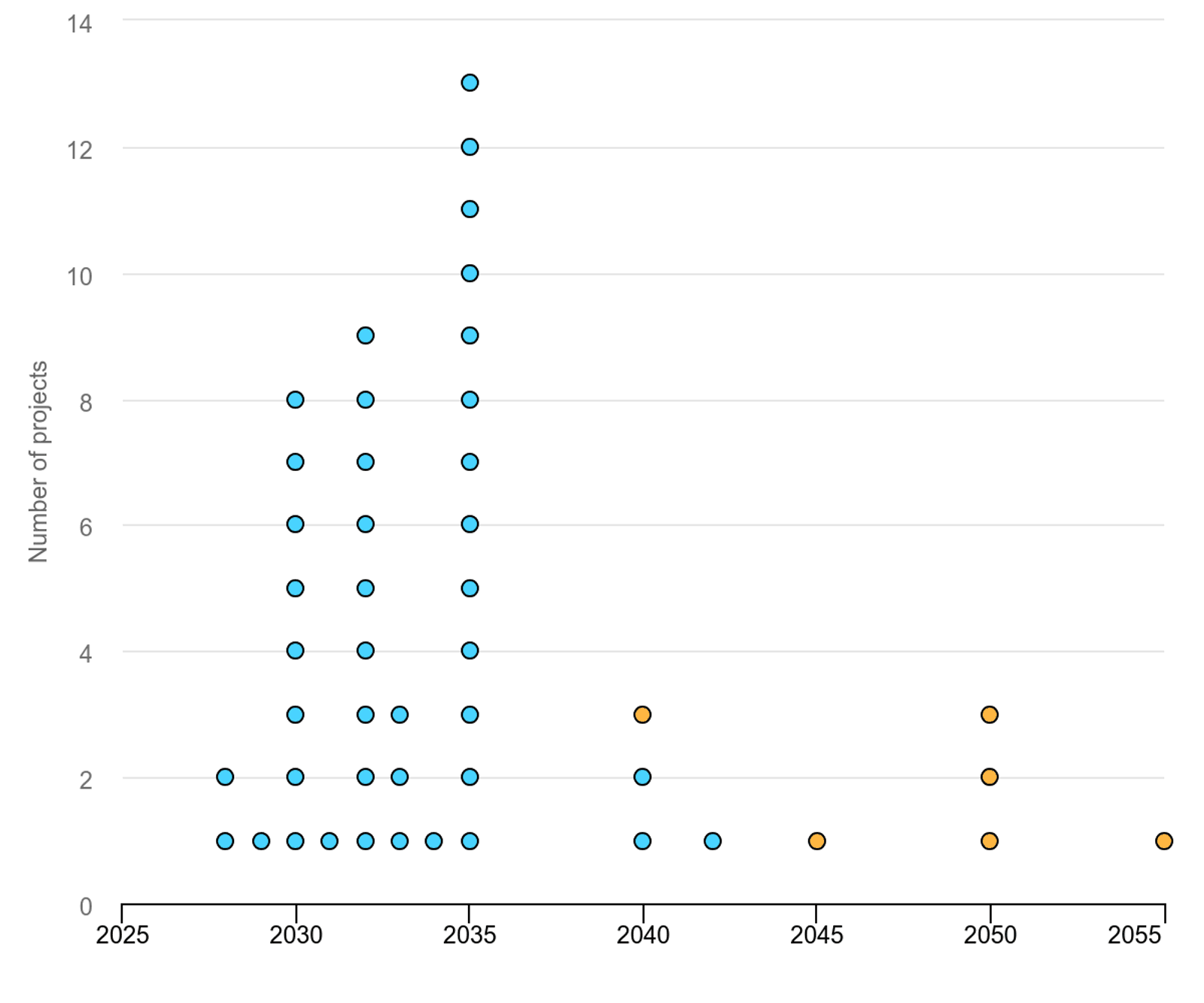
Milestone challenges
The report identifies five milestones, with knowledge gaps to meet.
- Demonstrate with high reproducibility Q=10 – the threshold generally considered to be the point at which a reactor performs efficiently enough to be integrated into an overall system that produces more electricity output than its inputs.
- Breed and capture tritium fuel at high temperatures without affecting the fusion reaction – essential for the process as long as the deuterium-tritium reaction remains the leading fuel option among developers.
- Develop materials designs that can withstand neutron bombardment and extreme conditions years so they can deliver multi-decade operations without major and costly refurbishments.
- Remove heat from the reaction chamber so it can drive a turbine without interfering with the fusion reaction for efficient, commercial operation.
- Make reactors more compact and reproduceable with acceptable construction times to deliver long term cost competitiveness.
Innovation priorities
The State of Energy Innovation 2026 report comments that with so many avenues of research and approaches to commercialising fusion energy, pinpointing just a few top priorities for governments and investors is difficult.
For some technologies – such as tokamaks, stellarators, laser indirect drive inertial confinement and leading magneto-inertial confinement approaches – there are clear and essential next steps: demonstrate engineering breakeven, finalise engineering design and then build MW-scale pilot reactors.
For other approaches, smaller-scale projects are needed wherever experts agree that the concepts have long-term potential to accumulate gigawatts of installed capacity.
With the high level of collaboration, a priority to enable development to proceed as fast as practicable is to reinforce the institutions that facilitate bilateral and multilateral collaboration and burden sharing. No country alone can take on all the pilot and demonstration projects that are proposed, and all these projects could hold insights for their peers in partner countries.
The report adds areas that are natural candidates for international cooperation, and that can inform advances across different technological areas and scale, including materials development and testing; tritium breeding and alternative fuels; novel coolants; waste management; and regulatory approaches that protect citizens while enabling faster permitting for lower radioactivity levels compared with nuclear fission.