Grid tech roundup: why stability is taking centre stage
Yusuf Latief
Posted on: 21 February 2026
Belgian battery stabilises grid, solid state transformers win $140 million, and South Korea sees landmark e-STATCOM pact as IEA calls for more innovation.
Grid stability has taken centre stage across the globe in recent weeks, with new partnerships, financing and milestones announced to bring data centre projects online, ensure grid resilience and drive innovation.
To start with, AMI company Trilliant has partnered up with data and AI tech company Atombeam in the US to accelerate the movement of data on the power grid, which the companies say will enable “a profound shift in security”.
Also in the US, start-up Heron Power, founded in 2025 by former Tesla executive Drew Baglino, has raised $140 million to build a 40GW, automated manufacturing facility for its solid-state transformer solution for critical energy and AI data centre projects.
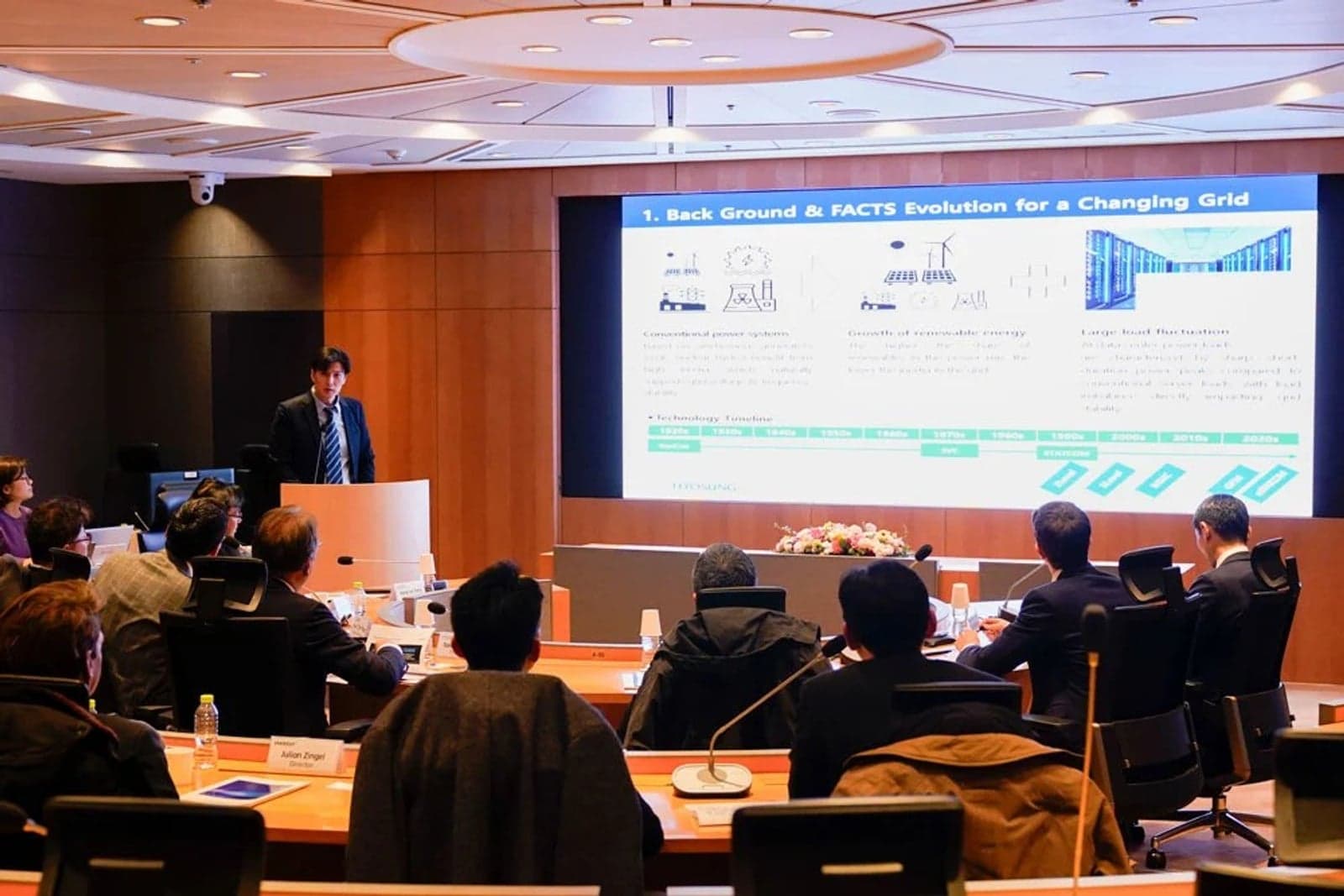
Data centre projects also took focus in a deal between tech company Skeleton Technologies and Hyosung Heavy Industries in South Korea to cooperate on the country’s first domestically produced next-generation e-STATCOM grid stabilization solution.
And last but not least, over in Belgium, Wärtsilä has been selected to deliver a 50MW/100MWh battery energy storage system which it says “will play a vital role in balancing the grid".
All this comes as energy tech innovation has been placed as a critical topic on the global agenda. The IEA in its latest State of Energy Innovation report called for more innovation of grid stability technology while also lauding the innovation that batteries specifically have seen in the recent years.
Data compaction for the digital grid
The partnership between Trilliant and Atombeam centres on advanced metering infrastructure and grid-edge communications at a time when utilities are integrating more variable renewables, smart meters and edge devices.
Trilliant operates a device-independent communications platform that manages more than 2.7 terabytes of data daily, supporting utilities and smart cities in modernising their grids. But as operators push more data across networks originally not designed for this scale, bandwidth constraints, latency and data security become stability issues in their own right.
Atombeam’s Neurpac product uses what the company calls ‘Data-as-Codewords’ technology. According to Atombeam, this AI-powered tech reduces the size of data by 75% and increases available bandwidth by a factor of 4x or more, while making data more secure even before encryption is applied.
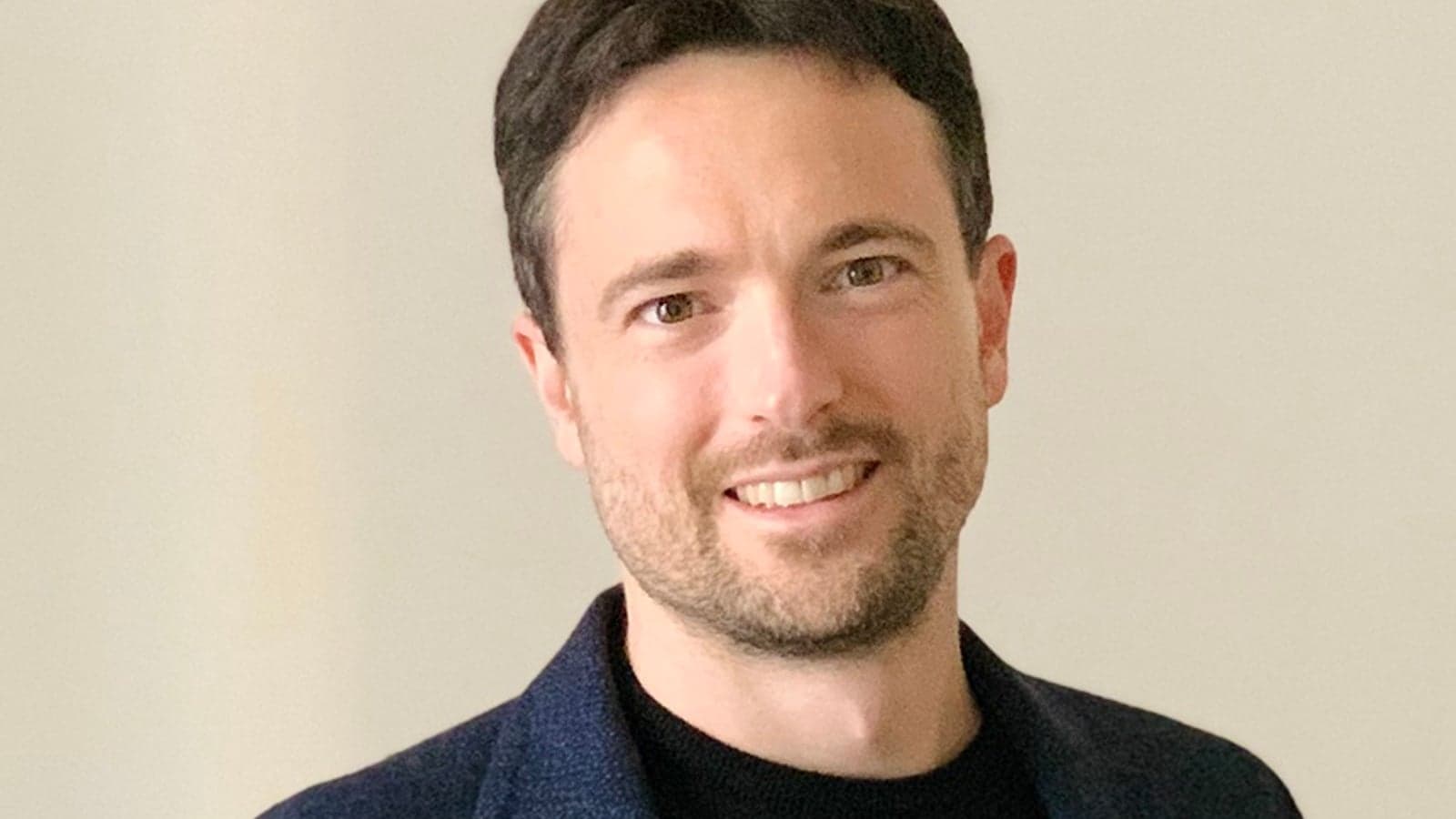
Atombeam founder and chief executive Charles Yeomans said: "Trilliant revolutionised the very concept of the modern grid by providing customers with a platform that delivers a paradigm shift in performance and can be built with the meters and devices of their choice.
“In turn, Neurpac makes it possible for operations to exponentially accelerate the movement of data on those same grids – eliminating latency, dramatically increasing available bandwidth and enabling a profound shift in security – all with software that's light enough to protect and optimise even the smallest sensors at the edge.”
The companies position the partnership as a way to strengthen how grid data moves from the edge to the Head End System, enabling real-time analytics without overloading communications infrastructure or increasing transport costs — a digital layer of grid stability.
Solid-state transformers for faster interconnection
Heron Power’s $140 million Series B financing, co-led by California-based venture capital firm Andreessen Horowitz and Bill Gates-founded Breakthrough Energy Ventures, will fund a 40GW, highly automated US manufacturing facility for Heron Link.
Heron Link is designed to streamline the connection of low-voltage DC technologies — including solar, batteries and AI computers — to medium-voltage AC grids without the use of traditional transformers.
Using modern power semiconductors and a modular architecture, Heron says its solution eliminates tiers of legacy electrical equipment for data centre, solar and storage projects.
Exclusive: Why Ann Mettler believes now is the time to catalyse Europe
Europe urgently needs to address its deindustrialisation and avoid replacing old dependencies with new ones, says former Vice President of Breakthrough Energy, Ann Mettler.
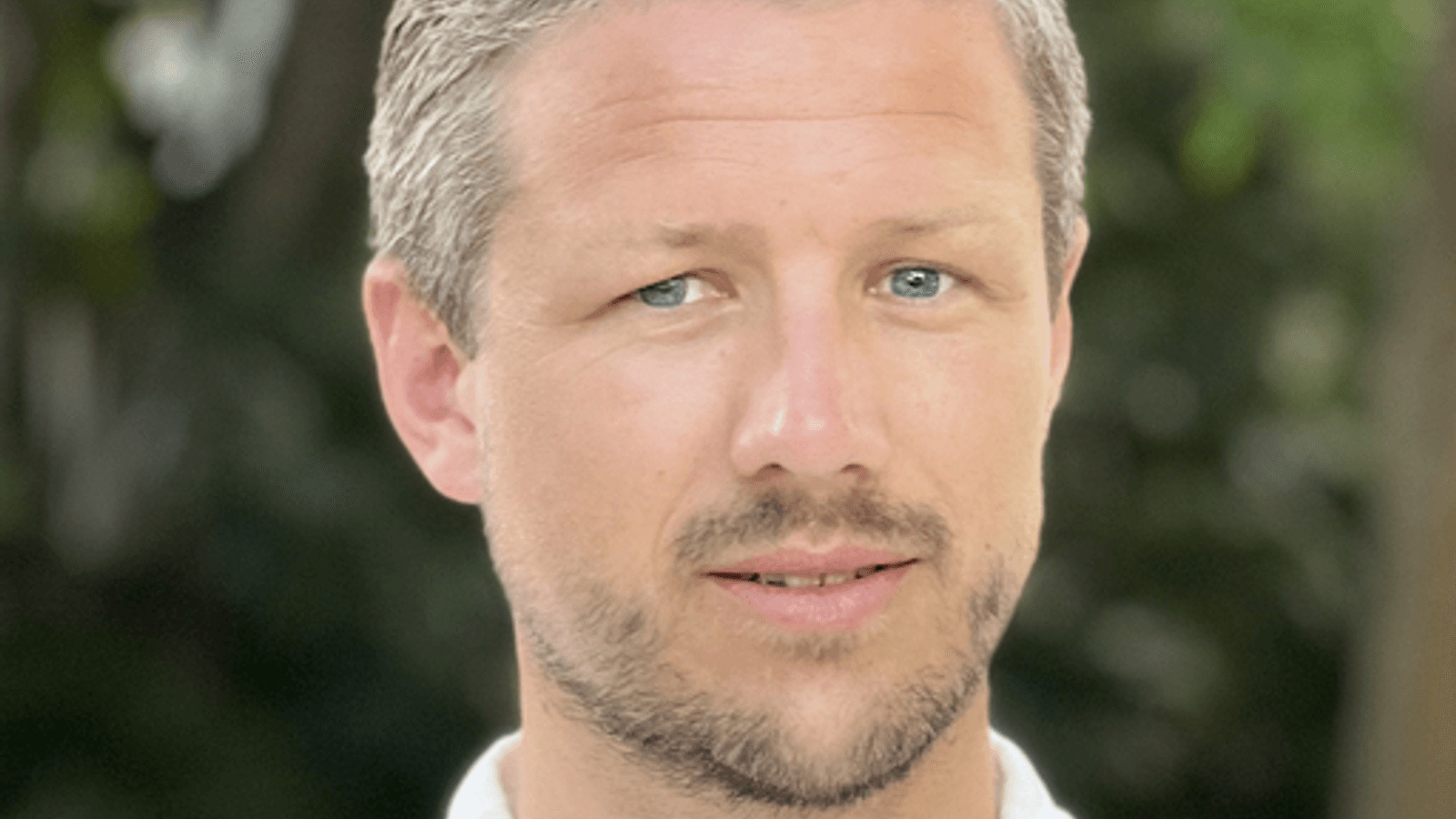
The company’s founder and chief executive Drew Baglino, the former senior vice-president of Powertrain and Energy for Tesla, commented that too much of today’s electrical infrastructure is “passive, clunky equipment designed decades ago”, framing Heron’s approach as enabling projects to come online faster while allowing the grid to operate more reliably and scale affordably.
With more than 40GW of early interest identified through customer partnerships, the company is targeting a key grid bottleneck: the long lead times and rising costs associated with conventional transformers, at a time when electricity demand and data centre buildout are accelerating.
e-STATCOM for Korea
Estonia-based manufacturer Skeleton Technologies has signed a strategic MoU with Hyosung Heavy Industries, together with Marubeni Corporation, to cooperate on South Korea’s first domestically produced next-generation e-STATCOM grid stabilisation solution, with commercialisation targeted for 2027.
The partnership integrates Skeleton’s supercapacitor-based high-voltage rack into Hyosung’s STATCOM (Static Synchronous Compensator) platform.
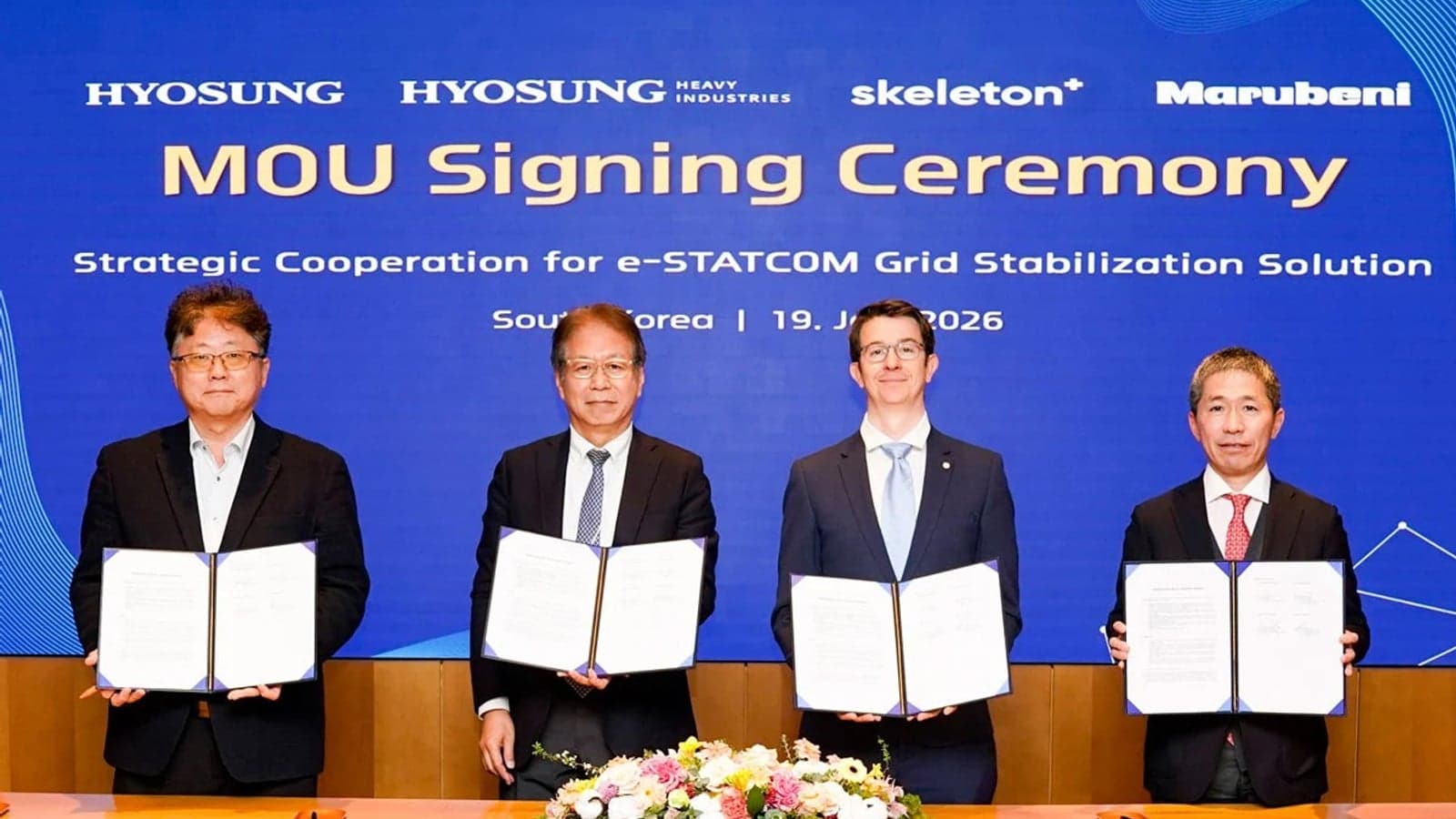
The e-STATCOM is designed to enable both reactive and active power compensation by combining STATCOM functionality with high-power energy storage systems.
This new class of grid stability solutions, the company said, will be able to address the structural stresses created by renewable energy penetration and the rapid rise of AI data-centre loads.
According to the companies, the solution will deliver rapid energy injection, virtual inertia and fast response during grid disturbances, describing e-STATCOM as essential infrastructure for resilient, high-performance power systems in an era of growing volatility.
Cho Hyun-joon, Chairman of Hyosung Group, emphasised that the global power market is entering a super-cycle driven by the convergence of AI and renewable energy. He underscored Hyosung Heavy Industries’ ambition to lead the development of next-generation grid technologies and reshape the global power grid landscape.
More on Skeleton Technologies: Skeleton opens Europe's largest supercapacitor factory in Germany
Battery storage for ancillary services
Wärtsilä has begun construction of a 50MW/100MWh battery energy storage system for Gramme Storage 1 in central-eastern Belgium, with completion expected by Q2 2027.
The project will participate in Belgium’s Capacity Remuneration Mechanism, which is designed to ensure energy supply security by enabling assets to deliver essential grid services such as frequency and voltage support.
Guillaume Poncelet, Managing Director at Kallima Energies, said the system will deliver “dependable, flexible energy” and play “a vital role in balancing the grid”.
Gramme 1 will utilise Wärtsilä's GridSolveTM Quantum2 energy storage system together with its control and optimisation software, GEMS, to deliver a solution that enhances grid flexibility, reliability, and sustainability.
Wärtsilä will also deliver the project under an engineered equipment delivery contract, with guaranteed asset performance under a separate long-term service agreement. With this project underway, Wärtsilä’s energy storage portfolio in Europe now exceeds 2.7 GWh.
The Finnish company said its GridSolveTM Quantum2 energy storage system, together with its GEMS control and optimisation software, will provide a fully integrated solution enhancing grid flexibility, reliability and sustainability, underscoring the scale at which batteries are being deployed to support system stability.
Proven tech, slow uptake
All this comes with the IEA’s latest State of Energy Innovation report as a backdrop, placing innovation, particularly on grid stability, as a critical topic on the global agenda.
According to the report, energy technologies now represent multi-trillion dollar global markets, with the energy sector increasingly becoming an innovation powerhouse spanning batteries, transformers, turbines, motors and heat exchangers.
At the same time however, the report notes that as grid operators face a range of challenges, there is sluggish uptake of technologies that can address them.
In the report, the IEA identifies four major technical challenges facing electricity systems: ensuring real-time stability and power quality; system adequacy and flexibility; physical resilience; and effective grid governance, interoperability and cybersecurity.
It lists mainstream technologies still not used in many grids, including HVDC systems, static compensators and frequency converters, renewables forecasting tools, synchronous condensers, large-scale stationary batteries, and telecommunications for enhanced monitoring and control at the edges of the grid.
Technologies available to the market for the past decade, but with uptake remaining low, include grid forming inverters, DERMS, VPPs, DLR, and grid digital twins.
There is also a smaller number of early-stage low technology readiness level technologies that, with further adaptation, could potentially be successfully transformed into improved products.
However, except for certain proposals for long-duration energy storage in novel batteries or thermal or mechanical processes, there are very few entirely new classes of technology at low TRL for which there are still high uncertainties about capabilities.
This group of technologies includes E-STATCOMs, high-temperature superconducting cables, smart transformers, AI-powered grid health monitoring and forecasting, and multi-terminal HVDC networks.