Why the UK should harness its hidden geothermal potential
Guest/partner contributor
Posted on: 5 March 2026
Clear policy, long-term investor confidence and public awareness are urgently needed to realise the vast potential of the UK's geothermal sector, writes Jordan Weddepohl of Arup.
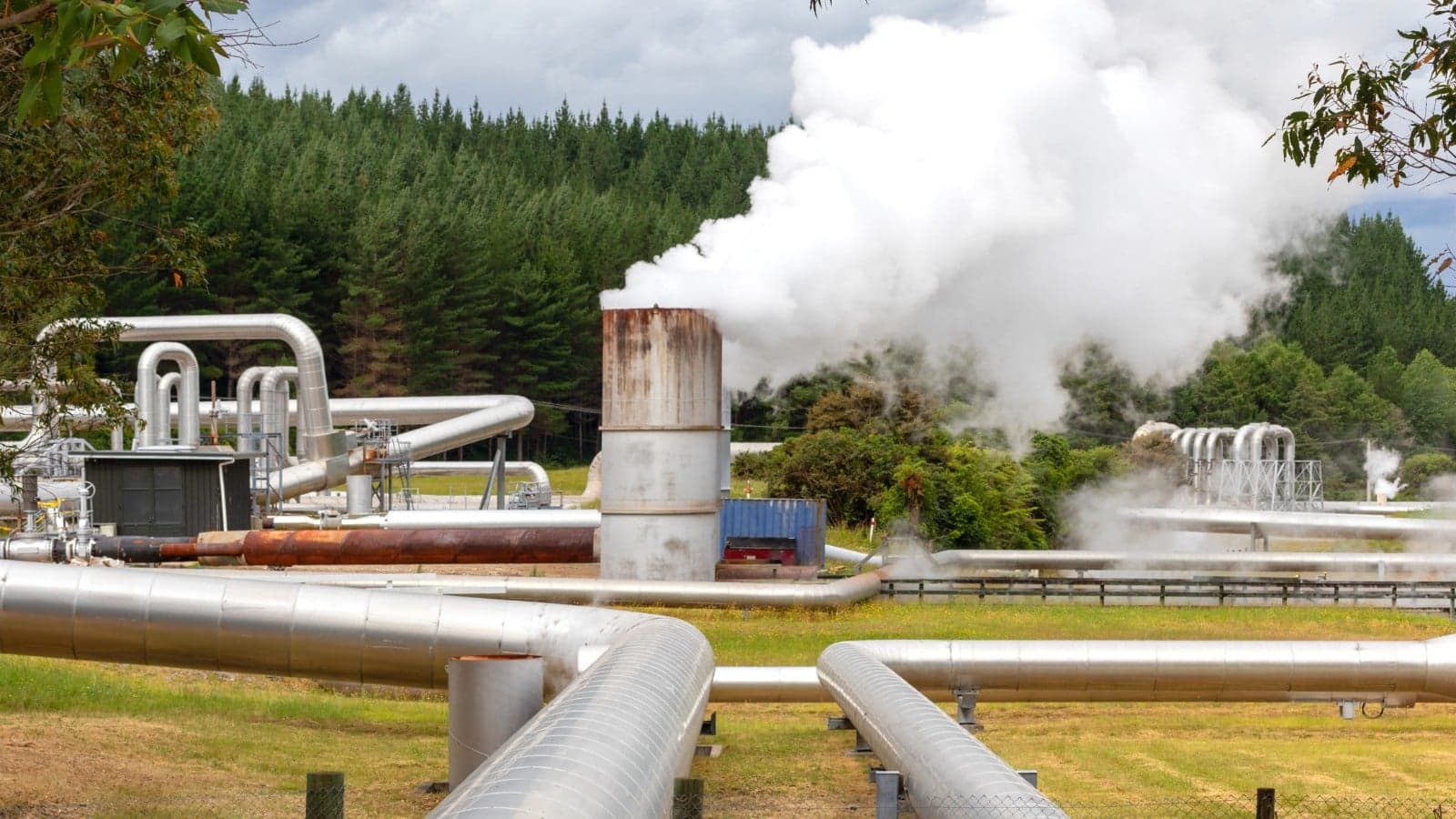
In the UK, geothermal energy’s primary value lies in providing firm, low‑carbon heating and cooling that helps reduce winter peak electricity demand and wider system costs. Electricity generation will likely remain modest, limited to favourable geological regions.
The sector is still at an early stage. High upfront costs, uncertain market routes and limited financial support have slowed deployment, meaning geothermal currently supplies less than 0.3% of the UK’s annual heat demand. Yet the underlying resource is significant and sector activity is building. New deep‑geothermal proposals are progressing, mine‑water and district‑heating schemes are scaling, and ground‑source heat pump (GSHP) uptake continues to rise, with more than 55,000 installations nationwide.
Shallow geothermal systems, particularly ground‑source heat pumps coupled with underground thermal‑energy storage, offer a low-operational-cost, scalable route to decarbonising heating and cooling reducing peak‑load pressures on the electricity grid.
Deep geothermal presents an additional opportunity for larger‑scale, baseload heat and can act as a supply for district‑heating networks. However, deployment has yet to reach commercial scale. Early exploration and drilling remain complex and costly, and without stronger national support, the financial risk and uncertainty may be off-putting to developers.
Have you read?
UK’s first geothermal plant starts powering the grid
Scotland's Aberdeen instals sensors to measure geothermal potential
Despite these challenges, geothermal heat remains a stable, domestic, low‑carbon resource with a wide range of potential uses.
Unlocking this opportunity would strengthen energy resilience, reduce reliance on imported fuels, and support the UK’s long‑term progress towards net‑zero.
Learning from global pioneers
Natural variations in geology mean that for some countries, geothermal power is much easier, and economical, to harness. Indonesia, for example, lies along the Pacific “Ring of Fire”, where volcanic activity generates vast sub-surface heat. As a result, the country possesses some of the world’s largest geothermal power resources. Similarly, Türkiye sits on an active tectonic belt and leads Europe in geothermal power generation as a result.
By contrast, the UK must drill several kilometres deep to access high enough temperatures for electricity generation. Greater depth increases drilling costs and technical risks, raising investment barriers. While geothermal power will not displace wind or solar in the UK, it can complement them where geological conditions allow. The role of geothermal energy becomes increasingly important as the UK experiences increasingly extreme and unpredictable weather affecting the reliability of other renewables.
Unlike variable renewables, weather has no effect on geothermal energy and so it operates continuously. As the UK races to meet its decarbonisation targets, tapping into this constant energy source becomes essential.
The UK’s geothermal potential
Despite the UK’s moderate geothermal gradients of 26–27 °C per kilometre below ground, projects across the UK are already proving geothermal viability. Mine-water schemes in the North supply low-carbon heat, including commercial 2.4MW and 1.2MW systems at Lancaster Wines and a 6MW system in Gateshead serving public buildings, industry and 1,250 homes.
Nottingham University Hospitals NHS Trust is installing a low-carbon heating and cooling system using 64 boreholes drilled to 250 metres. It’s expected to reduce emissions by approximately 10,000 tonnes of CO₂, a 30% reduction that could rise to 43% once gas heating is fully retired.
Similarly, University of York is investing £35 million ($47 million) in a deep-geothermal system to heat its campus, while Cornwall’s United Downs deep-geothermal power plant aims to generate around 3MW of continuous electricity from 2026.
Unlocking wider potential, however, requires longer-term investment strategies, as geothermal assets are designed for 30-year lifespans.
The need for a clear regulatory landscape
Currently, the UK’s regulatory framework for geothermal development is fragmented, with responsibilities split between the Environment Agency, the North Sea Transition Authority and local councils.
This lack of a single, standardised structure slows approvals and creates uncertainty for developers. A unified framework or dedicated regulator could streamline exploration, licensing, and development, reducing delays and embedding geothermal energy within the UK’s wider energy strategy.
Recent UK reforms are helping: heat network zoning will help accelerate district‑heating deployment; the Environment Agency is developing clearer guidance for open‑ and closed‑loop systems, including underground thermal‑energy‑storage permitting; and the Mine Remediation Authority has streamlined approvals for mine-water projects. Together, these steps create a more consistent pathway for geothermal developments.
Also of interest: Geothermal boom will see capacity triple by 2030 says IEA
International examples show the benefits of clarity. Germany, the Netherlands, France, and Belgium have revised national mining or energy laws to formally classify and define geothermal ownership, licensing and regulatory processes. Without comparable clarity, the UK risks losing momentum.
Technological advances unlocking potential
Technological innovation is also expanding opportunities for geothermal development to previously infeasible locations. Enhanced Geothermal Systems (EGS) and Advanced Geothermal Systems (AGS) reduce geological risk by creating the necessary conditions through stimulating rock formations (EGS) or using closed-loop systems (AGS), allowing heat extraction in more locations with greater reliability.
Drilling efficiency is improving too. Polycrystalline diamond compact (PDC) drill bits, adapted from the oil and gas sector, enable efficient drilling with low energy consumption. Recent progress in the United States underscores the pace of change; since 2016, the FORGE and Fervo EGS projects in Utah, US, report fivefold increases in drilling speed, over 60% cost reductions, tripled well outputs, and nearly halved levelised costs since 2016. These advances markedly improve the economic performance of geothermal systems, enabling higher output at reduced cost, and could have knock‑on impacts that strengthen geothermal economics globally.
Additionally, artificial intelligence and advanced computational models now help predict reservoir behaviour, temperature and pressure, optimising performance throughout a project’s life.
Repurposing existing oil and gas wells offers further potential. Arup’s work with Third Energy (now CeraPhi) in North Yorkshire demonstrated how converting an existing well into a standing-column geothermal system can save millions in drilling costs and reduce environmental impact. However, feasibility depends on proximity to heat demand; with heat networks costing around £1 million ($1.3 million) per kilometre, demonstrating the need for supply and demand to align.
Building public awareness
Perhaps the most underrated barrier to geothermal development in the UK is communication. Within the sector, enthusiasm is high, but outside it, awareness remains low. Many policymakers, developers, and members of the public simply do not realise that geothermal energy is a viable domestic resource with both negligible footprint and environmental impact.
A clear, consistent national message is needed to explain what geothermal energy is, where it works best, and how it fits into the UK’s decarbonisation strategy. Public engagement must go hand in hand with transparency. Open access to data from existing projects will help de-risk future developments and build investor confidence and public opinion.
The UK already benefits from active industry groups such as Geothermal UK and National Geothermal Centre, advocacy organisations, and engaged politicians such as Minister Whitehead who holds responsibility for geothermal. The priority now is to coordinate and amplify these efforts so geothermal becomes widely recognised as a credible, long‑term part of the UK’s energy system.
A stable future beneath our feet
Shallow geothermal systems, particularly GSHPs with thermal‑energy storage, offer reliable, efficient heat and cooling at megawatt scale, easing pressure on the electrical grid.
Deep-geothermal offers baseload heat and can supply district‑heating networks. Although the market is still emerging and capital costs remain high, there is substantial potential for cost reduction as drilling markets mature.
By contrast, geothermal electricity generation will likely remain modest. It will not displace wind or solar but can complement them where the geology supports power production. When the wind is not blowing or the sun is not shining, geothermal power plants continue to operate at 85–90% capacity.
The UK already has the technical expertise and early success stories to prove that geothermal works here.
What is missing is coordination: clear policy, long-term investor confidence, and public awareness. By integrating geothermal energy where feasible, the UK can transform how we think about heat and power.
Beneath our feet lies a reliable, low-carbon energy source waiting to be tapped – it is time to bring it to the surface.
ABOUT THE AUTHOR:
Jordan Weddepohl is Senior Geologist at engineering consultancy, Arup. He has practical and technical expertise across geothermal, geoenvironmental, and digital domains.