How Australia’s waste-to-energy sector can overcome community resistance
Guest/partner contributor
Posted on: 1 May 2026
Community resistance toward waste-to-energy is largely driven by misconceptions about air pollution and perceived environmental risks, write Kristen Clarke and Lyon McLeod of Ramboll Australia.
Australia’s move into large scale Waste-to-Energy (WtE) is intended to support a more circular economy by reducing landfill volumes while recovering energy and metals, but this shift brings heightened scrutiny of both air emissions and residue management from the outset.
For communities, the central issue is confidence: knowing that emissions are effectively monitored, residues are safely managed, and information is transparent and accessible.
These concerns naturally lead into how best practice design, multilayered monitoring, and rigorous commissioning processes work together to demonstrate that modern WtE facilities can operate safely and reliably.
Resistance from local communities toward WtE facilities persists, largely driven by misconceptions about air pollution and perceived environmental risks. However, where modern WtE is established in regions such as Denmark, Japan, Sweden and the Netherlands, plants have robust flue gas cleaning systems and strict regulatory performance standards.
While the WtE sector in Australia is still in its early stages, the facilities that are operating, under construction or in approval, have been able to adopt similar best practice approaches informed by these advanced international markets, with the management of air emissions and residues produced through the process a key environmental focus.
Air emissions: understanding pollutants
Addressing concerns relating to air emissions begins with a clear understanding of the key air pollutants produced during WtE operations and the air pollution control and monitoring systems designed to control them.
WtE facilities generate several types of air pollutants that require careful control. Key pollutants include oxides of nitrogen (NOx), carbon monoxide (CO), fine particulate matter (PM10 and PM2.5), acid gases such as hydrochloric acid (HCl) and sulphur dioxide (SO₂), gaseous metals like lead and mercury, and trace organic compounds such as dioxins and furans.
These pollutants arise from the combustion of mixed waste and chemical reactions inside the furnace. As such, WtE facilities rely on advanced air pollution control and monitoring systems to manage emissions safely.
Have you read?
How a Swedish waste-to-energy plant is making carbon capture work
From waste to energy: INFERNO's breakthrough in solid state heat recovery
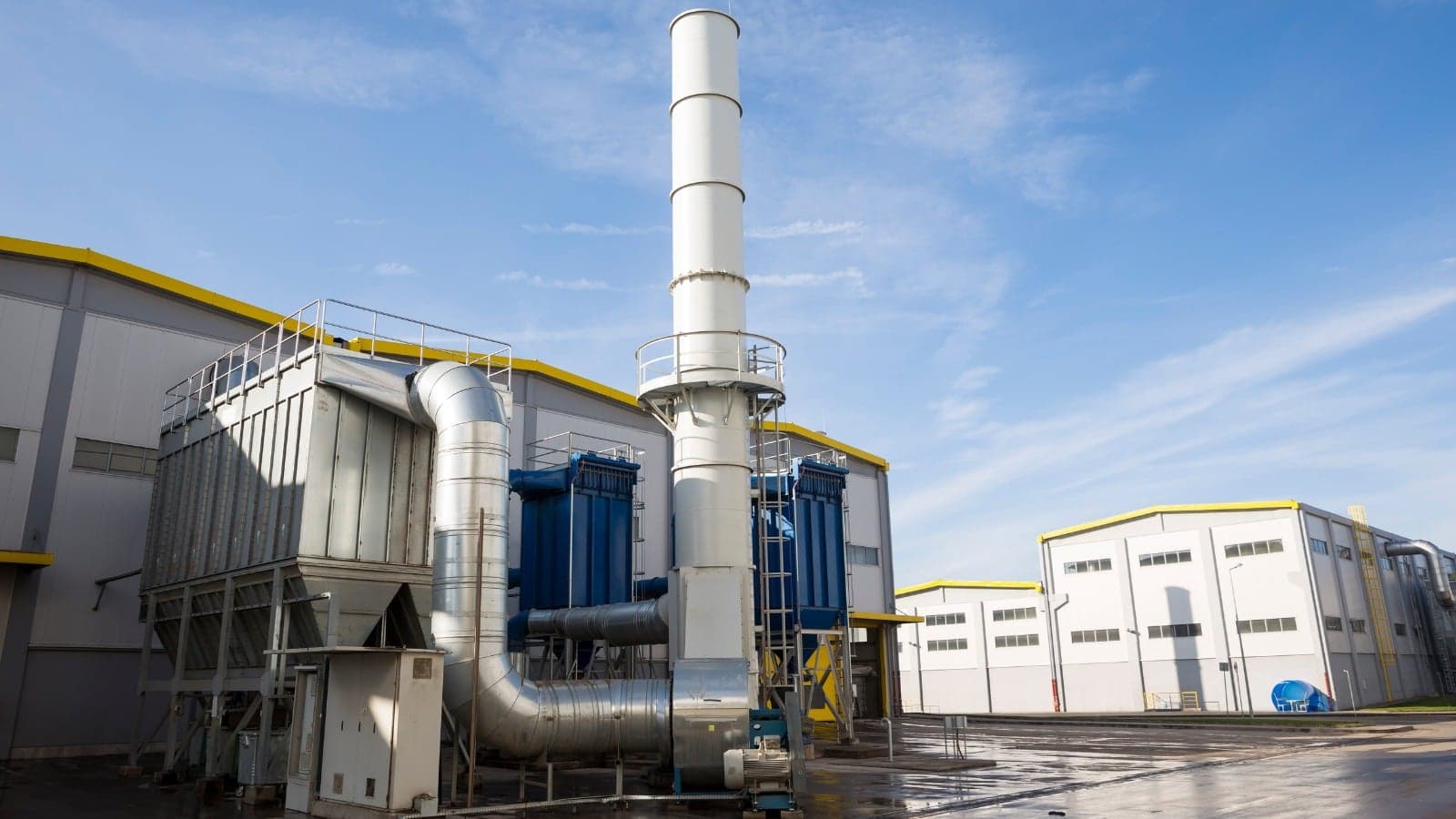
Modern WtE facilities employ bunker management procedures, such as pre-mixing of waste and automated combustion control systems to minimise the formation of pollutants such as CO, NOx and high temperatures to destroy trace organic compounds such as dioxins and furans. After combustion, these facilities use multistage air pollution control systems to remove pollutants before they reach the stack.
Technologies include fabric filters and electrostatic precipitators for particulate control, scrubbers for acid gas removal, activated carbon injection for the abatement of dioxins, furans and mercury, and selective catalytic or noncatalytic reduction systems for NOx abatement.
Emissions monitoring: continuous, periodic and ambient measurements
Because no single technology can measure all pollutants, WtE facilities apply a complementary suite of monitoring methods. Continuous emissions monitoring systems (CEMS) provide real time data for both monitoring and control of pollutants such as NOx, CO, particulates and acid gases. The Western Australian CEMS Code sets installation, verification and performance requirements to ensure data accuracy and alignment with international monitoring standards.
Pollutants such as dioxins, furans and many metals which cannot be monitored continuously and require long duration stack sampling are monitored through periodic testing. Here samples are collected by specialist stack testing service providers for laboratory analysis by National Association of Testing Authorities (NATA) accredited providers.
Stack testing is also undertaken using recognised Australian or US EPA methods to benchmark and validate CEMS performance. In addition, ambient monitoring stations at site boundaries measure ground level concentrations of pollutants such as NOx, PM2.5 and CO to compare against relevant ambient air quality criteria.
These design controls and complementary monitoring systems lay the foundation for responsible emissions management, but their performance must be demonstrated under real operating conditions.
During commissioning, the facility undergoes heightened scrutiny, including verification of air pollution control systems, comprehensive CEMS accuracy checks, and multiple rounds of NATA accredited stack testing for key pollutants. Together, CEMS data, laboratory stack tests and ambient monitoring provide strong assurance that emissions are stable, compliant and safe before full operations begin.
Solid residues: Incinerator Bottom Ash (IBA) and Air Pollution Control residues (APCr)
The other key emissions from WtE facilities are solid residues or ash, including Incinerator Bottom Ash (IBA) and Air Pollution Control residues (APCr).
APCr comprises ash and resides from flue gas treatment and is approximately 10% of total residue from a WtE facility. APCr is a hazardous waste due to a high pH and concentrations of heavy metals. Consequently, until a better option is approved, APCr will require disposal to hazardous waste landfills or treatment and disposal to ‘conventional’ landfills.
Also of interest:
Fortescue speeds up green grid project to curb volatile fossil fuel costs
BESS roundup: Australia’s battery storage sector surges
IBA is the incombustible portion of the waste and comprises the remaining 90% of the residues from a WtE facility. At international WtE facilities, IBA is tested to demonstrate it is ‘non-hazardous’ and is usually processed by extraction of metals for recycling and generation of aggregates that may be used for construction purposes. However, international recovery rates for IBA vary between locations and is generally dependent on local traditions and whether a circular approach to waste management has already been adopted.
Australia’s pathway for residue recovery
In Australia, both WtE facilities and residue recovery are aligned with national waste policy and targets through reducing the volume of waste sent to landfill and the safe recovery of materials for beneficial use. When it comes to the management of waste in Australia, each state has its own legislative framework that requires WtE facilities to characterise the residues during commissioning and start up to ensure they are manged in a way that does not pose an unacceptable risk to human health and the environment.
Commercialisation and safe recovery of IBA requires considerable effort from WtE facilities to demonstrate that IBA can be safely managed outside of a controlled environment such as a landfill. National environmental protection legislation and state waste frameworks for all states, apart from Western Australia (WA), include detailed processes for recovery and beneficial use of a material classified as a ‘waste’.
WtE facilities in development and operation in WA, and in planning and approval in Victoria, New South Wales and Queensland, has resulted in the development of new industry for the management of residues. Companies with international experience, keen to enter the Australian market, have been working to develop sites with the capability of processing WtE residues into products, comprising aggregates and recovery of metals.
Aggregates manufactured from IBA are being assessed for suitability as a construction material (i.e. in bricks or road construction) and an alternative to traditional construction materials, reducing environmental impacts from mining and quarrying (clearing etc).
Building community confidence for long‑term success
Together, best practice design, robust emissions control, comprehensive monitoring and rigorous commissioning demonstrate that modern WtE facilities can operate safely while supporting Australia’s circular economy goals.
Drawing on experience from well-established overseas WtE markets with long-term stable operations, strict emission regulations, established best practice techniques for emission controls and mature residue management practices, Australia’s emerging WtE sector can build the community confidence essential for its long-term success.
ABOUT THE AUTHORS:
Kristen Clarke (Left) is Principal Air Quality Scientist at Ramboll Australia. She has over 18 years of environmental consulting experience and is a Certified Air Quality Professional specialising in air quality impact assessment and management.
Lyon McLeod (Right) is Managing Consultant at Ramboll Australia. He is a Certified Environmental Practitioner with experience in assessing the management options for residues generated from Waste to Energy (WtE) facilities in Australia.
Latest content
+4
The cost of keeping warm: Delivering a just clean heat and cooling transition for European citizens
How the Emissions Trading System 2 (ETS2) raises funds for member states to invest in modernising their energy systems, offering a lifeline to millions of European citizens struggling to pay their energy bills, is explained by Delia Villagrasa, director the Cool Heating Coalition, and Beatriz Yordi, Director Carbon Markets and Clean Mobility, DG CLIMA, European Commission.
- Guest/partner contributor
- 15/07/2025