How the Port of Bilbao is redefining ports' role as energy hubs in Europe
Guest/partner contributor
Posted on: 26 February 2026
The Port of Bilbao has developed an integrated energy model to deliver decarbonisation, resilience and competitiveness, writes CEO Ivan Jimenez Aira.
Across Europe, the energy transition is no longer confined to power plants and grids. It is increasingly shaped by what happens at the edges of the system – where energy meets transport, industry, and cities.
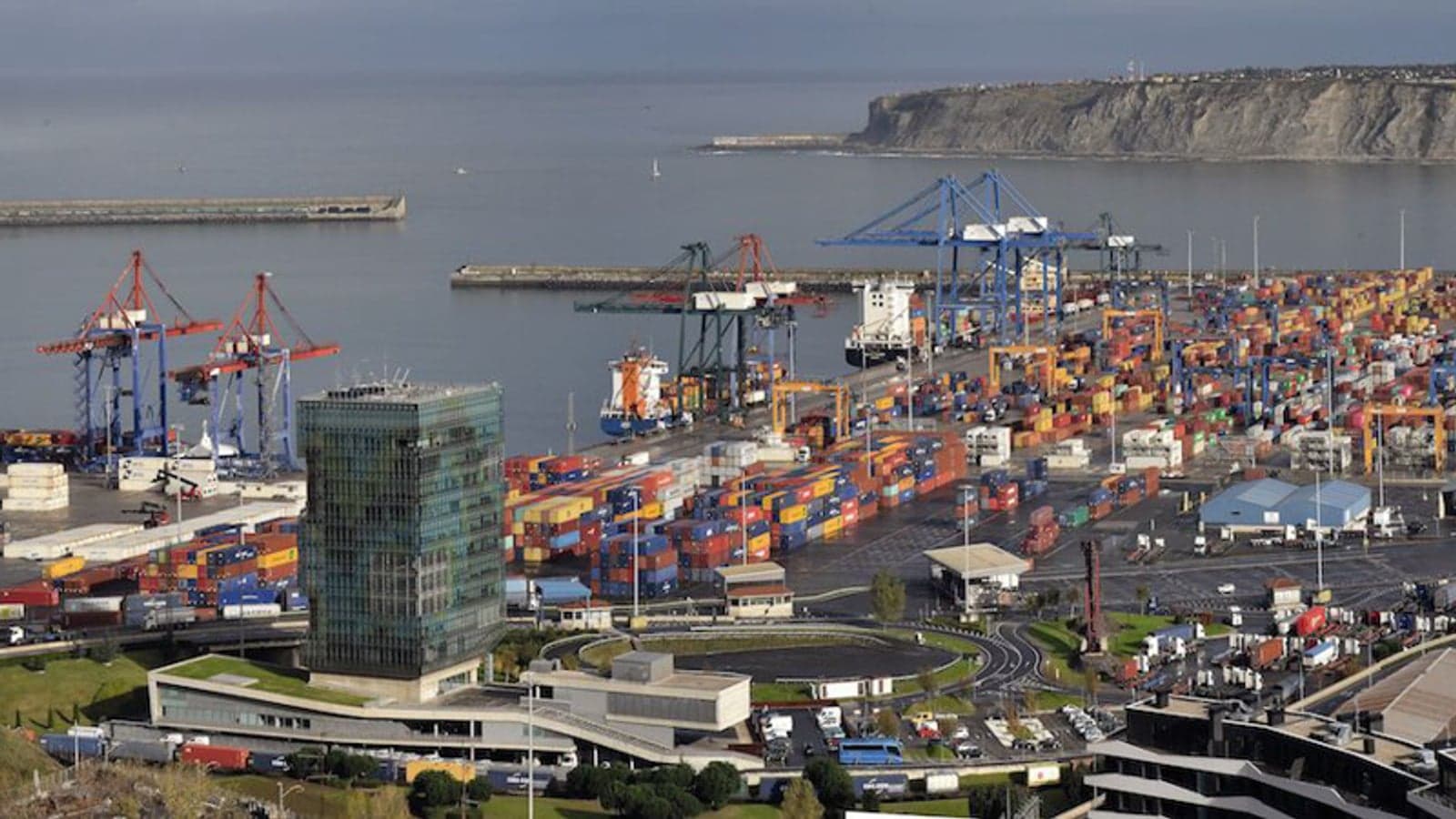
Ports sit precisely at this intersection. They are major energy consumers, strategic logistics hubs and increasingly, platforms for clean energy production and flexibility.
Against this backdrop, the Port of Bilbao has positioned itself as a frontrunner. Through the EU-funded BilbOPS project, Bilbao is not only deploying large-scale onshore power supply (OPS) but also embedding it within a wider port energy model. The ambition goes beyond compliance with Fit for 55 or the Alternative Fuels Infrastructure Regulation (AFIR).
The goal is to secure energy sovereignty, energy security, decarbonisation and support maritime and industrial competitiveness.
Recent debates have underlined a shared challenge: how to scale electrification without overwhelming already constrained grids. Bilbao’s experience offers a practical, system-level answer.
BilbOPS methodology
The Bilbao Port energy model is built around integration rather than isolated assets. Its design reflects a clear understanding that, electric substations, onshore power supply, renewables, storage, digital platforms and governance must evolve together.
Onshore power supply as the anchor
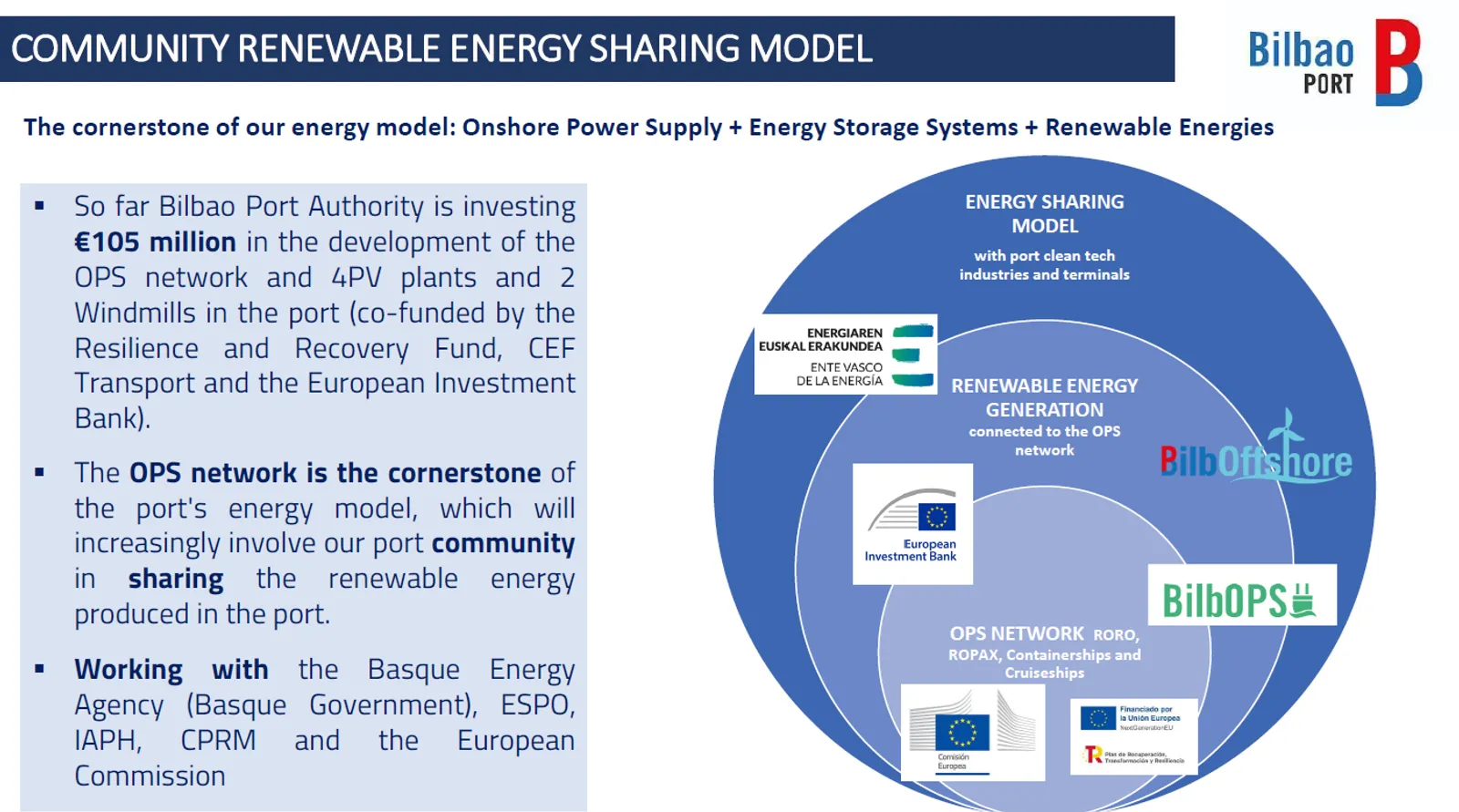
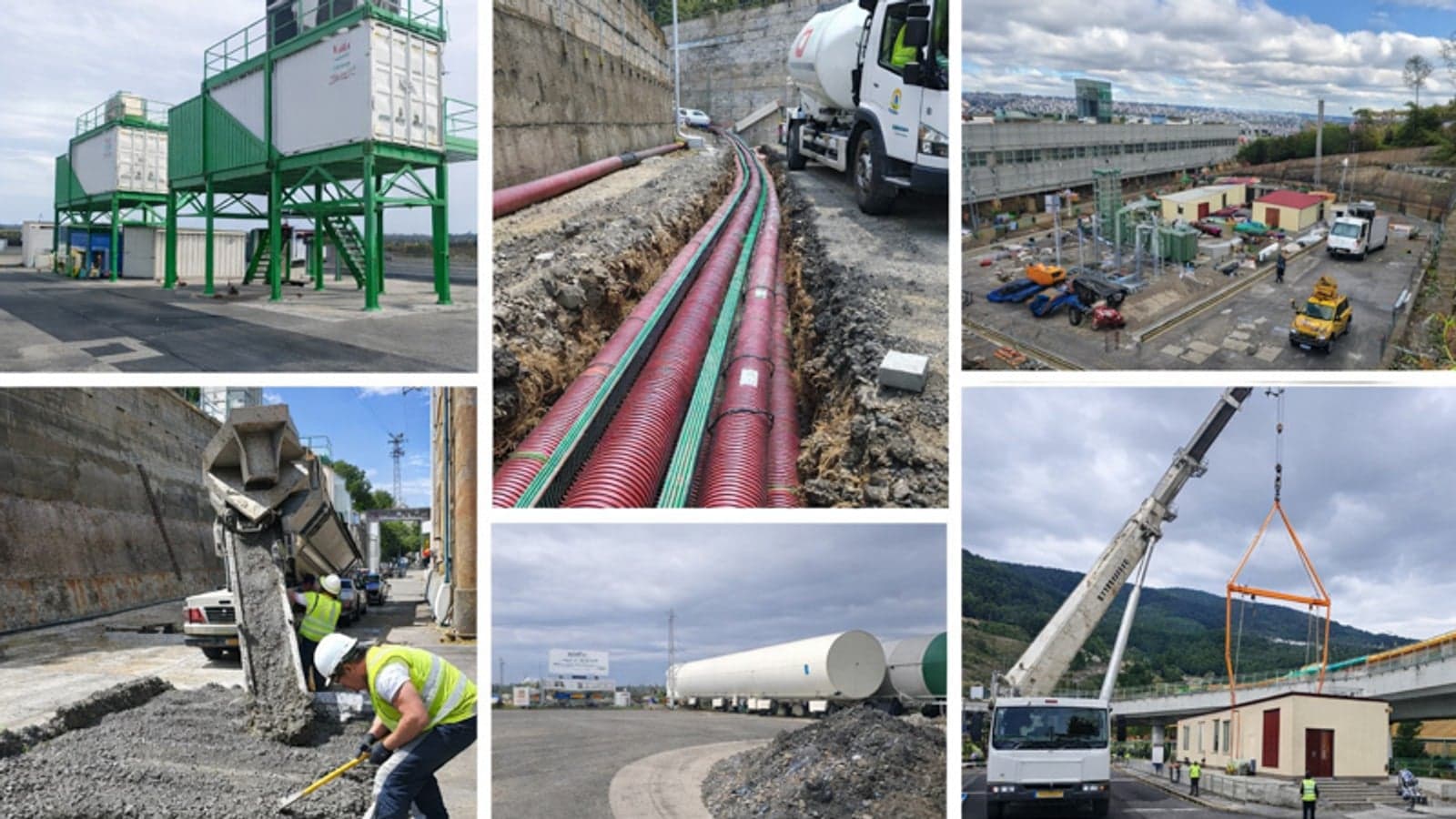
Onshore power supply is the cornerstone of the model. The port is rolling out a flexible, scalable OPS network capable of serving container ships, ro-ro, ro-pax ferries and cruise vessels. Starting from an initial capacity of 30MW, the system is being upgraded to 60MW by 2026, with a roadmap towards 175MW by 2030.
Energy needs are increasing exponentially so in order to avoid grid capacity constraints we combine repowering and building new electric substations and local renewable energy production. This anticipates both regulatory requirements and rising demand from ship operators, industries, new alternative fuel production, electric terminal equipment and EV trucks facing ETS and FuelEU Maritime obligations.
Local renewable generation
Electrification only delivers real decarbonisation if electricity is clean. Bilbao has therefore coupled OPS deployment with renewable energy production inside the port area. Photovoltaic plants and wind assets are directly connected to the OPS network, reducing reliance on upstream grids and limiting exposure to volatile wholesale markets. Future integration with hydrogen and e-fuels infrastructure further strengthens the model.
Storage and flexibility
Battery energy storage systems play a critical role. They smooth demand peaks created by simultaneous vessel connections, stabilise the port-grid interface, and enable better alignment between renewable generation and consumption. In practice, storage transforms OPS from a rigid load into a flexible grid asset.
Energy sharing and governance
A defining feature of the model is its focus on energy sharing within the port community. Different regulatory and commercial configurations – closed networks, shared self-consumption and energy sharing with terminals and industries – are being assessed to deliver predictable and competitive energy prices.
Digital monitoring ensure non-discriminatory access while supporting long-term planning for both the port authority and its industrial and transport stakeholders.
Results and discussion
The Bilbao Port energy model delivers impact on multiple fronts, reflecting the multidimensional role ports now play in the energy transition.
Decarbonisation with local benefits
OPS deployment enables vessels to switch off auxiliary engines at berth, cutting CO₂ emissions from port calls by close to 40% by 2030. Just as importantly, reductions in NOₓ, SO₂, and particulate matter significantly improve air quality in nearby urban areas. This dual climate-and-health dividend is becoming a key driver of public acceptance for port electrification.
Energy security and sovereignty
By 2030, electricity demand at the port is expected to increase sixfold. Rather than relying solely on external grid upgrades, Bilbao’s model focuses on producing and retaining energy locally. Up to 50MW of renewable capacity within the port area enhances resilience and reduces vulnerability to grid congestion – a recurring concern across Europe.
Competitiveness in a carbon priced world
For shipping lines, OPS is no longer optional. Yet high and unpredictable electricity prices risk undermining uptake. By combining energy purchase, self-consumption, storage and energy sharing, the port can offer more stable pricing structures. This helps break the long-standing “chicken-and-egg” problem between ports investing in OPS and shipowners retrofitting vessels.
A systems perspective for Europe
The port functions as a microcosm of the wider energy transition: integrating generation, demand, flexibility and market design in one location. It echoes emerging policy discussions on net zero acceleration valleys and the need to prioritise industrial and logistics hubs for grid capacity and innovation.
Conclusion
The Port of Bilbao demonstrates how ports can evolve from energy intensive infrastructure into active energy system players. By anchoring OPS within a broader framework of renewables, storage and community energy sharing, the Bilbao Port energy model delivers decarbonisation without sacrificing resilience or competitiveness.
As Europe accelerates electrification across transport and industry, such integrated models will become increasingly essential. For energy professionals, system operators and policymakers, Bilbao offers a clear message: the path to net zero runs through ports – and ports can lead the way.
References
1. European Commission. Fit for 55 and AFIR legislative package.
2. CEF Transport. BilbOPS Project (101079550).
3. Enlit World. The Guide Newsletter, January 2026.
4. Port of Bilbao – Energy transition and BilbOPS documentation.
About the author
Ivan Jimenez Aira, President and CEO of the Port of Bilbao, contributes to the strategic planning, development and delivery of key and innovative port initiatives. Through his work, he helps reinforce the Port of Bilbao’s position as a resilient, efficient and competitive logistics and energy hub within the European maritime network.