Partner content
How Kraken’s utility grade AI is boosting grid resilience
Jonathan Spencer Jones
Posted on: 2 December 2025
Kraken's Assaf Biderman explains how a unified data model, deep domain expertise and human-in-the-loop operations have enabled Kraken to build utility-grade products with AI — combining the agility to innovate quickly with the resilience the energy sector demands.

“Kraken is an end-to-end platform and as AI has become increasingly intertwined, it’s enabling us to do new things.” Assaf Biderman, Chief AI and Corporate Development Officer at Kraken begins, as we sit down to chat about how AI is becoming embedded in its operations.
“It’s allowing us to improve the ability of our clients to optimise their grids to lower the cost of energy and improve resilience, provide the tools for better customer service with more precise and quick responses, further enhance the quality of our product with automated testing and to innovate faster with more code building.”
For Biderman, who oversees Kraken’s work with AI, the starting point for his assertion is Kraken’s ‘unified data model’, in which all the available datasets – those that concern metering, billing, customer communications and consumer devices, for example – are brought together into a single accessible and uniform system.
“This breaks down the numerous data siloes, often as many as a couple of dozen for a typical utility, to provide the benefit of a holistic view, and with this AI can thrive and make correlations.”
In other words, the more relevant and greater quality data available in one place, the better informed AI responses will be, and the better the outcomes that AI can deliver across the utility value chain. This model also helps ensure AI is faster to deploy and more secure.
“The best-in-class security layers enable our AI to interact with the data without going to multiple cloud environments and that’s very powerful,” comments Biderman.
Such a model also enables the creation of client specific knowledge bases, which in turn support compliance with national and regional regulations and further increases the accuracy and relevance of the AI outputs, Biderman adds.
“Hundreds of companies are building AI agents, but they don’t understand the utility world, which is very specific and highly regulated. As Kraken was built in the energy industry, we are able to take our knowledge and domain expertise and bake it into layers on top of the data infrastructure,” he says.
“We are able to provide the industry context and in the world of AI, context wins and sets us apart.”
Indeed, almost by coincidence Kraken has been uniquely built for AI, he adds, citing a favourite quote from Kraken founder and Chief Technology Officer James Eddison, who said that if he knew at the outset of building Kraken what he knows about AI today, he would have built it in the same way.
Human-in-the-loop
Biderman says that another feature that cements Kraken’s AI as utility grade is the ‘human-in-the-loop’ structure.
As an example, he cites the company’s pod approach to customer service. Kraken’s unified platform enables utilities to break down tiered escalation siloes in their call centres. Previously a utility might have had a hierarchical structure where customer issues are passed to increasingly specialised support levels until resolved. With Kraken, however, a single human ‘universal agent’ is empowered to address all aspects of the customer experience, making comprehensive decisions across the board.
“With Kraken’s universal agent model, our clients have seen transformations in customer and employee satisfaction along with lower costs to serve. Similarly, with our AI agents, we are further empowering our clients’ employees with more information and context to address customer issues precisely and rapidly.”
AI opportunity
When it comes to the type of AI, Biderman says Kraken is non-discriminatory, anything that is built on machine learning – predictive tools, generative tools and agentic tools, are all considered AI.
“We have a lot of mileage with AI in the industry, and we keep on maturing and improving our products”. As examples, he mentions tools for forecasting and optimisation and flexibility products that use AI and have been in production for over five years.
Kraken’s generative AI-based agentic customer service product has been in the market for more than three years, generating double digit percentage savings in terms of cost to serve for utilities, representing tens of millions of customers, while also improving both employee and customer satisfaction.
“We are now releasing a new, fully autonomous conversational agent solution in both text and voice first with a select group of clients and then for general availability, which will enable our customers to build the best agents that provide resolutions for a broad diversity of issues while remaining precise and compliant.”
Further R&D of advanced AI features is under way in all areas of the Kraken business – from billing through to marketing, made possible primarily by a strong tech team that updates the code of Kraken's operating system two hundred times per day on average.
With Kraken’s universal agent model, our clients have seen transformations in customer and employee satisfaction along with lower costs to serve.
Measurable results
Baking AI into Kraken has led to a 30% increase in agent productivity, combined with an uplift in both employee and customer satisfaction through faster, more empathetic resolutions.
Similarly Kraken clients report a 10% increase in engineer utilisation via predictive scheduling and smarter routing utilising Kraken’s fieldwork product, Kraken Field.
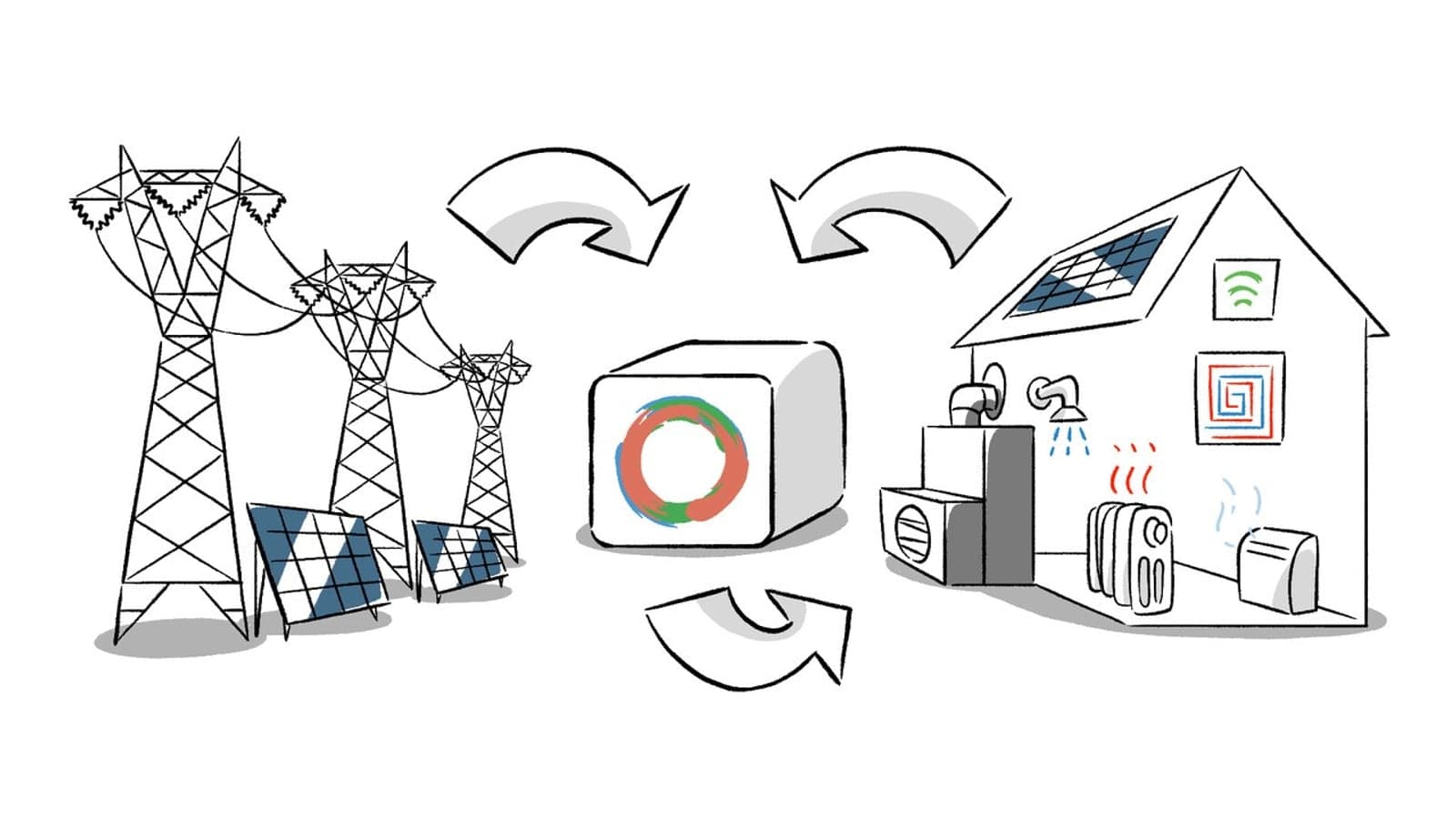
Smarter (fleet-level) flexibility forecasts with AI-optimised orchestration also have been reported with Kraken’s ‘Generation Flex’ and ‘Residential Flex’ capabilities, respectively helping grid-scale battery owners and large generators optimise their assets and optimising flexibility from residential assets, such as home batteries, EVs and heat pumps.
“AI is having a tremendous impact on energy,” says Biderman. “For example, when it comes to energy management, we see AI with the potential to substantially improve grid efficiency, resilience and the energy mix, and to lower the price of energy to end customers. Here is a unique example where AI is a key enabler of the solution for sustainable energy provision and that's part of what makes me excited and why I joined Kraken personally.”
Still, ultimately AI is a tool and there are areas where it has yet to make an impact. “One has to be rigorous in testing and selective in its usage to advance the pain points of clients and make their lives better,” Biderman concludes. “Looking ahead, I think we’re just scratching the surface, and the future utility offering will be significantly improved with more renewable energy at lower cost and with greater resilience.”