Live blog: Europe's response to the energy crisis following the Middle East conflict
Enlit Editorial Team
Posted on: 23 March 2026
Europe needs to rethink its energy security strategy once again now that the Iran war is severely impacting global energy markets and energy prices.
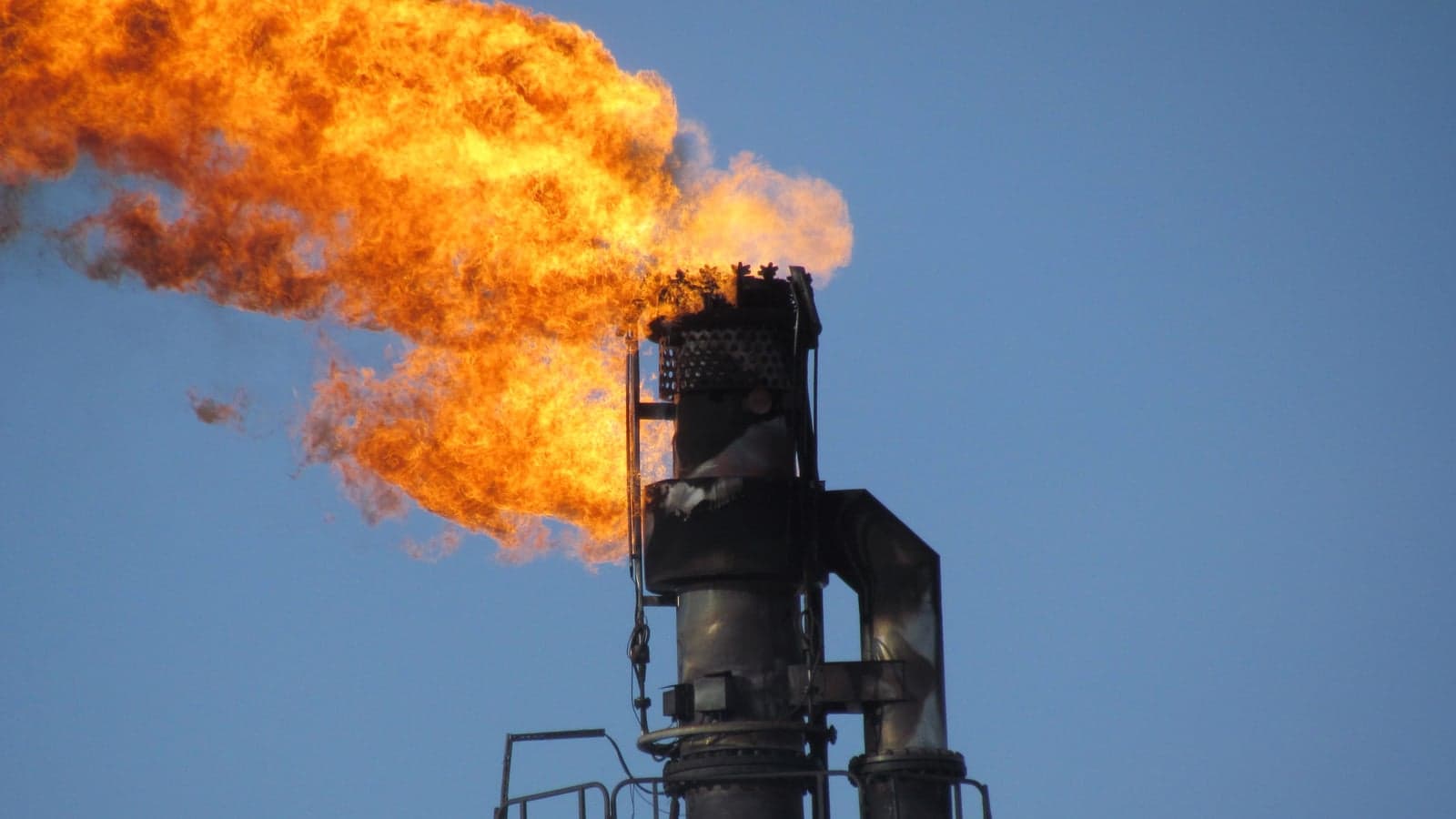
The closure of the Strait of Hormuz, prompted by the military conflict between Iran, the United States and Israel, has caused severe volatility in the global oil and gas markets. Unsurprisingly, this affects energy supply and demand, influencing the availability and pricing of fossil fuels.
On 11 March, members of the International Energy Agency agreed to release some of the strategic oil reserves to cool the prices. However, serious concerns about a further supply chain crunch persist, continuing to impact energy markets. The European Commission is on a mission to find ways to shield consumers from the global price shock and reduce energy bills. While no concrete plans have been proposed yet, it’s evident that addressing this challenge will require a collaborative effort between national governments and the EU.
After the beginning of the Russia-Ukraine war in 2022, Europe successfully united to transform a crisis into an opportunity to reduce dependency on Russian gas. Given the ongoing concerns about energy security and competitiveness, do you think member states will be able to come together once again?
In this blog, we will keep you up to date about how politicians and companies in Europe are responding to the energy crisis following the closure of the Strait of Hormuz and the Middle East conflict.
This is an ongoing story, and we will curate and cover a selection of the relevant news and insights as and when they come in...
22 April
European Commission launches AccelerateEU
The AccelerateEU initiative has been launched as part of a “dynamic response” from the European Commission to the Middle East conflict, that has seen an additional €24 billion spent on energy imports due to higher prices since its escalation.
Aimed to provide both immediate relief to households and businesses, particularly the most vulnerable, while at the same time putting in place measures to accelerate reducing the dependency on volatile fossil fuel markets, it comprises five themes:
- Deeper EU-level coordination;
- Protecting consumers and industry from price shocks;
- Accelerating the shift to homegrown clean energy and electrification;
- Strengthening the energy system;
- Boosting investment.
“Our AccelerateEU strategy will bring both immediate and more structural relief measures to European citizens and businesses,” asserts Ursula von der Leyen, President of the European Commission.
Continue reading the full story.
21 April
UK joins European countries buffering against energy price volatility
The UK government has announced new measures to reduce the impact that volatile gas prices have on the price of electricity.
Plans include voluntary long term fixed contracts that will be offered to existing low-carbon generators, as well as an updated Electricity Generators Levy.
Another significant measure from the government includes plans to make it easier for people to switch to cheaper electric transport and heating, by making EV chargers, solar panels and heat pumps easier to instal for renters, flat-dwellers and households without a driveway.
The UK’s relief measures came a day after the Dutch Cabinet announced its own set of economic measures and days prior to the European Commission approving State aid schemes to provide temporary electricity price relief for energy-intensive companies in Bulgaria, Germany and Slovenia in line with the objectives of the Clean Industrial Deal.
20 April
Strait of Hormuz closes, oil prices rise
Oil prices have risen again following another closure of the Strait of Hormuz on Saturday.
According to BBC reportage, the Brent crude benchmark oil price jumped over 6% to around £71 ($96) a barrel, reversing the slump on Friday when Iran said the Strait of Hormuz would be "completely open" to commercial vessels for the remainder of the ceasefire.
17 April
Gas prices react as Iran declares the Strait of Hormuz to be open
Iran's Foreign Minister Seyed Abbas Araghchi has declared the Strait of Hormuz open to all commercial vessels due to the ceasefire in Lebanon.
International oil prices dropped almost 11%, around $89 a barrel, after the announcement and the benchmark European gas contract also fell by about 8.5% to €38.8 per MWh.
President Trump stated in a post on the Truth social media platform that the US naval blockade in the Strait will remain in place until negotiations with Iran are complete.
IEA's Birol expresses concerns about jet fuel crunch
In an interview with the Associated Press (AP), International Energy Agency Executive Director Fatih Birol warned that Europe has roughly six weeks of jet fuel supplies remaining, raising the prospect of flight cancellations if shortages worsen.
Birol highlighted the strain the Middle East conflict is placing on global energy markets, describing the situation as “the largest energy crisis we have ever faced.”
According to AP, he expects significant increases in petrol, gas, and electricity prices. While developing nations are likely to bear the brunt, Birol cautioned that no country will be immune to the impacts of this event.
16 April
System integration key to absorbing price shocks says EASAC
The European Academies Science Advisory Council (EASAC) published commentary arguing that for Europe to mitigate soaring energy prices and ensure security of supply, energy system integration is imperative, with home-grown renewables and grid modernisation forming its backbone.
EASAC’s commentary emphasises that radical energy system transformation and integration has become a strategic imperative, providing a roadmap as debates intensify on how Europe can manage soaring energy prices, ensure security of supply, and restore affordability and industrial competitiveness.
It highlights how integrating renewable energy sources and modernising grid infrastructure can enable faster decarbonisation, reduce dependence on volatile fossil fuel markets, alleviate grid congestion, and lower energy costs.
EASAC, a network of National Science Academies of EU member states, cites how the closure of the Strait of Hormuz removed a significant supply of oil and liquefied natural gas from global markets, leading to what the International Energy Agency referred to as the “greatest global energy security challenge in history.”
This comes as Europe is making insufficient progress on strengthening power grids and deploying flexibility management systems, which are key to fully integrating renewable energy, says the council.
Additionally, electricity price spreads across EU borders, a proxy for congestion, remain significant in many areas, with highly congested borders showing persistent price divergence above €30/MWh, reflecting deep structural bottlenecks in the internal energy market.
It is in light of these issues, as well as distributed social consequences, that EASAC advocates for energy system integration, which it defines as coordinated planning and operation of the energy system as a whole, across multiple energy supplies, carriers, infrastructures, and consumption sectors.
14 April
Solar urged as solution for energy independence
The vice-president of Solar Heat Europe has urged policymakers and investors to harness the energy democracy offered by the sun.
“No-one controls or has monopoly on the sun: it shines everywhere and we need to invest in the technology to capture it and store it, said Christophe Williams, who is also chief executive of UK solar thermal company Naked Energy.
Speaking in Brussels, he said: “We are in a crisis like we’ve never seen before and we need solutions now... and Europe has them. We have homegrown industries that can deploy renewable heat solutions for businesses and communities today that last 20-to-30 years in the field.
“We haven’t learned our lessons from the previous Ukraine crisis and the previous oil crisis. I think memories are quite short and now we need to make those investments and support the technologies that are available today.
This crisis should serve as a final lesson that we need to not just talk, but we have got to get solutions out there to reduce gas costs, reduce our reliance on imported fossil fuels and make a difference to people’s bills to bring them down.”
13 April
IEA’s Birol: “I have one golden rule for energy security; that is improvement towards diversification.”
The Atlantic Council’s Global Energy Center hosted an AC Front Page conversation featuring Fatih Birol, who discussed the recent energy-supply disruptions and how the IEA is responding to the crisis, including with members’ decisions this month to release oil from strategic stockpiles.
When asked on top three policy recommendations coming out of the crisis, said Birol: “I have one golden rule for energy security; that is improvement towards diversification.
“Diversify from whom you get your energy. Diversify your energy mix. Diversify your trade routes. Diversification is key. “Overreliance on one single country, one single trade route, one single field is always risky. Europe paid a big money cost for that over gas and Russia.”
Additionally, when asked on the investment horizon, Birol forecast that demand for SMRs, renewables and coal would strengthen.
“Four years ago, we said nuclear is set to make a comeback, as IEA. And it is coming back. But [this] will reinforce it. And maybe the [small modular reactors (SMRs)] coming to market will be a bit faster than it was before.
“Second, I expect renewable energies will grow even faster. For example, in Europe after Russia’s invasion of Ukraine, the annual instalments of nuclear—instalments of renewables, solar and wind, increased by a factor of three, because of fast permitting, because of the licensing, and because of other measures government has taken. These were not driven by climate change, [rather] by energy security…Now electric cars, especially in Asia, developing Asia, may get an additional boost.
“I also expect, temporary or not, in some countries…coal use may increase because of it being secure.”
IEA, IMF and World Bank Group meet
The Heads of the International Energy Agency, International Monetary Fund, and World Bank Group met as part of the coordination group established in early April to maximize their institutions’ response to the energy and economic impacts of the war in the Middle East.
At the end of their meeting, they issued the following statement:
“As we noted earlier this month, the impact of the war is substantial, global, and highly asymmetric, disproportionately affecting energy importers, in particular low-income countries.
“Due to supply disruptions, shortages of key inputs are likely to have implications for energy, food, and other industries. The war has also forcibly displaced people, impacted jobs, and reduced travel and tourism, which may take time to reverse.
“Our teams are working closely, including at country level, to leverage our respective expertise and help countries through tailored policy advice and, in the case of the IMF and World Bank, financial support where needed.
“We will continue to monitor closely and assess the impact of the war on energy markets, the global economy and individual countries, and to coordinate our response and support to our member countries—working with, and drawing on, other international organizations’ expertise as needed to lay the foundations for a resilient recovery that delivers stability, growth and jobs.”
9 April
Study shows Middle East crisis splitting global power markets into winners and losers
New research from Wood Mackenzie has identified the countries most exposed to negative impacts on electricity markets. In the study, The Great Power Divide: The Middle East crisis is splitting global power markets into winners and losers, Wood Mackenzie finds that Japan represents the most exposed power market globally, with 64% of electricity generation dependent on imported coal and gas.
Japan is followed by South Korea at 56%, with Italy leading European markets at 47%.
The United States and Brazil show minimal vulnerability at zero or 1%.
In the report, Wood Mackenzie presents what it refers to as a base case, which assumes a de-escalation in geopolitical tensions and fuel price moderation in the latter half of 2026. If this occurs, the report predicts the average cost of generation will increase by $2.3/MWh across the 13 analysed markets. Italy, Japan, and South Korea experience the highest absolute impact with $4.3/MWh in cost escalation.
Allen Wang, Vice President Head of Asia Pacific Power and Renewables Research for Wood Mackenzie, commented on the study findings: "These cost increases represent significant policy challenges, requiring governments and utilities to navigate difficult trade-offs between financial support mechanisms, regulatory interventions, and retail tariff adjustments.
"For emerging markets with constrained fiscal capacity, elevated fuel costs also translate to heightened reliability risks as securing incremental fuel supplies becomes increasingly challenging during periods of market tightness."
02 April
Energy security top influencer of global policy and investment decisions, says LCP
LCP has published an analysis finding that escalating geopolitical risk, especially the conflict in the Middle East, is pushing energy security to the forefront of global policy and capital allocation decisions.
While decarbonisation and rising electricity demand remain powerful drivers of the energy transition, LCP argues that energy security is now the dominant near-term force shaping system needs and investment priorities.
They argue that the energy transition is driven by three reinforcing forces: decarbonisation, energy security, and growth in aggregate electricity demand. While all three have been important for several years, the current geopolitical environment has shifted the balance decisively towards energy security.
LCP highlights that a successful transition requires more than scaling renewables. Reducing reliance on imported fossil fuels and building domestic low-carbon capacity is likely to increase capital requirements across the energy system.
The firm notes that a possible investment strategy approach considers not only low carbon power generation, but also the enabling infrastructure - networks, storage, grid flexibility and demand-side assets.
According to their analysis, countries are not equally exposed to geopolitical disruption. Exposure depends not just on how much fossil fuel a country uses, but where those inputs come from and how resilient the wider system is. France and Canada, for example, are structurally less exposed in power generation than the UK, due to their domestic energy sources.
Additionally, it notes that policy responses to geopolitical risk will not look the same everywhere. In some markets, energy security is likely to accelerate clean power, storage, grids and electrification. In others, it may also support greater use of domestic gas resources, LNG infrastructure or strategic reserves. The common theme, it notes, is a search for greater resilience and lower vulnerability.
Sam Hollister, Head of Market Strategy, LCP Delta, commented in a release: “The second energy shock in just four years has once again put energy security and gas price volatility front and centre of people’s minds.
“In many markets, cleaner domestic energy systems, stronger grids and greater flexibility are now being seen not just as climate priorities, but as ways to improve energy resilience and reduce exposure to external shocks.” Mark Watts, Partner in LCP’s Investment team, added: “For investors, the message is clear: energy security is now shaping the transition just as much as decarbonisation.
“That means looking beyond generation alone and considering the full system: networks, storage, flexibility and demand-side assets. The opportunity set is widening and understanding how these components interact is becoming essential to navigating the next phase of the transition.”
01 April
IRENA touts 2025 renewable surge as case for resilience
IRENA has published their Renewable Capacity Statistics 2026 report, finding that renewable power capacity in 2025 reached 5.2TW after the addition of 692GW, marking a 15.5% annual increase.
IRENA, headquartered in the UAE, related the report to geopolitical tensions, saying the escalation in the Middle East has raised fresh concerns over supply security and fossil fuel price volatility.
Against this backdrop, says the Agency, renewable energy is gaining attention to build more resilient systems that are less vulnerable to international shocks. As renewables are homegrown, low-cost and can be deployed immediately, increasing their share in national energy systems can reduce exposure to international fuel markets, it adds.
31 March
Ann Mettler, Co-Founder of Catalyse Europe and former Vice President of Europe at Breakthrough Energy, comments on the current energy crisis.
"This is obviously a very serious situation right now. Europe is facing the second energy crisis in as little as four years. We're already witnessing inflation go up. The OECD came out with new inflation figures, estimates of around 4%. That's a significant rise while at the same time growth is going down, and European growth was quite depressed to begin with.
"I heard that Prime Minister Maloni is in Algeria to see if she can buy LNG from Algeria because following the bombings in Qatar, that supply - and I think Italy received about 30% of its LNG from Qatar - has now been cut off for the foreseeable future. So, we're seeing in a very short period of time a really, a huge disruption. This is very serious and policymakers and businesses and citizens are right to be concerned."
Listen to the full conversation with Ann Mettler in the latest episode of the Energy Transitions podcast.
IRENA's La Camera: "Today's energy shock makes the case for renewables with brutal clarity."
30 March
IEA launches tracker to monitor policy responses to energy market impacts of Middle East conflict
The IEA has launched a dedicated policy tracker to monitor government actions taken in response to the energy market impacts of the conflict in the Middle East.
The tracker provides an overview of measures introduced by governments to conserve energy and protect consumers from rising prices, as governments respond to supply disruptions and increased volatility, notably in markets for crude oil, oil products and LNG.
The tracker presents two main categories of action: measures aimed at conserving energy and those designed to support consumers.
The tracker will be updated regularly as new policies are announced and the situation evolves, providing timely insights into how countries are addressing the crisis.
G7 Energy and Finance Ministers and Central Bank Governors call for deeper assessment into economic impact of energy market developments.
The G7 Energy and Finance Ministers and Central Bank Governors held a virtual meeting to assess the evolving situation in the Middle East and its implications for energy markets, the global economy, and financial stability.
In a communiqué, the group said its Central Banks are closely monitoring the impact of energy and other commodity price pressures on inflation, inflation expectations, and economic activity.
The group called on call on the International Monetary Fund, the World Bank Group, and the OECD to deepen their assessment of the economic impact of the developments in the energy markets.
This includes the impact on developing countries, sectoral consequences and implications for strategic value chains, including with respect to critical minerals, and food security, and to report back by the time of the Spring Meetings.
Additionally, it asked the IEA to continue monitoring developments in energy markets and to provide analysis to its members and prospective scenarios to help member countries of the G7 design proper measures to face the potential evolution of the situation.
The opening address of the joint meeting was conducted by the IEA's Executive Director, Fatih Birol.
Máximo Miccinilli of FleishmanHillard EU: "The EU is in a structurally stronger position—not because it has found a single way to shield itself, but because it has developed a broader toolbox of resilience mechanisms that now operate in parallel."
Miccinilli, Senior Partner and Head of Energy & Climate, explains how the conflict in the Middle East put energy security back at the top of Europe’s agenda. But unlike in 2022, the EU is not starting from scratch. While it is better prepared, it hasn’t been protected, he says.
"Diversification has reduced dependence on pipeline gas and increased flexibility, even if it comes at a higher and more volatile price,” Miccinilli notes.
At the same time, he added, lower gas demand—driven by policy measures and faster renewable deployment—has eased some pressure on the system. But the adjustment has not been uniform.
Industry in particular, says Miccinilli, remains exposed. Which is why the nature of the risk has shifted.
“The key challenge today is less about physical security of supply and more about affordability and economic impact,” he says.
Miccinilli explains how in 2022, governments stepped in with subsidies, price caps and tax measures to contain the fallout. This time, the question is whether they can—or will—do it again in a coordinated way.
“The question now is whether governments have the fiscal space and political appetite to deploy similar measures again, and how coordinated those responses will be across the EU."
Miccinilli shared his thoughts in an Enlit exclusive.
27 March
Greg Jackson says demand for solar is soaring since Iran war
"We've seen a 50% increase in sales for rooftop solar for households, just in the three weeks since this [the Iran war] kicked off", the Octopus Energy boss told the BBC.
Jackson was referring to new internal data that shows record‑breaking demand for clean tech, with the company logging its biggest‑ever month for enquiries and sales.
In addition to the increase in solar, the company also saw a 51% uptick in heat pump sales. EV charger sales are up 20%, as drivers look to escape unpredictable costs at the pumps.
Energy independence is cited as the top reason for homeowners making the switch.
To keep up the momentum, Octopus has begun operating a fast-track for oil-reliant households – replacing expensive oil boilers with clean heat pumps in just 10 days from the initial quote to the final installation.
Rebecca Dibb-Simkin, Chief Product Officer at Octopus Energy, commented: “We are seeing a massive shift as people stop just asking and start acting. British families are tired of being held hostage by global fossil fuel prices.
“By switching to solar and heat pumps, they are becoming their own power stations – locking in low costs and protecting their wallets for the long term.“
26 March
Trump to delay attacks on Iranian power infrastructure for 10 days
The White House has posted a message on X stating that President Trump is pausing the destruction of energy plants by 10 Days to Monday, April 6, 2026.
25 March
WindEurope urges EU Member States to double down on renewables
WindEurope CEO Tinne van der Straeten calls on European Member States to tap into home-grown electricity as a shield against rising energy prices:
"With the closure of the Strait of Hormuz, Europe has woken up, again, to its dependence on unreliable fossil fuel imports. This crisis is not a one-off. It’s the new normal. Home-grown electricity is Europe’s only future-proof energy strategy."
The Association points to Germany and the UK as examples.
Specifically, as a direct reaction to the conflict in the Middle East, Germany’s Minister for Economy and Energy Katherina Reiche, announced that the country will increase onshore wind auction volumes up to 2030 by an additional 12GW.
In a video statement on LinkedIn, Reiche said: "Energy is no longer just an economic issue – it is a central security policy dimension of our time. The current situation shows how vulnerable global energy supply chains are and how quickly geopolitical conflicts become real economic risks.
"Our answer is more diversification, more resilience and [an Energiepolitik] that brings together security of supply, affordability and sustainability."
The association also points to the UK government's package of measures announced in mid-March in response to the events in the Middle East.
These include enabling consumers to buy low-cost solar panels; the intention to bring forward the next renewables auction to July, following the success of AR-7; and the intention to speed up infrastructure buildout for renewables following the success of the Fingleton Review.
Said UK Energy Secretary Ed Miliband: "Global events demonstrate there’s not a moment to waste in our drive for clean power because there can be no energy security while we are so dependent on fossil fuels."
Additionally, WindEurope cites research from Ember that shows how countries that rely less on gas power are less exposed to electricity price volatility.
In Spain, gas influenced the price of electricity in only 15% of hours in 2026, the research says, compared to 89% in Italy. As a result, Spain has seen lower power prices than other EU countries since the conflict in Iran started.
Said Dr Chris Rosslowe, Senior Energy Analyst, Ember: "Once again global conflict has sent gas prices soaring, with potentially dramatic economic consequences for import-dependent regions.
"Clean power paired with electrification is the only way to shield against sudden gas and power price hikes in this and future crises.
"Some countries have moved faster than others, with plenty of work still to do to build a resilient, clean, electrified energy system across the bloc.
Jørgensen: "We should not ever again import as much as one molecule of Russian energy"
In a conversation with POLITICO's Chief EU Correspondent and Brussels Playbook Podcast Host, Zoya Sheftalovich, EU Commissioner for Energy and Housing, Dan Jørgensen, made it very clear that the current energy situation in Europe would not open the door to Russian gas imports again.
"No, there is no road back to dependency on Russian energy. In my opinion, in the future, we should not ever again import as much as one molecule of Russian energy."
He acknowledged, however, the additional energy price challenges caused by the Iran war:
"It is true that there is no simple answer, there's no silver bullet, but there are a range of different things that you can do that will help member states and will help citizens and companies. We do have quite flexible state aid rules that make it possible for Member States to say: OK, this group of vulnerable citizens, we will help them economically to face this crisis or these types of industry will help them lower their energy bills."
Whereas many people compare the current crisis to the energy struggles following Russia's invasion of Ukraine, Jørgensen believes that there are more differences than similarities:
"In a way, it is similar because people struggle to pay their bills. But if we dive into an analysis of what is actually happening, it's quite different.
One of the reasons it is different is that we are better situated now to deal with the crisis. In 2022, we were heavily dependent on gas from Russia. Today, that dependency is, of course, of a different nature. We get zero coal, we get almost no oil, and we get around 10% of our gas from Russia, and we are getting out of that dependency also.
"We have also deployed much more renewables, this means that we have much more homegrown energy and we have more cheap energy. So in many ways, we have moved forward. Now, the reason why this hurts us so much is when the world market prices go up, it doesn't really matter so much what your sources are, if you are dependent on fossils, you will be hurt."
Gridraven CEO: "Europe can achieve a secure domestic energy supply, but it is unlikely to return to the extremely low electricity prices of the 2010s."
Georg Rute, Chief Executive Officer of Gridraven, says that domestically produced solar and wind are Europe’s only mature path to more stable prices and long-term energy independence.
However, the tech company's CEO adds that slow build-out of the transmission grid threatens to stall this future.
Says Rute: "Europe’s energy security depends not only on how much electricity it can generate, but also on how effectively it can move that power across the grid.
"The best solar and wind resources are often far away from cities, in places with historically weak grids. Grid congestion and static transmission limits leave a significant share of renewable energy unused, even when wind conditions would allow them to safely carry more power."
The answer for this, says Rute, is grid optimisation.
"If Europe wants a more secure, independent, and renewables-based energy system, it will need to build a much stronger transmission grid. But the fastest gains will come from optimising the grid it already has."
Rute shared his thoughts in an Enlit exclusive.
24 March
GB Energy chair backs more UK domestic oil & gas production
Juergen Maier, chair of Great British Energy – the entity created by the Labour government to define and deliver Britain’s energy transition – has used a LinkedIn post to outline what he calls the “confusing debate about whether exploring more North Sea oil & gas will bring down UK energy prices”.
Maier, who was CEO of Siemens UK from 1986 until 2019, said he was in favour of supporting more North Sea oil production because “it slows job losses in oil & gas industries allowing us to help transition those much needed skilled jobs to roles in the growing renewable energy sector.”
He said it also “supports supply chains to better manage their transition to new supply chains. Oil & gas is used in other important applications beyond energy generation; e.g. plastics & chemical production and to have a local production capability & supply is sensible industrial sovereignty.”
He also accepts that “the carbon intensity of the oil & gas produced locally can be lower compared to that imported, so it makes sense in this transition phase.”
And he adds, it supports tax revenues.
However, he stressed that “I reject the argument that more oil and gas from the North Sea brings down energy costs. It doesn't – indeed, energy costs are rising at this very moment because of fossil fuels.”
IRENA's La Camera calls for an immediate ceasefire
On social media platform LinkedIn, Director General of the International Renewable Energy Agency Francesco La Camera condemned the attacks on civilian and energy infrastructure, saying they constitute "a serious breach of sovereignty and territorial integrity, an escalation and a clear violation of international law and the principles of sovereignty enshrined in the UN Charter."
"I am particularly concerned by the attacks against our host country, the United Arab Emirates (UAE), as well as other IRENA members in the region. I express my full solidarity with the leadership and people of the affected countries, and extend my deepest condolences to the families and loved ones of those who lost their lives as a result of these attacks."
La Camera said the developments in the region highlight the importance of safeguarding critical infrastructure, including energy, water and civilian, which are "essential to stability, sustainable development, and the well-being of communities. The attacks not only threaten national security but also have far-reaching implications for global energy systems, resilience, and economic stability.
"I call for an immediate ceasefire without delay and for open dialogue to achieve lasting peace. IRENA remains committed to supporting its host countries and members in advancing energy security, strengthening system resilience, and accelerating the transition to sustainable energy."
Von der Leyen: "Building our resilience is today's job"
Speaking at the conclusion of her visit to Australia, European Commission President Ursula von der Leyen said that "none of us is immune to the shocks, both geopolitical and economic, that the war in Iran brings to our populations. Pain at the pump is hard for our citizens. And just another reminder that building our resilience is today's job."
Her remark was part of the speech in the Australian Parliament, announcing the signing of a free-trade agreement between Europe and Australia.
"We in Europe have been reckoning with our dependencies, particularly with Russian gas. There were warning signs, and we learnt the lesson in the hardest of ways, in February 2022. For context, imagine, for example, if here in Australia you were forced to stop selling your iron ore overnight? In a way, this is what we have had to do in Europe. Russian gas – a no go overnight. And after our societies had already withstood so much. First, with the financial crisis, then the pandemic, the beginning of the war in Ukraine and now a second energy gas and oil price shock. Diversification was and remains a necessity."
"This is why I am proud that we have made decarbonisation a defining pillar of our free trade agreement. This is hard-headed commonsense."
Part of the free-trade agreement is an improved access for Europe to Australia's critical raw materials, by lowering tariffs on imports and opening investment opportunities.
"Australia is one of the world’s most important producers of critical raw material. In contrast, Europe is one of the world’s major users. So today, we agreed on four major projects, covering production of rare earths, lithium, and tungsten", she wrote on X.
Von der Leyen further emphasised the importance of energy independence:
"With geopolitics at a boiling point, we [Europe] know firsthand that the more you build homegrown energy, the sooner you get independent and thus can shield yourself from energy price shocks. We are in a race to electrify our economies. This is what future generations will judge us on."
Earlier that day, in a joint press conference with Prime Minister Tony Albanese, Von der Leyen voiced her concern about the situation in the Middle East:
"I am deeply concerned about the escalating conflict. Iran has to cease immediately its threats, laying of mines, drone and missile attacks and other attempts to block the Strait to commercial shipping. The recent attacks by Iran on unarmed commercial vessels in the Gulf, attacks on civilian infrastructure including oil and gas installations, and the de facto closure of the Strait of Hormuz by Iranian forces is unacceptable and must be condemned. I also want to emphasize that freedom of navigation is a fundamental principle of international law."
Volatility should be seen as catalyst says Schneider's Godemel
Schneider Electric's EVP of Energy Management, Frédéric Godemel, says the current sustained disruption could provide "the stimulus needed to re-build our energy systems quicker, for long term stability".
He suggests we "are entering an electricity supercycle" and says that supercycle can be used as a catalyst for energy security if countries and companies move fast on three priorities. Find out what those priorities are in his article here.
23 March
Trump postpones strikes against energy infrastructure
Trump, on Truth Social, says he has instructed the US Department of War to “postpone any and all military strikes against Iranian power plants and energy infrastructure for a five day period, subject to the success of the ongoing meetings and discussions.”
UK poll backs homegrown oil and gas alongside renewables
Trade body Offshore Energies UK (OEUK), which represents oil and gas companies as well as CCS and renewable firms, says a poll it commissioned shows “overwhelming public support for using the UK’s own oil and gas resources alongside renewables to strengthen national security, manage overreliance on imports, and ensure stable, long‑term decision‑making on how the sector is taxed”.
The study was conducted by Opinium with a representative sample of 2,000 UK adults and found:
- 76% find it convincing that “because global events can disrupt energy supplies, the UK should continue producing oil and gas at home rather than relying more on imports.”
- 74% say the UK should “produce as much of its own oil and gas as possible rather than rely on imports.”
- 40% believe the best approach to UK energy security is investing in a balanced mix of renewables and UK oil and gas, compared to just 26% who want a renewables‑only approach and 13% who want oil and gas only.
- 59% think oil and gas companies should pay higher taxes when prices are unusually high - but crucially, 67% say any windfall tax must be rules‑based, providing clear, predictable certainty about how companies will be taxed.
- When asked about a permanent, rules‑based windfall mechanism, a plurality (45%) of the public supports the model, with only a small minority (12%) opposing it and many seeking clarity before deciding.
Offshore Energies UK chief executive David Whitehouse said: “The public are clear: the UK needs homegrown energy and a balanced transition that strengthens our national security. "People want renewables and UK oil and gas working side by side - not one instead of the other - and they want decisions based on long‑term rules, not short‑term politics.
"A rules‑based approach to taxation is part of that stability. It ensures the public receives a fair share in times of genuine windfalls while giving companies the certainty needed to keep investing in UK energy, UK jobs and the UK's transition.”
EU must expand renewables, storage and flexibility says lawyer
Jean-Pascal Boutin, partner in the energy group of law firm Watson, Farley & Williams, says that “as governments across the EU and in the UK grapple with the implications for affordability, security and decarbonisation, 2026 is emerging as a pivotal year for energy policy and system transformation”.
"The sharp rise in European gas prices has drawn renewed attention to the structure of electricity markets, particularly the use of marginal pricing, where gas‑fired generation sets the wholesale electricity price."
He says the challenge for EU policymakers “is the variety of generation portfolios of the different energy landscapes of its member states. Nordic countries have the benefit of hydro energy with negligible reliance on fossil fuels. Similarly, France has nuclear; Germany has a mixture of coal and hydro; Italy, Greece and the Netherlands all use natural gas to varying degrees.
“Given this wide spread of energy facility types, it is difficult to see what EU authorities could do on a mandatory basis regarding marginal pricing and decoupling electricity from high gas prices. The encouraged roll-out of renewable energy CFDs and PPAs seems likely as well as an acceleration of battery support schemes as an alternative to gas. This would support energy security and localisation of generation facilities thereby avoiding imports of fuels and exposure to world events.”
Boutin says that in response to the complex web of soaring gas prices, infrastructure bottlenecks, policy disagreements and geopolitical disruptions heightened by the conflict in the Middle East, “we envisage that governments and regulators accelerate efforts to expand renewable energy deployment; increase storage and flexibility; modernise grid infrastructure; and diversify energy supplies."
22 March
Iran rebuts ultimatum
Iran rebuts Donald Trump’s ultimatum, threatening attacks on energy infrastructure in the Gulf States, should the United States follow up on 48-hour ultimatum.
MB Ghalibaf, Speaker of Islamic Republic of Iran’s Parliament, on social media platform X:
"Immediately after the power plants and infrastructure in our country are targeted, the critical infrastructure, energy infrastructure, and oil facilities throughout the region will be considered legitimate targets and will be destroyed in an irreversible manner, and the price of oil will remain high for a long time."
Trump threatens Iran power plants
US President Donald Trump takes to Truth Social to give Iran a 48-hour ultimatum: “Open, without threat, the Strait of Hormuz,” threatening to attack the country’s power plants.
21 March
IEA's Fatih Birol decries energy crisis
"The war in the Middle East is creating a major energy crisis, including the largest supply disruption in the history of the global oil market...," says Fatih Birol