Scaling positive clean energy districts: Cities need organisation, not more pilots
Guest/partner contributor
Posted on: 24 February 2026
Cities are setting ambitious climate and clean energy goals, yet many struggle to translate innovation into large scale deployment, writes Veronika Cerna.
Many cities are struggling to move beyond pilot projects. In most cases, the problem is not a lack of technology or ambition, but a lack of orchestration. Clean energy initiatives are often developed in a fragmented manner, with unclear ownership, short-term funding and limited capacity to coordinate across departments and partners. As a result, promising projects fail to scale.
ASCEND, an EU-funded Horizon Europe project working to accelerate the deployment of 'positive clean energy districts' as a default solution for climate neutral, inclusive and resilient cities across Europe, was developed to address this structural gap. The initiative focuses on helping cities design positive clean energy districts that can move from experimentation to long-term implementation. Rather than treating governance, business models and digital tools as separate elements, ASCEND brings them together as core building blocks for scalable district development.
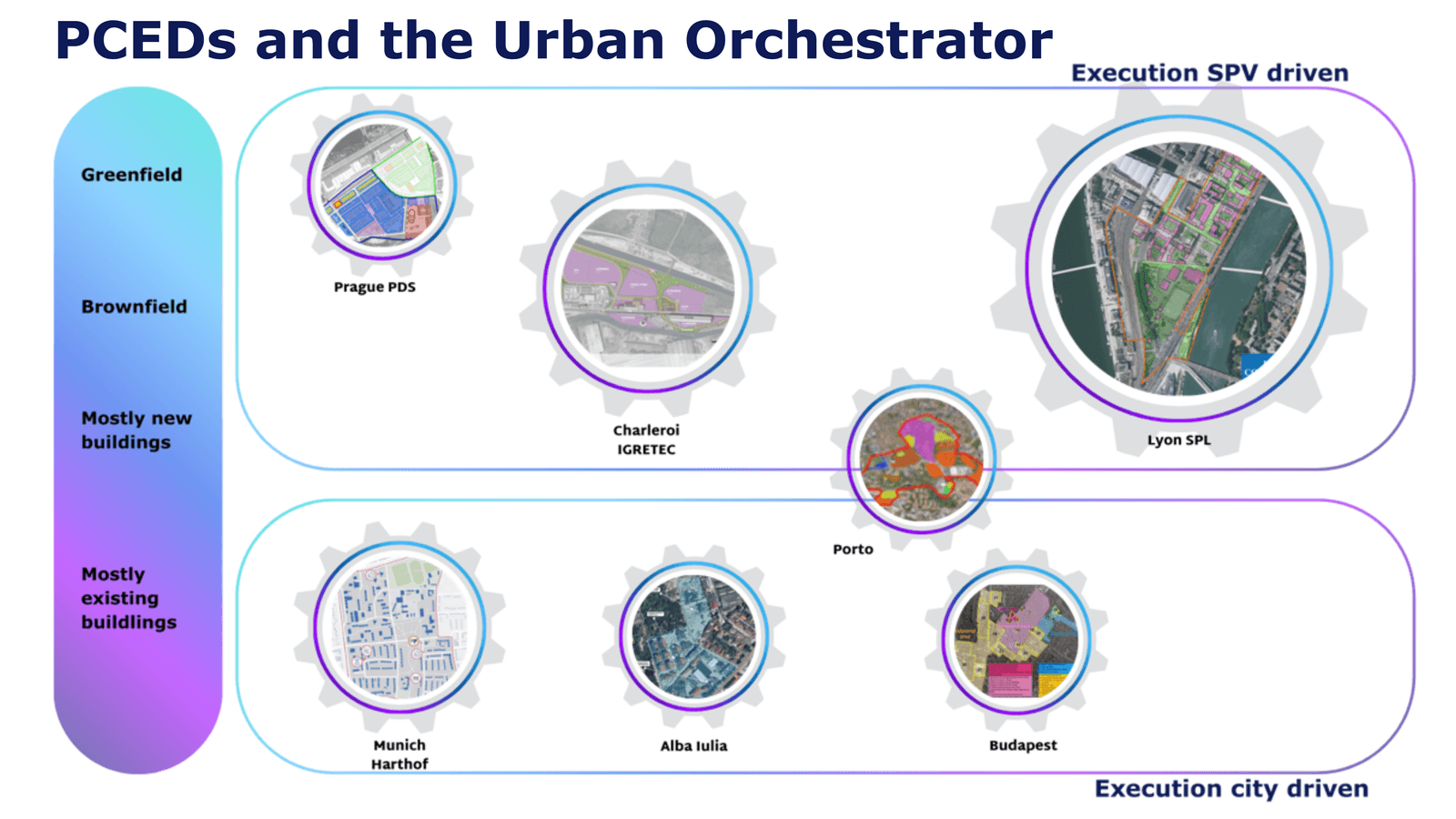
Rooted in large-scale demonstrations in Lyon (France) and Munich (Germany) and replicated through six multiplier cities, Alba Iulia (Romania), Budapest (Hungary), Charleroi (Belgium), Prague (Czech Republic), Porto (Portugal) and Stockholm (Sweden), ASCEND integrates citizen engagement, zero carbon buildings, smart grids, sustainable mobility and digital decision tools to deliver scalable, cost-effective district models
A central element of this approach is the urban orchestrator, a role linked to a public entity that aggregates components and services at district level and ensures continuity beyond the pilot phase. Unlike temporary project teams, the urban orchestrator has the mandate to aggregate services, negotiate with partners and steward value creation over the full lifecycle of a district.
City challenges
Cities often run into three persistent challenges.
The energy transition is complex and typically involves many city departments and external actors, making coordination difficult. Responsibilities are spread across planning, energy, mobility, housing and finance, while utilities, technology providers, investors and citizens all play a role. Without a dedicated organisational structure, decision-making slows and projects lose momentum.
ASCEND responds by emphasising governance models that are adapted to the realities of each district. Contexts vary widely, from new developments to existing neighbourhoods with mixed building types, and each requires a different organisational setup. Cities can draw on several options, including special purpose vehicles, cross-departmental mission teams, or citizen-led organisations. The objective is the same in each case: to create a structure that can coordinate effectively, negotiate with partners and keep projects moving. Without this organisational backbone, even well-funded projects stall.
A second challenge is that even successful pilot projects often remain isolated and never expand into full districts – the familiar 'pilot trap'. Many pilots are designed as stand-alone demonstrations, making them difficult to replicate or adapt elsewhere.
ASCEND encourages cities to plan for scale from the outset, ensuring that governance arrangements and delivery models support replication across districts rather than one-off implementation.
Business and financing models represent a third major barrier. Pilot projects frequently depend on short-term public funding and are not designed for long-term operation or expansion. This limits their ability to attract investment or sustain services over time. Long-term deployment requires business models linked to ongoing value creation, whether through energy savings, shared services, local flexibility markets or district-wide infrastructure. Without business models tied to long-term value creation, positive clean energy district scaling remains mostly unbankable and dependent on grants.
Digital tools act as decision accelerators, allowing cities to stress test options before political or financial commitments are made. Tools such as the PCED Assembler allow cities to test different governance arrangements, compare investment pathways and explore risks within a digital sandbox before committing resources.
This enables more informed decision making, encourages collaboration across departments and helps cities shift from static planning to dynamic, stress tested models that are better suited to scaling positive clean energy districts.
If cities are serious about scaling positive clean energy districts, the next frontier is not innovation, but organisation.
About the author
Veronika Cerna is the founder and CEO of TWNTY, a consultancy specialising in strategy, governance and business models for climate neutral cities. With over 20 years of experience across EU institutions, international organisations and programmes, she works with European cities, public authorities and Horizon Europe initiatives to help translate clean energy innovation into scalable, investable systems.