Scotland's Aberdeen instals sensors to measure geothermal potential
Pamela Largue
Posted on: 16 February 2026
The sensors will be used to create a map of the granite and other structures to a depth of 5km beneath the entire city.
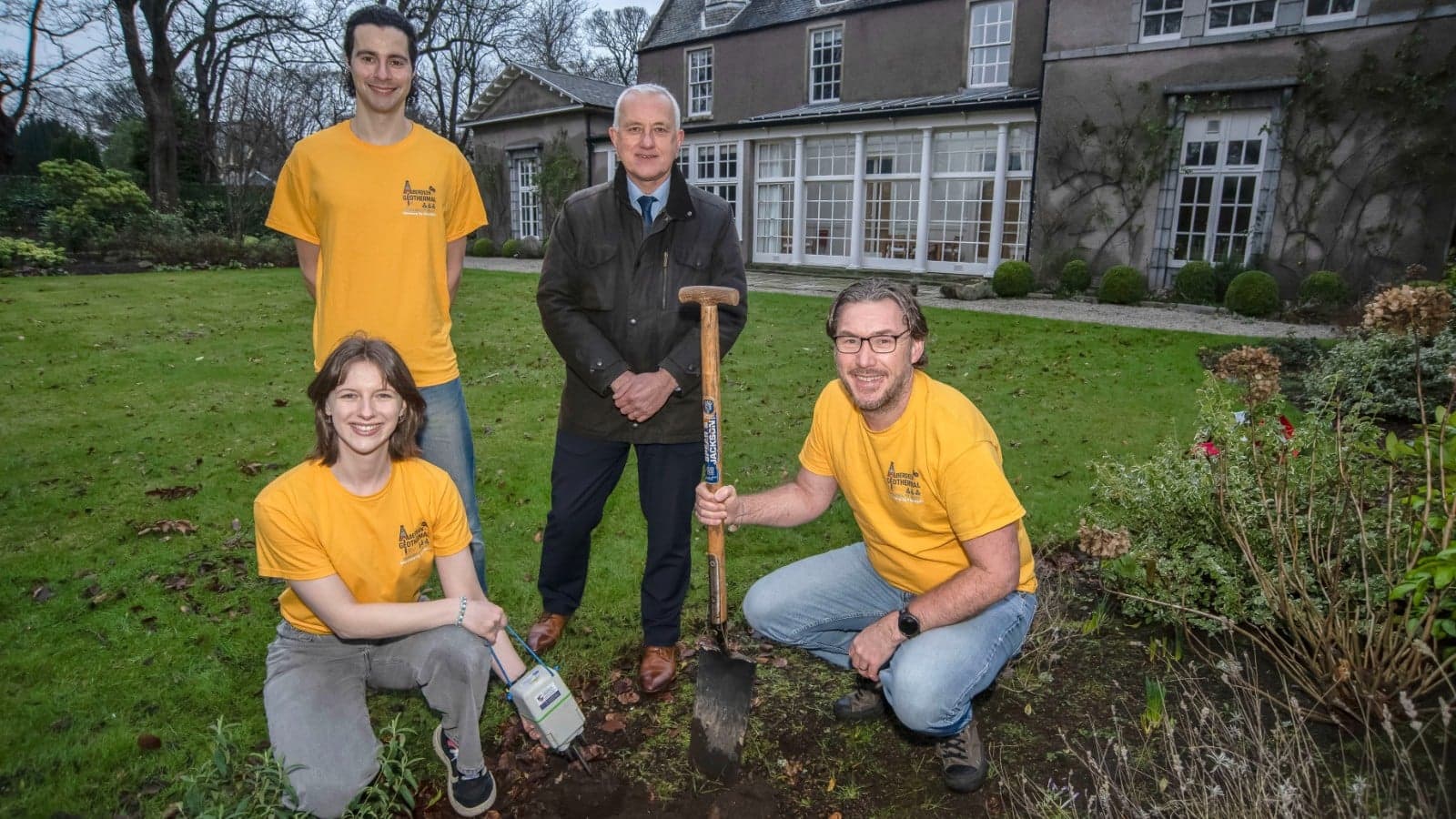
Researchers have started deploying seismic nodes across Aberdeen, Scotland, to identify the city’s geothermal potential.
The 100 nodes, approximately 10cm x 10cm x 30cm in size, will be installed across a variety of domestic and commercial sites to create a 3D subsurface map.
According to the University of Aberdeen, the nodes will be buried in the ground to record natural and man-made vibrations from waves, wind and traffic over the next 1-2 months.
The ‘seismic noise’ recoded will help create a map of the granite and other subsurface structures to a depth of 5km beneath the entire city.
Dr Amy Gilligan, researcher with the Aberdeen Geothermal Feasibility Pilot (AGFP), commented in a statement: “By placing these small sensors in the ground, we can safely and quietly listen to natural vibrations and build a picture of the rocks deep below Aberdeen.”
Gilligan explains that people won’t notice the sensors once in place. They will quietly go about collecting data that will help the team map the best places for geothermal heating.
Have you read?
Industry calls on EU for investment-driven geothermal plan
Geothermal boom will see capacity triple by 2030 says IEA
As part of the pilot, a borehole will be drilled to a depth of over 500 metres on King’s College campus in Old Aberdeen.
The University of Aberdeen says the borehole will provide direct subsurface temperature, geology and hydrology data. It will also aid with testing the potential for heat generated by granite at depth to heat buildings across the city.
The pilot is being funded through a £1 million public grant from UK Research and Innovation (UKRI) and led by the University of Aberdeen.
The team is waiting on planning consent for the borehole and in the meantime is installing the nodes across an area ranging from the Bridge of Don to Nigg, and inland as far as Hazlehead.
The project is support by a number of partners including NHS Grampian, Aberdeen City Council, Aberdeen Heat and Power, Robert Gordon University, Geosolutions Leeds at the University of Leeds, the British Geological Survey, TU Delft Netherlands, the National Geothermal Centre, the Net Zero Technology Centre and Aberdeen Renewable Energy Group, alongside several experienced individuals and departments.
The University of Aberdeen suggests the pioneering pilot will help bring to fruition a number of initiatives being considered across the city, as all data collected from the project will be made openly available.
UK’s geothermal potential
According to the National Geothermal Centre (NGC), the UK has significant low-temperature geothermal potential, with many areas having geothermal gradients a little above the global average.
The UK also hosts several deeply buried granites which have elevated geothermal gradients but do not contain or flow significant quantities of fluid. If flow paths can be created between the points of extraction and injection, these hot dry rock systems could be used to produce both electricity and heat.
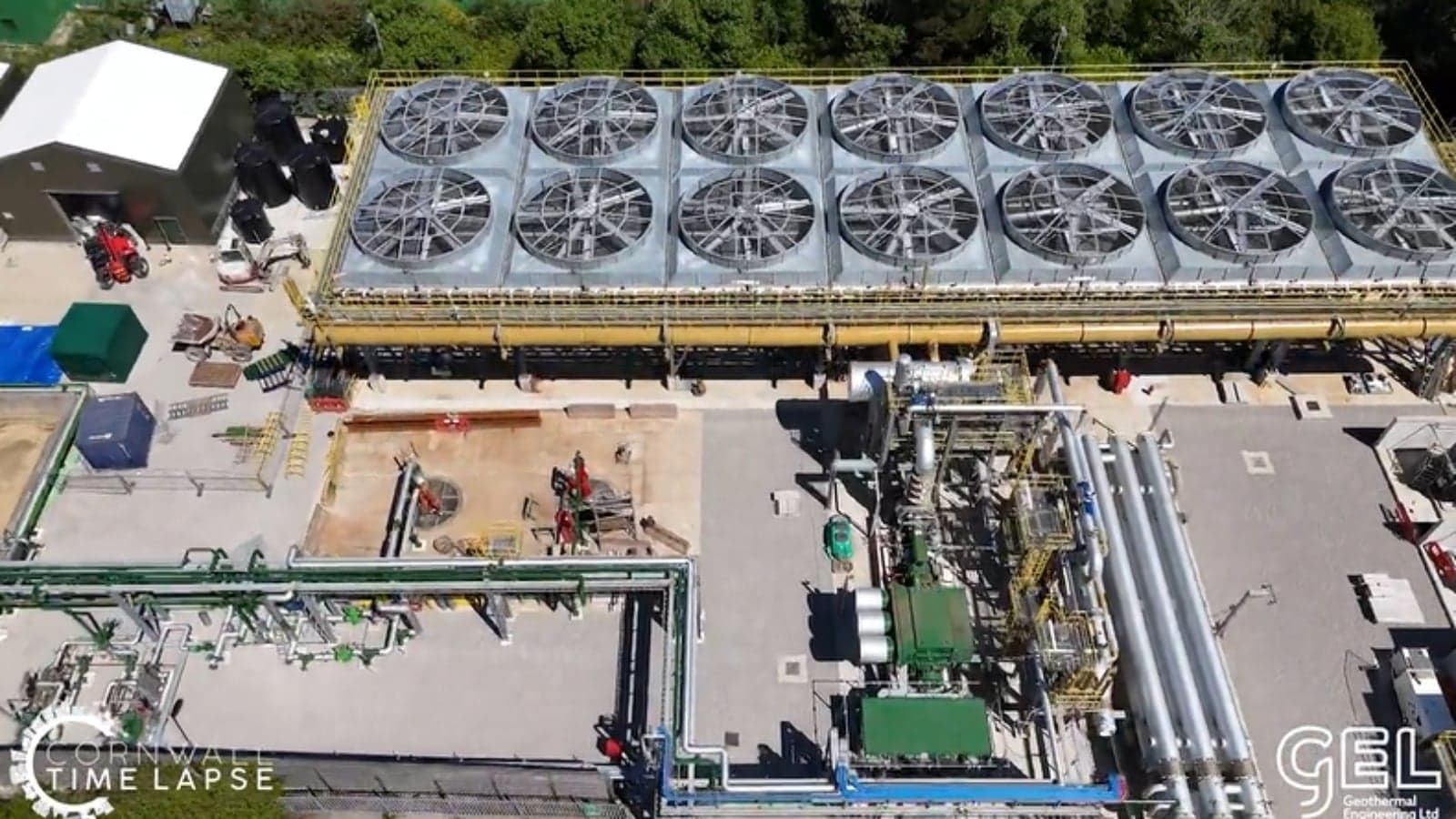
In Cornwall at the United Downs site and the Eden Project, the potential for electricity production from deep drilling into granite is currently being investigated.
The UK has extensive areas of buried sandstone and limestone aquifers at depths of up to 6km and with maximum temperatures of a little over 100°C. These account for the majority of the UK’s deep geothermal resource, states NGC. This means that plenty of potential exists. One example of a hot sedimentary aquifer geothermal system, and one of the UK’s earliest geothermal systems, is operational in Southampton.
Finally, the UK has a number of onshore and offshore oil and gas wells, as well as around 23,000 disused deep coal mines and numerous metal mines that could be repurposed for geothermal uses.