Why Herbert Diess believes e-mobility is the 'wonder formula' of the energy transition
Pamela Largue
Posted on: 23 February 2026
It's time to tap into cars as the largest distributed storage resource, says Herbert Diess, Chairman of the Board of The Mobility House and former Volkswagen CEO.
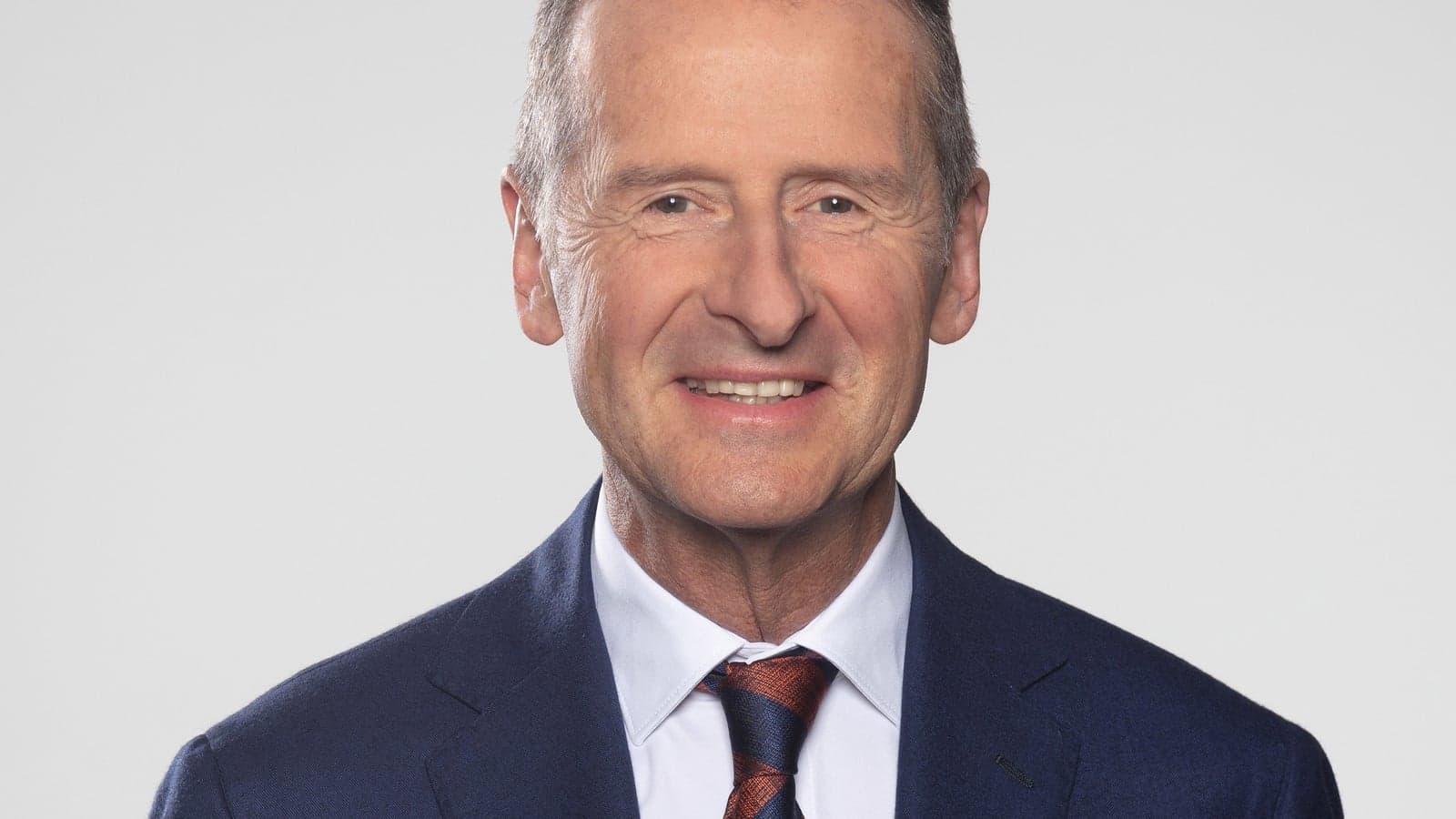
For Dr Herbert Diess, former CEO of Volkswagen and current chair of The Mobility House, the convergence of mobility and energy opens “a totally new world,” a world in which e-mobility is more than simply a part of the transition, but one of its most powerful decentralised tools.
His vision is to see electric vehicles take their place as critical storage assets that unlock flexibility across the power system, a vision that has been a hallmark of Diess' career for decades.
“It’s really, I would say, a wonder formula… a big driver of change.”
And a significant part of this winning formula, explains Diess, is the sound economics behind the transformation.
“What’s really driving the transition is the ever-lower cost of solar panels and ever-lower cost of solar energy,” he explains.
In Germany, this cost dynamic is already reshaping markets. “Through the summer, basically three, four, five hours where energy is at the cost of zero… because the panels are installed, so they just produce.”
The consequence of having an abundance of cheap midday electricity is that storage becomes essential.
Have you read?
Batteries on wheels: When cars stop driving, a revolution begins
Why China is leading the EV race
Diess explains that the largest distributed storage resource is not in stationary batteries, but in cars.
With around two million electric vehicles in Germany alone and millions more worldwide, the aggregate capacity is vast. Yet these assets are dramatically underused, says Diess.
“Cars are only used one hour per day. So, you have this car standing around 23 hours doing nothing and then you have this huge battery in a car.”
He stresses the scale of that battery: “A car battery can feed a house for probably a fortnight... It’s a lot of energy in this car.”
While the availability of car batteries is not a challenge, there is a technical leap required to integrate them into the energy system.
However, once connected via smart, bidirectional charging, vehicles can shift energy from times of abundance to times of scarcity. “You can shift the energy from daylight, from sun, from cheap into expensive 6:00 in the evening when everybody comes home and the sun is not shining anymore.”
Aggregated across thousands or even hundreds of thousands of vehicles, this creates a highly distributed flexibility platform, he highlights.
It also changes the perception of the car.
“A car is no longer a consumer of energy. It’s part of the energy system of a hugely distributed energy system.”
For Diess, this shift is transformative and would reduce the need for costly grid expansion while allowing far more renewable power to enter the system.
The business case is becoming tangible. With bi-directional charging and dynamic tariffs, drivers can earn from providing storage services.
Also of interest: IEA urges grid and flexibility plan to meet electricity boom
Diess explains that resistance to this transformation is inevitable and might slow the uptake of e-mobility. Drawing on the concept of “creative destruction,” Diess observes that large incumbents “have a lot to lose,” and therefore often try “to slow down change as much as possible.”
“If such a transition happens, there are people who are going to lose out,” he acknowledges.
These include established energy companies, network operators and incumbent automotive suppliers.
However, he adds with a smile, the economics make the shift unstoppable.
With solar electricity in parts of Europe being produced cost-effectively, it means it’s a lot cheaper to recharge than refuel with diesel or gasoline.
And China’s rapid scaling of electric vehicles and renewables has further accelerated global cost reductions.
Battery prices are falling sharply, solar deployment is surging, and electric cars are already cost-competitive with combustion models in major markets.
“You still can slow it down,” he says, “but you can’t stop it.”
Watch the full Energy Transitions interview with Dr Herbert Diess: