World Bank helps fast-track India's rooftop solar ambitions
Pamela Largue
Posted on: 14 July 2026
The loans will drive India's rooftop solar rollout, boost clean energy access, create jobs and stimulate private investment.
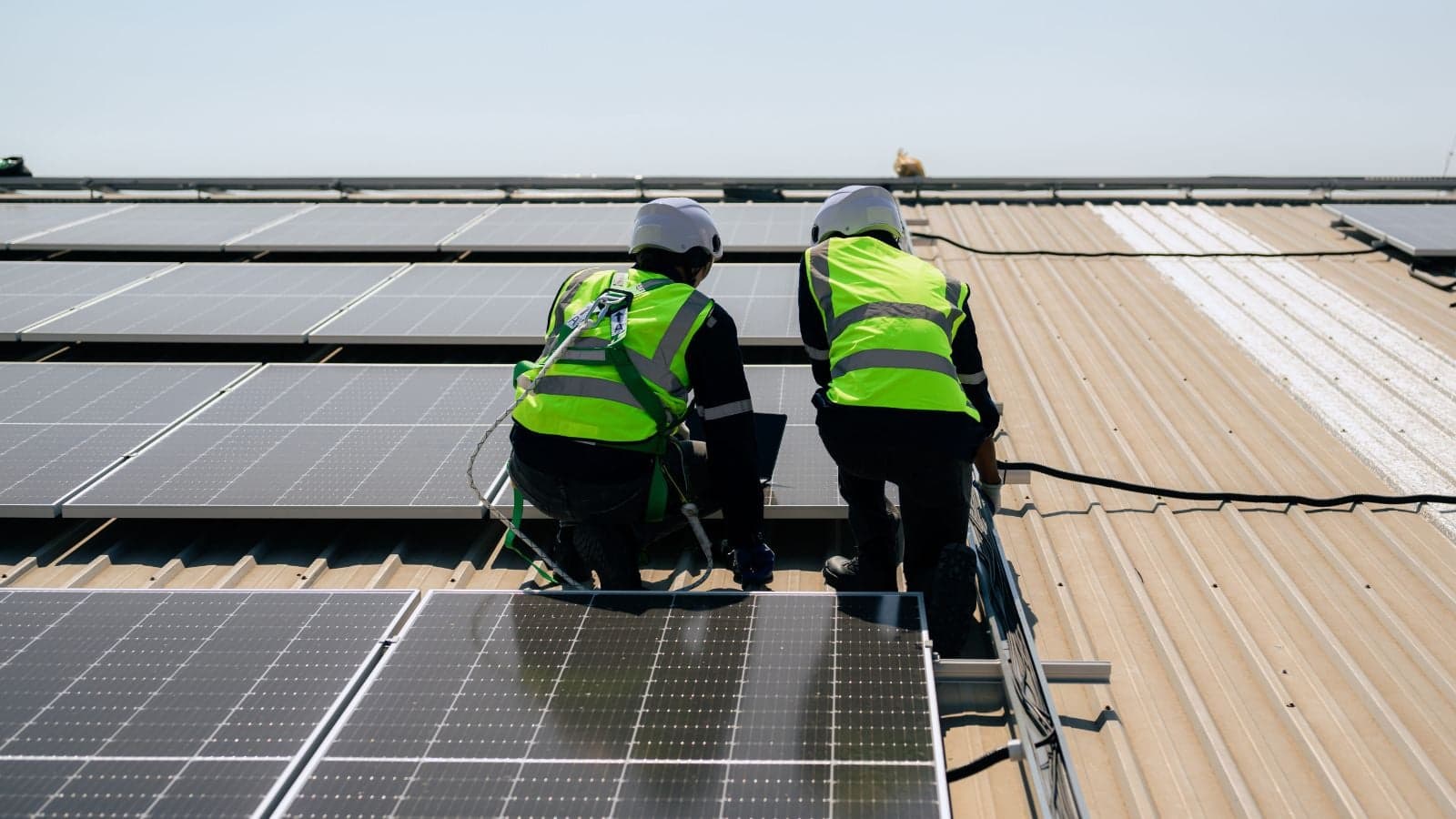
The World Bank has approved financing to accelerate India’s rooftop solar deployment and help the county to hit its renewable energy targets.
The funding will specifically support the PM Surya Ghar: Muft Bijli Yojana programme, a government initiative launched as a mechanism to provide free electricity to households by promoting grid-connected rooftop solar installations.
Eligible households receive financial subsidies to cover up to 60% of the solar system's cost, enabling them to generate up to 300 units of electricity per month for free.
Besides bringing clean energy to more homes, the funding will also spur the creation of 1.7 million job opportunities across the renewable energy manufacturing, installation, and services value chain.
The World Bank's financing package includes an $820 million loan from the International Bank for Reconstruction and Development (IBRD), a $60 million concessional loan from the Clean Technology Fund, and a $10 million grant from IBRD’s Livable Planet Fund.
The World Bank also will mobilise $4.2 billion in private financing in the form of commercial loans.
Have you read?
GE Vernova to deliver pumped-storage units for India’s Upper Sileru hydro plant
How the humble rice husk could cut emissions in India’s iron ore industry
Adani Group invests $100bn in renewable-powered AI data centres
Paul Proccee, World Bank Acting Country Director for India, said: “The World Bank has been supporting India’s solar rooftop sector for over a decade, mobilizing more than $2 billion to catalyze market growth from 500MW to over 27GW of installed capacity.
“This new financing will help India scale up residential solar, while creating job opportunities across the supply chain and installation ecosystem.”
Moez Cherif, Task Team Leader of the programme, added that the programme will help remove financial barriers blocking growth of the residential solar market. It will also help build capacity of distribution companies, banks, and vendors to deliver integrated service solutions.
“Through collateral-free financing, households can install solar power and significantly reduce their monthly electricity bills,” said Cherif.
India has committed to achieving net zero by 2070 and increasing non-fossil-fuel-based energy resources to 60% of its electricity mix by 2035.
And solar power plays a large role in this achieving this goal, both utility-scale and decentralised systems. According to the Institute for Energy Economics and Financial Analysis, while utility-scale solar has driven much of India’s recent capacity additions, decentralised and rooftop solar offer a key untapped opportunity to improve both utilisation and access to clean energy.
The PM Surya Ghar: Muft Bijli Yojana programme has already accelerated residential rooftop adoption, with over 3.2 million households installing systems as of 16 March 2026.
In FY2026, about 9GW of rooftop solar capacity was added in India, bringing the cumulative rooftop capacity to 26GW.