The smart science behind the UK's green energy revolution
Guest/partner contributor
Posted on: 12 May 2025
How advanced analytics, modelling and data science are enabling the energy transition.

How advanced analytics, modelling and data science are enabling the energy transition
By Gavin Blackett, Acting Executive Director of the Operational Research Society
As the UK accelerates toward a Net Zero future, an often-overlooked enabler of this transformation is operational research.
Operational research (OR) is a scientific discipline that supports smarter, data-driven decision making, helping organisations solve complex problems, from energy planning to climate risk resilience.
Used by organisations of all sizes, OR addresses messy, high-uncertainty issues. It combines advanced analytics, modelling, simulation, optimisation and data science to identify the best solutions and practical actions.
More than just rolling out renewables, the UK’s energy transition requires intelligent systems to integrate wind and solar, strengthen the grid, and prepare for climate extremes.
This is where OR excels, delivering the models, analytics, and simulations needed to manage these challenges. This article explores the key role OR is playing in making the UK's Net Zero ambitions a reality.
Energy turns to smart science
As the urgency of climate change becomes increasingly evident, highlighted by new global temperature records and the looming threat of a 2°C rise by 2045, industries, particularly the energy sector, face growing pressure to mitigate climate risks and transition to low-carbon solutions. The stakes are high, and action is urgently needed.
OR is playing a key role in shaping energy systems that are not only increasingly responsive and efficient in their distribution of energy but also support national low-carbon objectives.
One standout example is the Dynamic Reserve Setting (DRS) project, developed by the Smith Institute, an AI, data science and advanced mathematics consultancy, for National Energy System Operator (NESO).
Using real-time data and machine learning, the DRS model forecasts how much reserve - essentially ‘spare capacity’ needed to manage potential supply and demand - the electricity grid needs at any moment, based on changing weather and system conditions.
This dynamic approach can make the grid more secure and efficient, reducing the amount of energy held in reserve whilst managing risk and potential demand. The project also supports greater integration of renewables onto the grid. In recognition of its innovative impact, the project was awarded the 2024 President’s Medal by The OR Society.
Dr Kieran Kalair, Principal Consultant at Smith Institute, noted at the time that DRS has the potential to revolutionise reserve setting for Britain’s electricity grid, making it more sustainable, efficient, and adaptable to the demands of a low-carbon future.
Decentralised energy networks
Two other experts making an impact in this field are Chris Dent, Professor of Industrial Mathematics, and Dr Lars Schewe, Reader in Operational Research, at University of Edinburgh.
They share insights from their work on projects aimed at future-proofing the UK’s energy networks including solutions that help energy systems cope with the pressures of climate change, with OR playing a role.
The UK’s energy grid, once centralised and dominated by large generators, has become increasingly decentralised. As Schewe explains, it is no longer a world where tens of generators are controlled from a single room at the press of a button.
Today, thousands of smaller units such as solar farms and wind turbines feed into the grid, introducing new layers of complexity, especially since these sources are highly weather-dependent.
Generating electricity without fossil fuels is not only an engineering challenge but also a significant mathematical one.
Dent says that to meet the target of decarbonising the electricity supply by the mid-2030s, the UK must accelerate research and innovation. With renewable sources being weather-dependent, there is a need for sophisticated prediction and decision-making tools to manage energy demand, plan for outages, and support faster decision-making.
As Schewe points out, more automated tools are needed to manage the growing complexity of the system, where currently, there’s still heavy reliance on manual processes, which is one example of where OR can be used to ease the decision-making load by automating many routine tasks.
Planning a Net Zero grid
Schewe was involved in the NESO Optimal Outage Planning System project, designed to support the transition to a net-zero energy system.
Using optimal power flow (OPF) models, the project generates potential scenarios to manage overloads and ensure grid stability. The goal is to optimise the UK’s energy network, particularly as renewable energy sources like wind and solar increase in prevalence, ensuring future resilience.
Outage planning is currently based on worst-case scenarios, with limited consideration for the impact of changing system conditions, such as fluctuations in generation or weather, or how one outage might influence another.
This approach has traditionally relied on 'rules of thumb'. With the rapid pace of change, these methods are starting to show their limitations, especially as much of the work is spent reacting to situations and re-planning.
The project seeks to incorporate improved risk estimation into the Network Access Planning (NAP) process, enabling more efficient and flexible management of outages.
A key focus is on improving network access to accelerate construction and maintenance while keeping the system responsive to the demands and conditions of a decarbonised grid.
Schewe highlights the need for better tools - not just for forecasting, but for enabling faster decision-making - explaining that the bottleneck is often not data quality itself, but the decision-making process.
Engineers still rely heavily on their judgment even in routine cases, which can slow response times. The project has demonstrated that OR can help by automating routine tasks, but human expertise will always be essential, especially in extreme situations.
Climate resilience and challenges
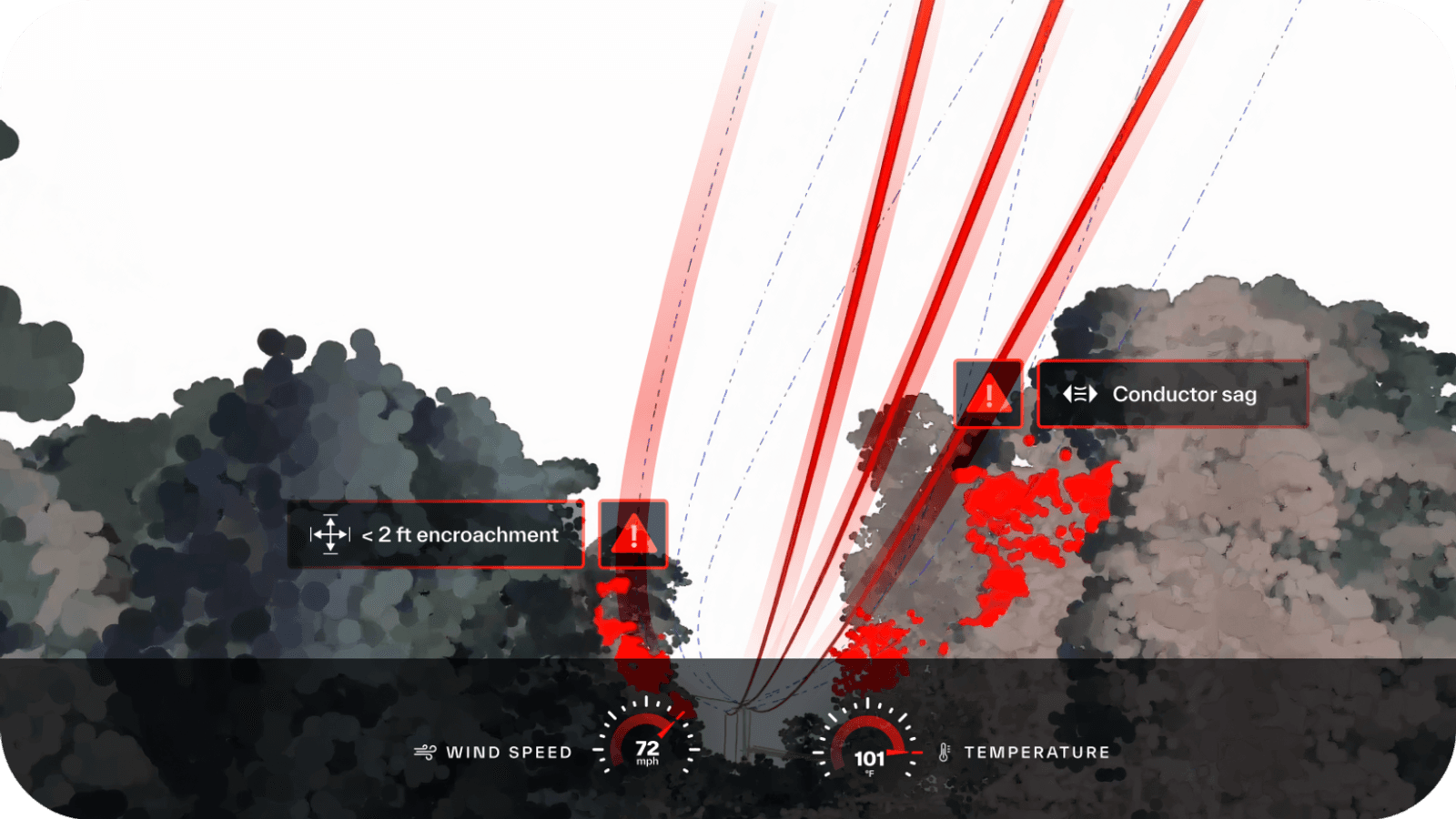
Climate change is complicating energy systems, as extreme weather events like floods, wildfires, and heatwaves increasingly disrupt multiple assets. Dent, who is more involved in climate resilience projects and energy network planning, warns that current models may not be sufficient to address these risks due to data gaps.
He explains that there is a need to account for extreme weather events, even if they have not been observed in the past. For example, large-scale forest fires or extreme heatwaves could simultaneously impact multiple assets, which current models do not fully consider.
More exclusive climate content:
Sustainable cooling in a warming climate: an urgent social question for our cities
Why a Mark Carney climate bounce could fix COP
Innovation summit told ‘now is not the time to hesitate’ on climate ambition
Dent stresses the importance of learning from past events like the 2019 and 2022 heatwaves, noting that insights from those managing the system during these events are invaluable. These real-world experiences can help build models to predict how the system will respond to future climate challenges.
As the UK’s energy system becomes more interconnected with Europe, Dent also highlights that managing climate-related risks will require sophisticated tools; especially as renewable energy sources grow in prominence.
There is a growing need to think about how everything fits together computationally, but OR will play a key role in managing these risks and ensuring future resilience.
Future energy landscape
Both Dent and Schewe agree that OR will be essential in managing the growing complexity of modern energy networks. In the coming decades, it will be indispensable for predicting energy demand, integrating renewables, and maintaining grid stability.
OR will also play a crucial role in managing the uncertainty associated with renewable energy output, especially as large-scale storage solutions begin to emerge. And as Europe’s energy systems become more interconnected OR will be key to optimising cross-border integration and coordination.
Already, projects like Dynamic Reserve Setting (DRS) and the NESO Optimal Outage Planning System illustrate the expanding role of OR in transforming how Britain manages its electricity grid.
As the climate continues to change, the demand for resilient and efficient energy infrastructure will only grow - and OR is a vital tool to help energy systems adapt faster, plan smarter, and operate more reliably in an increasingly unpredictable world.
By providing sophisticated modelling, forecasting, and automation capabilities, and by blending advanced analytics with human expertise, experts like Smith Institute, Dent, Schewe, and their peers are laying the foundation for a smarter, more sustainable energy future - one better equipped to meet the challenges of climate change.
The Operational Research Society is a professional body bringing together experts from operational research, decision analytics, and data science to advance the science and practice of analysis and decision-making.