Fitting the DSO into an increasingly digital world
Yusuf Latief
Posted on: 13 December 2025
Digitalisation is about more than simply automating workflows, says Wiener Netze's Head of Staff Unit, Digital Transformation.
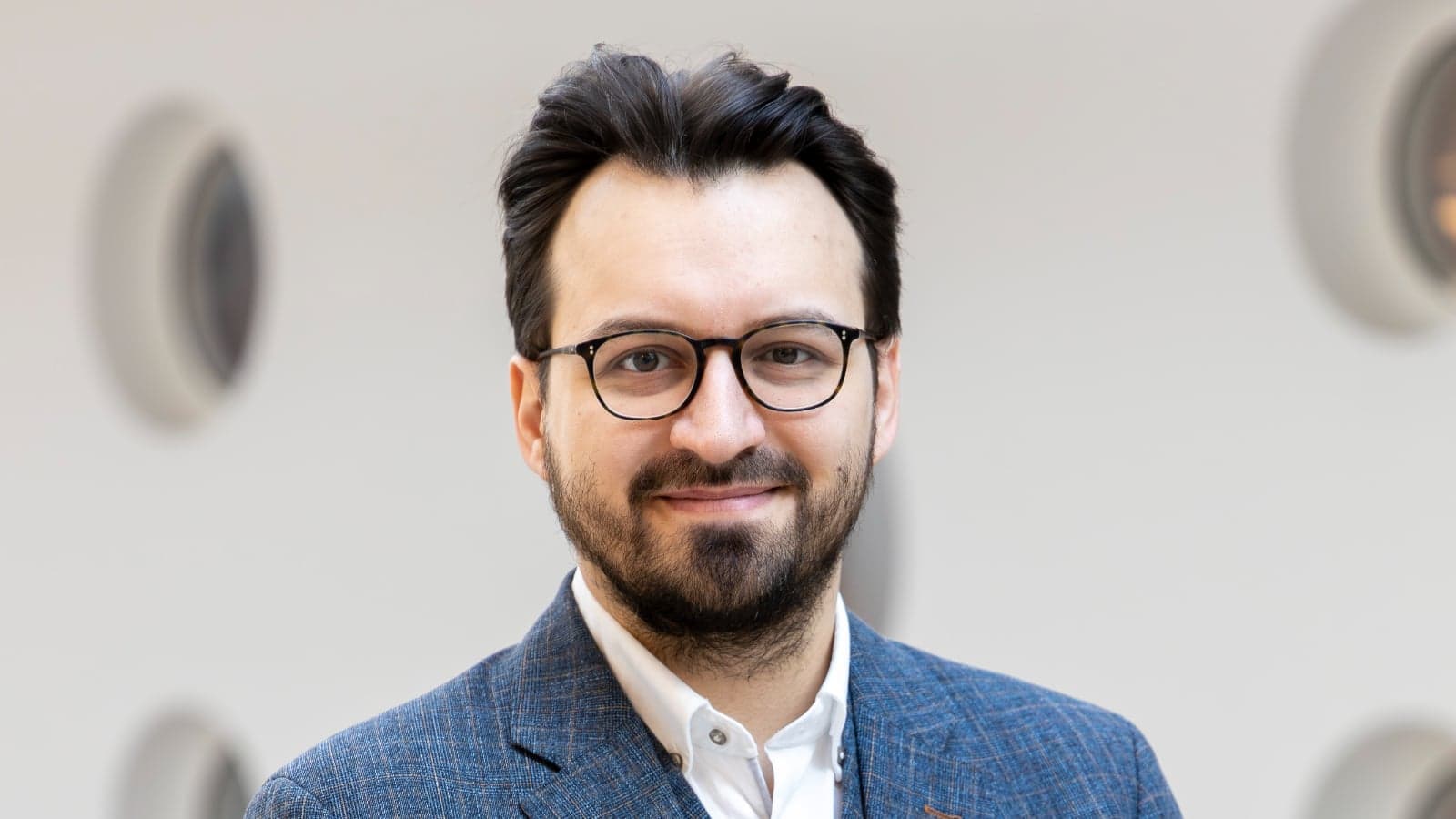
Wiener Netze, Austria’s largest combined energy operator, boasts digital efforts that are widely considered a success story. To find out why and how, Yusuf Latief caught up with Johannes Geist, the company’s Head of Staff Unit, Digital Transformation.
Digitalisation is reshaping electricity networks faster than many operators can keep up. Across Europe, electrification is pushing load patterns into new territory and grid operators are becoming data stewards as much as asset stewards. Austria—with one of the highest smart meter rollout rates in the EU—provides a useful snapshot of this transition.
For Wiener Netze, as Geist makes clear, the focus has matured from digitising workflows to rethinking how a DSO functions in a system where customers generate, store, and actively manage electricity.
Beyond automation
When considering these processes, Geist stresses that digitalisation and digital transformation are not interchangeable. Many utilities begin their digital journey by automating analogue processes, but this falls short of the scale of change now required.
“You can easily digitalize something and automate a process and then it just runs,” he adds, but genuine transformation requires understanding “the customer needs…the employee needs,” and re-evaluating whether existing structures are fit for digital tools.
Large, catch-all enterprise systems—common in the utility sector for decades—are under scrutiny. Geist warns that these systems are “not really maintainable anymore”, reinforcing why DSOs must be disciplined in how they scout new technologies, define requirements and prioritise value.
“That's something all the DSOs, in my opinion, need to figure out: their process of scouting what's new, figuring out what they want, hearing what the need is, and then providing a solution with a great price, because overall, price is a big factor.”
Smart metering: the first big test
Austria’s smart meter rollout - now 96.9% across the country - is widely seen as a success, although this does not necessarily mean it went smoothly. In fact, it exposed the risks of fragmented requirements and inconsistent processes before operators agreed to streamline their approaches.
Said Geist: “In Austria, we have around 119 electricity DSOs and 19 gas DSOs and everybody had some small deviation in their requirements, and they were not all 100% compatible. Everybody had their own struggles to implement everything, and to tell the customer what they need to do. That's what we learned: that we [should] come together.
“Everybody provides their best knowledge, and if it's not 100% like you imagined it, it's fine because overall, it's a better solution than if everyone does their own thing.”
For Geist, this was the core lesson: collaboration is key. A perfectly designed process for one is far less useful than a national one that works end-to-end across regions and suppliers. Alignment also simplified customer communication and ensured that someone moving from Vienna to another region encountered similar rules and tools.
Have you read?
Addressing the million-dollar AI question for the energy workforce
SMEs not tapping into electrification potential finds Schneider Electric
Europe’s industrial competitiveness depends on smarter energy systems
The rollout itself was long in the making—almost a decade of preparation, says Geist—before accelerating quickly near the deadline.
As Geist notes, the final years required moving beyond rigid project structures.
Disruptions rose from the likes of COVID-19, supply chain constraints and field-testing issues, forcing their teams to adapt.
Reacting in real time, he says, became more valuable than “defining everything down to the punctuation” during planning.
Data and the next wave of grid intelligence
These lessons in flexibility and iterative problem-solving set the stage for the next phase: leveraging the rich data streams from smart meters. Having learned how to respond in real time, Wiener Netze is now turning its attention to how this information can drive grid intelligence.
However, adds Geist, Wiener Netze’s use of smart meter data remains restricted by regulation, which limits quarter-hour values to billing and a few narrow use cases, although this is expected to change next year.
“We are thinking about how we can use this data for grid planning, grid operations, of course, and verifying the information that we have in our systems.”
“Sometimes we find out that the quality of data we have in our system is not 100% so we try to figure out if we can use metadata of our communication system or, power quality data”, help resolve mismatches, he adds.
For example, says Geist: confirming which customers are connected to which feeder, which would directly strengthen outage modelling and speed up restoration.
The organisational foundations
Asked on his advice for utilities and grid operators looking to accelerate their digital transformation, Geist says it comes down to people, not platforms.
“I've been with Wiener Netze for nine years now.
“The key to the success in our company was that, first of all, the culture was provided, that someone who was happy to do something new, who were focused on something new, they were allowed to do it.
You need to accept if it was a failure, and then start again.
“It was open enough that someone who has had not that much experience but the drive - they could do it. They were coached, advised and there was a surrounding culture that really fostered innovation.”
On the other side of this, he added, was the importance of having “a culture of failing.
“Because when you do something, you don't know what the output will be - it could be good, but it might not be…
“You need to accept if it was a failure, and then start again.”
This incremental, evolutionary approach—testing, adjusting, course-correcting—says Geist, proved decisive during the smart meter rollout and now shapes how digital projects are run.
Making communications work
When discussing what excites him most about the sector and what him and his team have planned, Geist cites customer communications, to his own surprise.
“In the past, we were just writing the text like we understood it and with legalese in mind. But if you look in Vienna, a lot of people are not native Austrian, German is not their first language, and if you use a really complicated sentence, they don't understand what we want them to do. That makes our work life even harder.
“So we try to use digitalisation, maybe with automatic translation so that the information we provide to all the customers are understandable for them in their native language or in a more, simpler, way.
“Making things more accessible; I was not expecting that to excite me, but I think it's something that helps us in the long run to get less customer complaints and … having them be more willing to engage in the services that we provide.”
Latest content
+7
What will it take to truly digitalise the European power grid?
In this episode of the Energy Transitions podcast, Christiane Mann, Chair of the T&D Europe working group on grid digitalisation and Vice President, Head of Industry Affairs at Siemens Smart Infrastructure, helps unpack what true grid digitalisation really means.
- Yusuf Latief
- 19/02/2026
Latest in Digitalisation
All articlesPartner content
+1
Digital water management: Empowering utilities with scientific decision-making
As urban water distribution networks continue to expand and water resource management becomes increasingly complex, water utilities are facing growing operational challenges.
- Guest/partner contributor
- 03/07/2026