Which industry offers the best lessons for the energy sector?
Kelvin Ross
Posted on: 30 December 2025
Energy players spotlight other sectors which have vital lessons about sector transformation.

You don’t need me to tell you that the energy sector is going through a period of transformation.
Many refer to these transitions as ‘unprecedented’, and indeed they are for energy players. However, other industries have ‘been-there-and-done-that’.
We wondered which sectors had the most valuable lessons for the power and utilities industry, so we asked a group of executives from across the energy spectrum… some of their answers may surprise you.
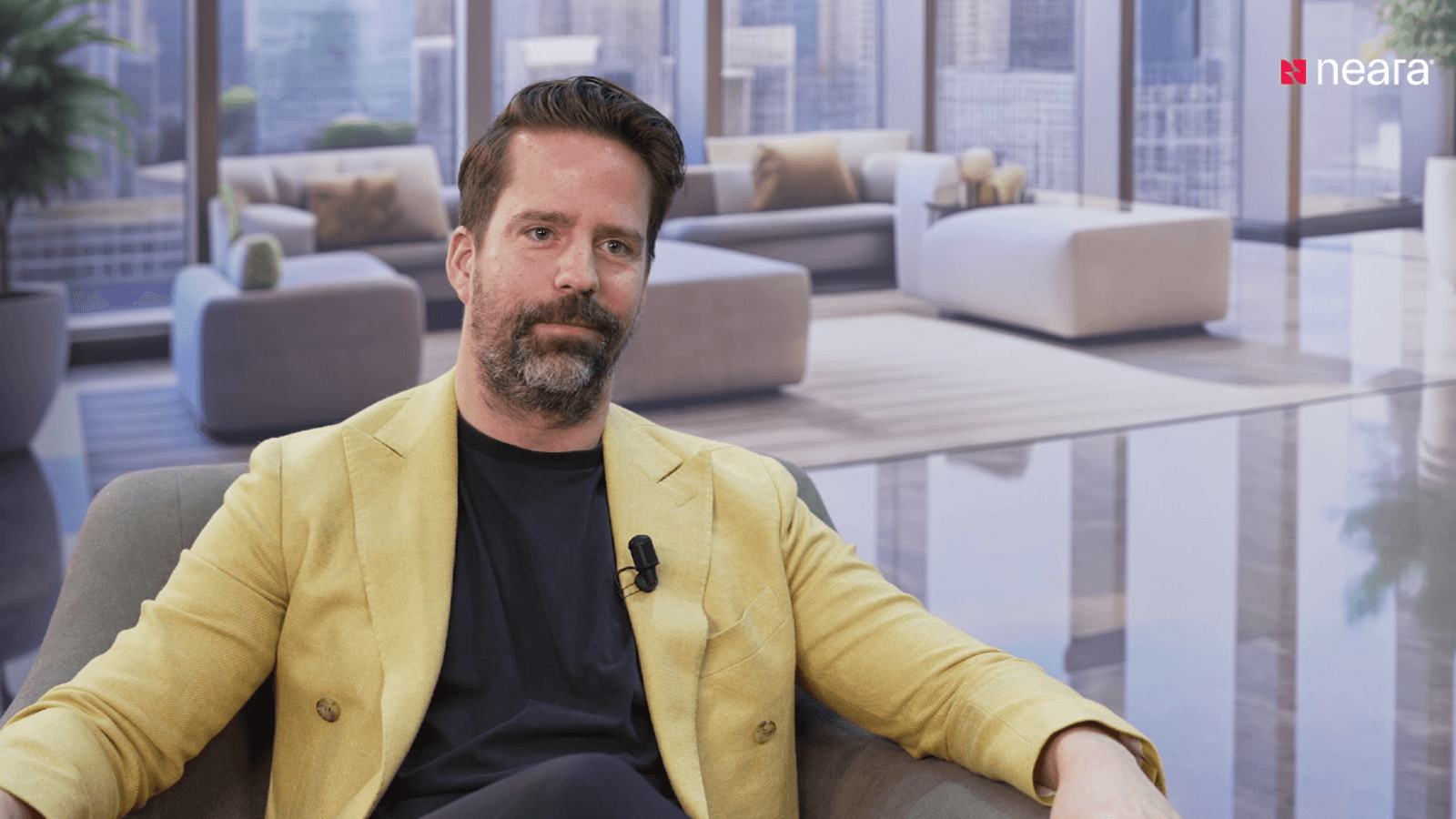
Taco Engelaar, Managing Director of Neara, says that “given the current focus on interconnection across Europe, I think the rail industry offers an interesting blueprint for the future of energy”.
“Just like its energy networks, Europe’s railways were built on heavily siloed, inconsistent infrastructure, designed for the nationally centralised, fossil-fuelled economies of the 20th century.
“But if you look at the railways now, especially across Western Europe, we have these incredible high-speed, interconnected systems which not only allow people to travel more easily across the continent but have also unlocked enormous economic advantages.”
Engelaar says that “getting to this point didn’t happen overnight, but it provides a lesson for the energy sector. With the right level of commitment and engagement from key stakeholders, as well as smart legislation and consistent financial and political support, building a resilient, interconnected energy grid is more than possible.”
How automotive drove change
For Jaroslav Macek, chief executive of Elevion Group, it’s another form of transportation that has the most to offer: “The automotive industry provides powerful lessons for the energy sector, particularly in how it has managed the shift towards electrification, innovation, and customer-driven transformation.”
He says that in less than two decades, “car manufacturers have moved from traditional combustion engines to highly efficient electric vehicles, reshaping not only products but entire value chains”.
However, this automotive transition, says Macek, has also revealed some important lessons for Europe: “The lack of full alignment between policy frameworks, industrial value chains, and investment clarity created inefficiencies and uncertainty across the ecosystem. As we accelerate the energy transition, we must learn from this experience, ensuring better coordination between technology development, regulation, and market readiness.”
He highlights the clear parallel between the car industry’s combustion-to-electric journey and the energy transition, “as we move from fossil-based, centralised systems to smart, integrated, and decarbonised solutions”.
“The automotive example shows that real change happens only when technology, policy, and consumer behaviour evolve together. We must make sure that as we transform industrial sectors across all verticals, we remain competitive and retain critical know-how in the value-added segments of the new energy economy.”
Tapping lessons from water
Michael De Vivo, Head of Europe at EA Technology, chooses three sectors, each of which he says “shows that openness, digitisation and decentralisation aren’t threats but the foundations for resilience, flexibility and future growth”.
His choices are water, data centres and telecoms. Water, he argues, “offers a particularly relevant example” for the energy sector: “It’s transitioning from large, capex-heavy infrastructure projects to smarter, digital-first solutions using sensors and software to improve compliance, resilience and efficiency.
“Energy can take note: not every challenge needs concrete and copper – sometimes, insight is the smarter investment.”
On data centres, he says, “these global-scale infrastructures rely on predictive analytics, real-time monitoring, and remote management to deliver ultra-high reliability. That mindset – infrastructure as a managed, data-driven service – is exactly where energy networks, particularly at LV level, need to go.”
Big data, big lessons
Puneet Singh, Vice-President of Technology and Innovation at Siemens, echoes the choice of data centres, because he says the sector “offers important learnings in the choice of primary energy mix”.
“Here we see multiple options such as small modular reactors, microgrids and hybrid energy mix, showcasing the many options in primary energy mix. There is also a strong focus on energy efficiency starting from the design phase, with lessons learnt from efficient cooling systems and the use of digital twins and artificial intelligence.”
He adds that data centres’ participation in demand response and other flexibility mechanisms also “demonstrates how the energy sector can encourage flexible demand-side participation from industrial users and prosumers”.
Listen to telecoms
And then there’s telecoms. Perhaps the most-cited industry with lessons for those working in power and utilities, it was the third choice from De Vivo. Telecoms, he says, “cracked the code on distributed intelligence, interoperability and ecosystem innovation decades ago”.
“DSOs can learn a lot from how telecoms layered their systems, separating physical infrastructure from services and enabling innovation at the edge without losing control at the core.”
Sergio Lazzarotto of DLMS UA agrees: “Roaming and interoperability standards enabled customers to use their phones across national borders. Energy markets need a similar approach for flexibility, so that devices and customers can easily participate across Europe.”
And Paul Domjan, Chief Policy and Global Affairs Officer at ENODA, has a very neat way of mirroring telecoms with the energy sector, by using the most famous pioneers from both industries: “When I started my career 30 years ago in software in dot-com 1.0, we used to say that we had the web at one end of the network and the browser at the other, but Alexander Graham Bell in the middle.
“Today, the energy system is in the same position: we have utility-scale solar and wind at one end of the network, and we have heat pumps, EVs, and digital loads at the other, but William Stanley, George Westinghouse, and Nikola Tesla are still in the middle.”