EU adopts RESourceEU Plan to secure critical minerals sovereignty
Pamela Largue
Posted on: 4 December 2025
The plan aims to protect industry from price and geopolitical shocks, expedite projects and reduce dependency on China.
The European Commission has announced the adoption of the RESourceEU Action Plan in an effort to secure the EU's supply of critical raw materials.
The plan, which builds on the Critical Raw Materials Act, will introduce measures to protect industry from price and geopolitical shocks, expedite critical raw materials (CRM) projects and create partnerships to diversify supply chains.
The context of the announcement is Europe’s heavy dependence on imports for critical raw materials, which are vital to the continent’s competitiveness.
The Commission states that currently over 90% of the EU's rare earth magnets come from a single country, China. This dependency has been exacerbated by recent announcements of export restrictions on CRMs such as graphite, gallium, germanium and rare earths, as well as on batteries and key processing technologies.
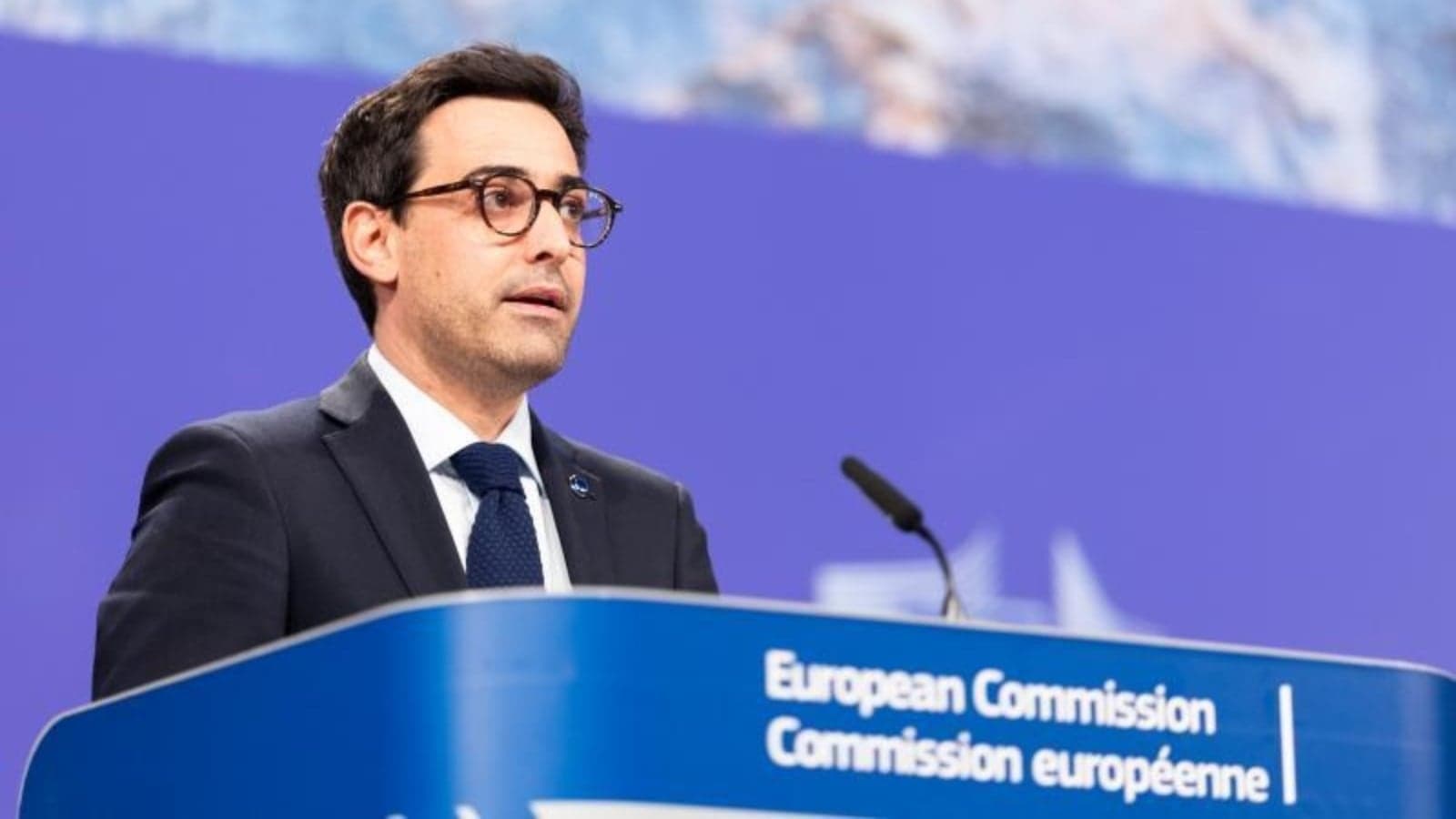
Stéphane Séjourné, Executive Vice-President for Prosperity and Industrial Strategy, said adoption of the plan was evidence of Europe acting on its independence in critical raw materials. "With the RESourceEU Action Plan, we are equipping ourselves with the tools we need to accelerate our own production, and diversify our supply, of critical raw materials.
“In this global race for the materials our industries need the most, RESourceEU is an engine of our industrial sovereignty. A cornerstone of Europe’s economic security.”
RESourceEU remedy
The plan is therefore designed to directly address these dependencies and urgently diversify supply. The first part of the plan will see the promotion of critical raw materials projects by de-risking investments, as well as speeding up and simplifying permitting.
To this end, the Commission is mobilising close to €3 billion ($3.5 billion) in EU financing over the next 12 months for CRM projects. Also, by removing regulatory bottlenecks, the EU is aiming to reduce dependencies by up to 50% by 2029.
Another core part of the RESourceEU Action Plan is to protect industry from geopolitical and price shocks. This will see the establishment of the European Critical Raw Materials Centre early next year.
Have you read?
IEA sounds alarm on energy security threats in latest global report
Skeleton opens Europe's largest supercapacitor factory in Germany
The Centre provide market intelligence, steer and finance strategic projects, and act as portfolio manager for diversified and resilient supply chains.
To support the work of the Centre, the Commission has also set up a Raw Materials Mechanism under the EU Energy and Raw Materials Platform, which will act as a matchmaking tool.
According to the Commission, this will help connect buyers and suppliers, streamline access for SMEs, and establish offtake agreements, feeding insights and practices into the Centre.
The Commission, together with Member States, will also launch a CRM stockpiling pilot to create an approach to raw material reserves, focusing on logistics and financing challenges to enhance industrial resilience.
Another important aspect of the plan is to encourage European partnerships with what it refers to as “like-minded countries”. The Commission will pursue mutually beneficial investment projects under Global Gateway with emerging markets and developing economies, with the goal of diversifying supply chains and speeding up industrial cooperation.
Finally, to protect the Single Market and bolster supply chain resilience, the Action Plan foresees increased levels of “monitoring, crisis coordination and defence against hostile interference”.
Priority projects
The European Commission, together with the European Investment Bank and Member States is already releasing funding for priority projects to put this plan into action. Two projects which have received priority states are the Vulcan's lithium extraction project in Germany, and the Greenland Resources' Malmbjerg molybdenum project.
The European Investment Bank (EIB) has agreed to provide €250 million ($292 million) in financing for Vulcan Energy’s phase one Lionheart Project in Germany’s Upper Rhine Valley. The €2 billion ($2.3 billion) project will build an integrated, battery‑quality lithium supply chain based on geothermal brines, helping to reduce Europe’s reliance on imported raw materials and support the decarbonisation of transport and industry.
According to the EIB, this is Europe’s first project to combine Direct Lithium Extraction with renewable energy generation, which sets a new sustainability standard for lithium.
Also of interest
Energy Transitions podcast: How to create a competitive metals industry in Europe
Nicola Beer, Vice‑President of the EIB, said: “By securing a strategic supply of lithium for European industry, we are strengthening Europe’s sovereignty and supporting the energy transition. With innovative geothermal technology, domestic production, and strong public-private cooperation, the project puts the EU’s Critical Raw Materials Act into practice and reinforces Europe’s supply chain resilience”.
The Malmbjerg Project, also to receive funding, is an open pit pure molybdenum project with magnesium byproduct. It’s located in east central Greenland can supply 25% of the EU overall molybdenum consumption and 100% of EU defence consumption.
Related tags
Latest in Markets & Policy
All articles+2
Kadri Simson: “We surprised the world with how strong Europe is”
The energy crisis triggered by Russia's invasion of Ukraine forced Europe to take decisions in months that would normally have taken years. At the centre of that response was Kadri Simson, European Commissioner for Energy from 2019 to 2024.
- Areti Ntaradimou
- 16/06/2026